How to care for your horse’s hooves as the seasons change
Spring is all about new growth and fresh starts — and that includes your horse’s hooves. As the seasons shift, so do the needs of your horse’s feet. In this blog, we’ll explore why exfoliating soles happen in springtime, what a retained sole is, and how to keep your horse comfortable and healthy during this seasonal transition.

Why retained soles happen over winter
To understand what’s going on in spring, we first need to look at what happens during winter.

In snowy regions — like Finland, northern Europe, and parts of North America — horses’ hooves don’t wear down like they do on dry ground. Whilst snow can erode the outside of the hoof capsule, it doesn’t exfoliate the sole; instead, it allows the sole to keep growing thicker. This leads to what’s known as a retained sole. The hoof wall also grows longer, but because both the wall and sole grow together, the change isn’t always obvious.
Even in places without snow, muddy and wet winter conditions can cause the same issue to some extent.
Over time, this leads to a hoof that starts to stretch forward: the toe grows long, usually at a shallower angle, and the heels begin to collapse underneath. The result is a hoof with a long toe and underrun heels.
Spring: when the hoof shape changes and how exfoliating soles affect hoof shape
This is the exfoliating sole moment.
Once the retained sole starts to come away, the overgrown hoof wall becomes visible, and you’ll often realise there’s a lot more to trim than you thought. On hooves like this, the hoof shape can improve quickly with correct and frequent enough trimming. A trim cycle that’s more than four weeks is usually too long for these kinds of hooves, and will result in cracks and chips in the hoof wall, and allows the hoof to become unbalanced.
As the snow melts or the ground dries, you may suddenly notice your horse’s hooves look odd. The toe and heel may appear to be running forward. At first, it might seem like there’s not enough wall height to fix it — but then the retained sole begins to exfoliate.
A skilled hoof care professional will know how to assess each horse’s hooves individually and will remove only the right amount of sole at the right time. Too much or too little can do more harm than good.

Signs your horse’s soles are exfoliating
When your horse’s soles start exfoliating, you may see fine cracks like little veins across the surface. These cracks get bigger, and the sole begins to flake off — sometimes in chunks, and sometimes as one large piece.
This might look alarming, but it’s totally normal.

You can help the process along by gently scraping away the loose, crumbling sole with a hoof pick. It usually comes off quite easily.
This is also the only time when trimming the sole with a hoof knife is appropriate — usually done by a professional to ensure no harm is done to the horse. Trimming parts of the sole is especially important if the sole has exfoliated only partially and left behind some areas that are higher; these are uncomfortable for the horse, much like a pebble in your shoe.
Don’t forget about foot soreness and laminitis risk
Retained soles aren’t the only concern in spring. Two other common issues are foot soreness and laminitis.
If your horse has been in wet, muddy conditions all winter, their hooves are likely softer due to moisture. Once the ground dries up, the sudden change in footing can cause soreness, especially for horses with thin soles or other existing hoof issues.
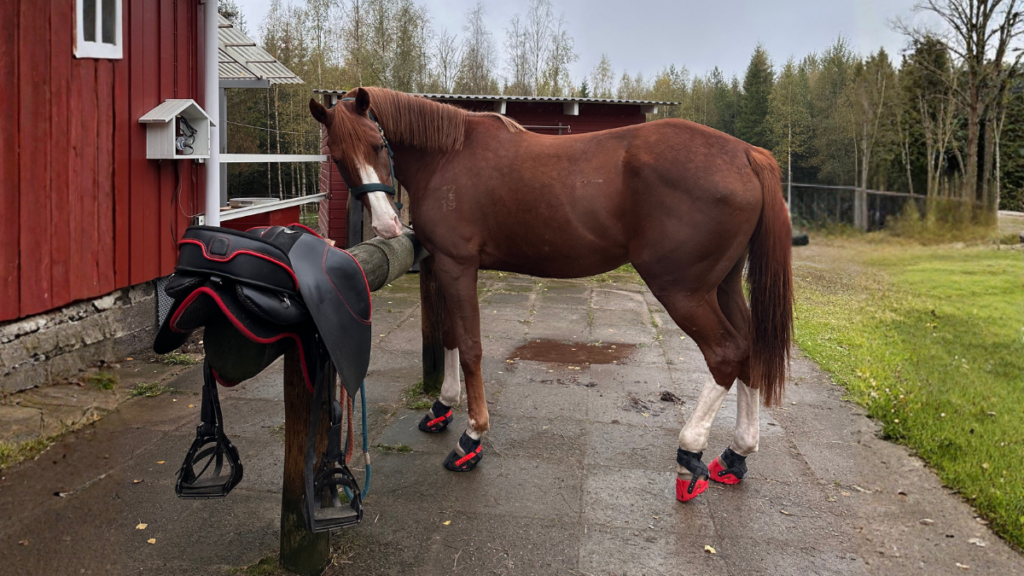
If your horse is foot sore, Flex Boots with pads provide instant, unbeatable comfort. The patented insole design acts like an air cushion, so it helps sore hooves as soon as you put the boots on. Pads in the boots increase the cushioning and shock absorption even more.


Then there’s spring grass. As it starts to grow, it becomes high in sugar, which increases the risk of inflammation and laminitis for all horses. You can learn more about laminitis in our other blog post.
Helping your horse through spring
Good hoof care is essential year-round, but spring is a key time to stay on top of it. Here are a few things you can do:
- Learn to maintain the hoof between trims. Backing the toe and rounding the hoof wall weekly can make a big difference in promoting a healthy hoof shape.
- Allow hooves to exfoliate naturally in turnout. When the turnout has varied surfaces, including some more abrasive ones, the hooves will wear out and exfoliate naturally. Each horse is an individual and how much natural wear is appropriate for them should be assessed on a case-by-case basis. If the hooves wear out too much, Flex Boots can be used during turnout too to provide protection.
- Use boots when working. Always use hoof boots when riding or asking the horse to do any work. Flex Boots provide the best balance of protection and comfort for spring hooves; they’re the softest on the market but offer top-level protection, supporting the natural function of the hoof.

Final thoughts
Exfoliating soles are a normal part of seasonal hoof change. With a bit of knowledge and the right tools, you can help your horse transition through spring comfortably and safely. Whether it’s understanding retained soles or choosing the right hoof boots, your care makes all the difference.