
Author : Alicia Harlov
Alicia Harlov is one of Flex Boots’ Equine Educators and Barefoot Trimming Specialists, where she creates video content as well as written articles pertinent to barefoot hoof health and soundness. Outside of Flex Boots, Alicia is a PHCP-certified hoofcare provider and program mentor who lives on the North Shore of Massachusetts, where she runs a hoof rehabilitation facility with a special focus on navicular horses. She pursues continuing education for hoofcare, equine nutrition and biomechanics at every opportunity, from sources around the world.
Are All Heel First Landings “Good”?
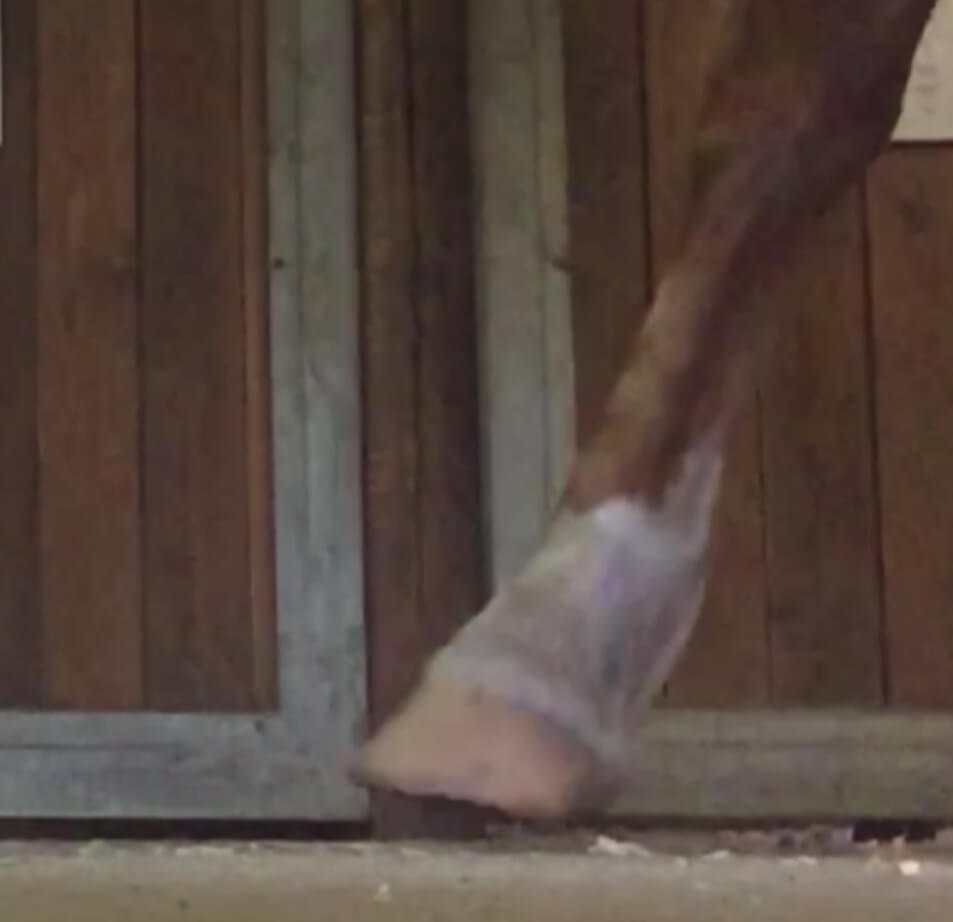
In the hoof rehabilitation world, heel first landings is a common topic. For many horse owners learning about biomechanics for the first time, hearing the phrase “you want a heel first landing” almost becomes synonymous with “healthy movement.” In many cases, that’s true. On flat, even ground at a forward walk or faster gait, a balanced heel first landing is generally considered one of the hallmarks of a comfortable, functional hoof.
But as with many things in hoof care, the reality is more nuanced than a simple checklist item.
Not all heel first landings are necessarily “good,” and not all toe first landings are caused by the same issue – or even pathological in every circumstance! To really understand what landing patterns are telling us, we have to look at the horse as a whole: comfort, posture, pathology, terrain, compensation patterns, trimming, protection, and movement mechanics.
Ironically, my own journey into hoof rehabilitation started with a horse diagnosed with navicular disease, so heel first landings quickly became something I obsessed over. Like many owners trying to rehab a sore horse, I learned to watch slow motion videos frame by frame, searching for tiny clues in movement patterns. Was the horse landing heel first? Was the toe stabbing the ground? Was one heel landing before the other? Was the horse protecting one side of the foot?
The more horses I watched, the more I realized that landing patterns are not just about “good” or “bad” feet. There are a myriad of reasons why a horse might land and load a certain way, and those reasons aren’t always bad.
What Is a Heel First Landing?
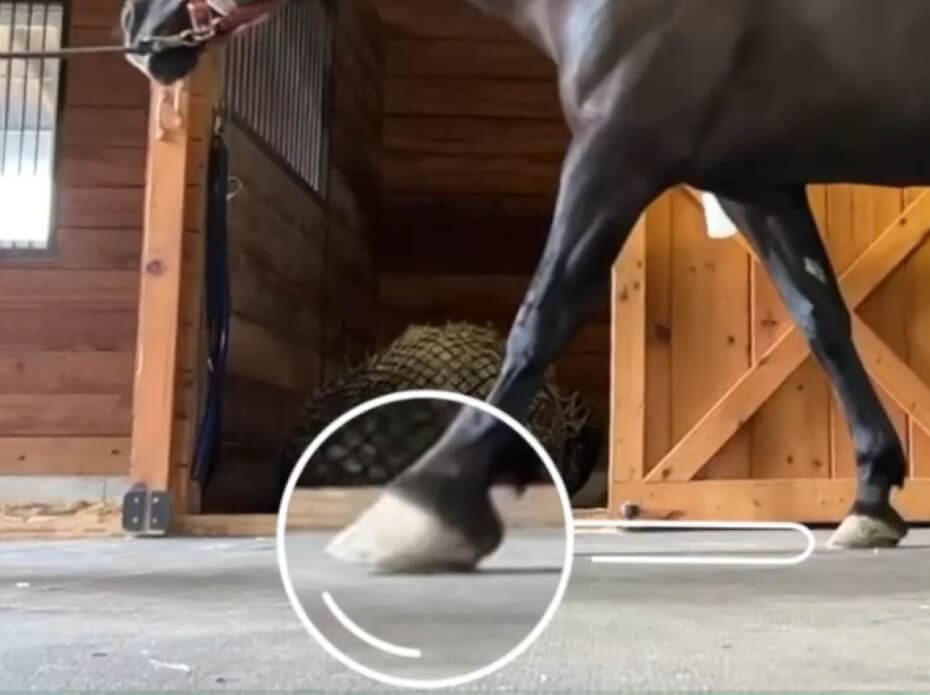
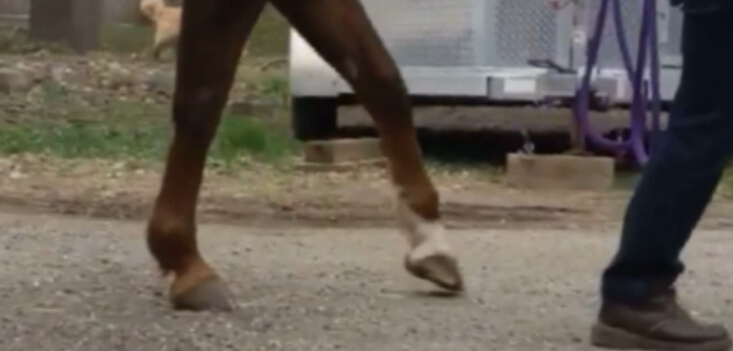
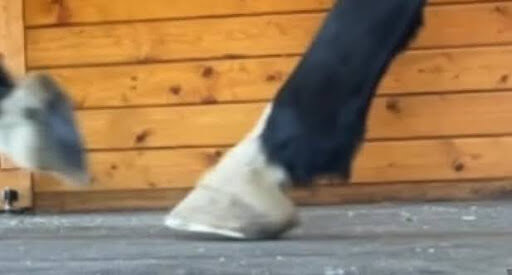
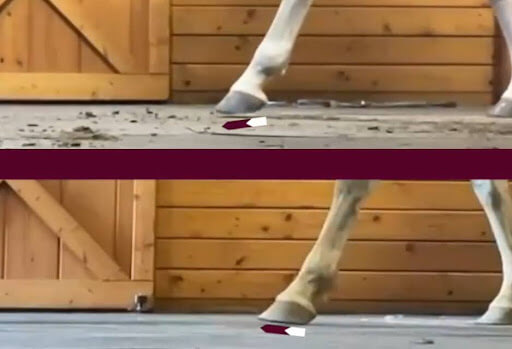
A heel first landing occurs when the heels contact the ground before the toe during the impact of the stance phase of the stride. Ideally, both heels land evenly and simultaneously, allowing the back of the foot to absorb and dissipate concussion before the rest of the hoof loads.
On flat, level footing at a forward walk or faster gait, this type of landing is generally considered biomechanically efficient and healthy. You can often identify it in slow motion video by looking for:
- A straightened carpus/knee at the moment of impact
- A slight upward tip of the toe as the heel touches down
- Even loading across both heels (moreso for front hooves, as hind hooves anatomically tend to load slightly laterally first)
- Smooth transition from landing to breakover
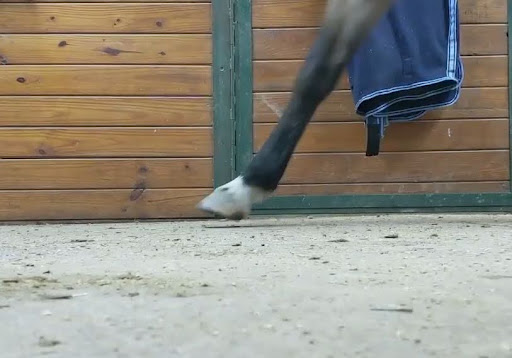
In person, these details can be difficult to see in real time, which is why slow motion video can be such a valuable tool for owners and hoof care professionals alike.
However, it is important to take context into consideration. There are situations where a heel first landing may naturally change. For example:
- Going uphill often “forces” a toe first landing to help with impulsion and momentum uphill
- Going downhill may exaggerate heel impact
- Deep footing changes preferential landing and loading
- Speed and terrain alter stride mechanics
Since all of these factors can change how a horse moves, when we discuss heel first landings in hoof rehabilitation, we are typically referring specifically to movement on flat, even terrain.
The Importance of Heel First Landing
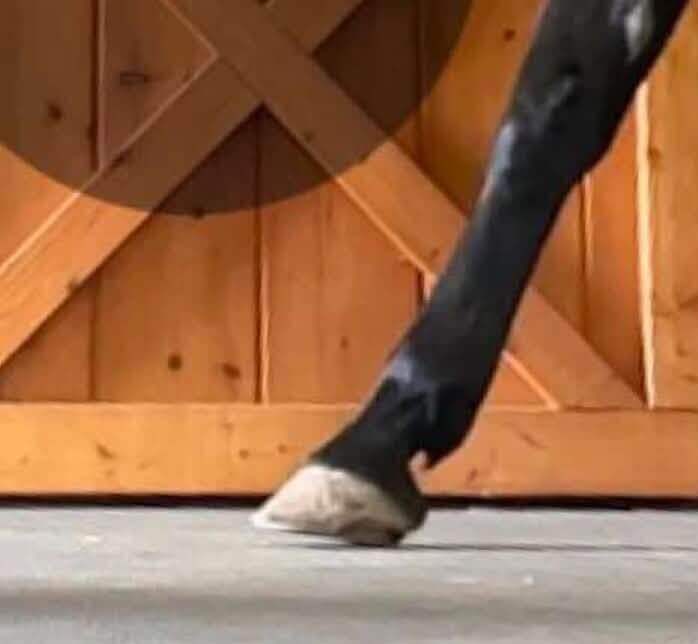
The back of the foot is designed to absorb shock.
Structures such as the frog, digital cushion, lateral cartilages, and even heels and bars all contribute to dissipating concussion and stabilizing the limb during impact. At landing, the tendons and ligaments of the lower limb – particularly the superficial and deep digital flexor tendons – are under tension and prepared to stabilize the foot and disperse energy appropriately.
In a balanced heel first landing, the hoof’s shock-absorbing structures are able to function the way they were biomechanically designed to function. The impact is distributed through the back of the foot before loading progresses through the rest of the hoof and limb.
This is important because movement directly influences the health of the structures of the hoof- both internally and externally. Proper loading stimulates circulation, strengthens tissues, and helps maintain a healthier internal hoof over time.
In many rehabilitation cases, encouraging comfortable heel first movement becomes an important goal because correct movement can help facilitate healing, much like physical therapy can rehabilitate tissues in humans.
Why Horses Land Toe First
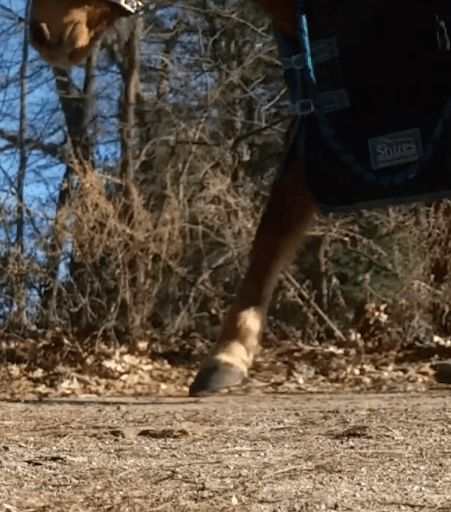
On flat, even footing, a persistent toe first landing almost always raises a red flag.
While there can occasionally be temporary or situational reasons for altered movement, horses typically avoid landing heel first because loading the back of the foot hurts.
A toe first landing is often a compensation pattern designed to protect painful structures within the caudal hoof.
Potential causes may include:
- Thrush, including deep central sulcus infections
- Frog weakness or sensitivity
- Contracted heels
- Underrun heels
- Thin soles
- Subclinical laminitis
- Navicular region pain
- Bruising
- Soft tissue injury
- Coffin joint discomfort
- Improper trimming
- Lack of protection on challenging terrain, especially for weaker hooves
Even seemingly “minor” issues like thrush can dramatically affect landing patterns. A horse with a painful central sulcus split, for example, may avoid heel loading simply because impact on the back of the foot is uncomfortable. Unfortunately, that compensation itself can create a cycle.
Repeated toe first landings alter how forces move through the hoof and limb. Instead of allowing the caudal structures to absorb concussion, the impact can lead to those forces becoming concentrated in joints and through soft tissue. Over time, this can contribute to additional strain on the limb and worsening problems over time.
The hoof was not designed to repeatedly stab its toe into the ground first, over and over again.
Are All Heel First Landings Healthy?
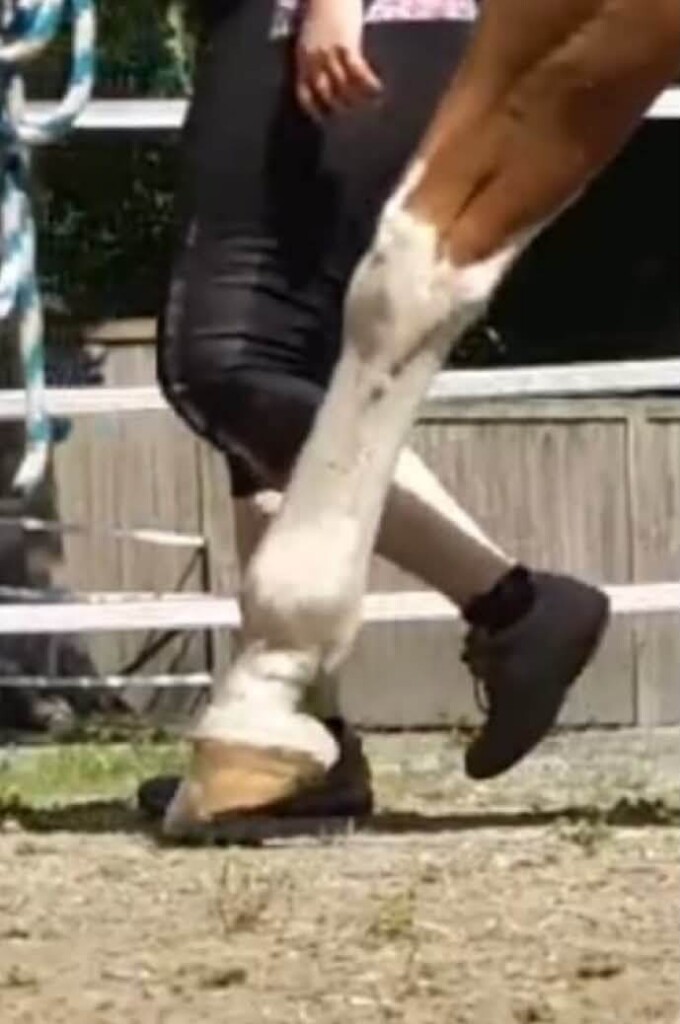
While a heel first landing on flat, even terrain typically means a horse is willing to fully extend its limb, a horse technically landing heel first does not automatically mean the horse is comfortable, functional, or biomechanically healthy.
For example:
- A horse with active laminitis may land excessively heel first to avoid loading a painful toe
- A horse may “slam” the heels into the ground abruptly rather than loading smoothly
- One heel may consistently land before the other
- The horse may still move stiffly or compensate elsewhere in the body, even with a heel first landing
Simply checking “heel first landing” off the list when watching biomechanics might miss an early laminitic case, or even soft tissue damage in the limb leading to an excessive pathological toe flip.
A healthy landing is generally confident, smooth, and even, with the horse appearing comfortable and willing to move forward freely. Rather than looking abrupt, guarded, or choppy, the movement should appear fluid throughout the entire limb and body, with the horse smoothly transitioning through impact, loading, and breakover without obvious hesitation or compensation.
The horse should appear willing to move forward, comfortably extend the limb, and transition fluidly through the stride without obvious hesitation.
An exaggerated or abrupt heel first landing may still indicate pathology or discomfort elsewhere in the foot or body.
The Leg Bone Is Connected to the … Entire Body
Landing patterns should never be evaluated in and of themselves, in isolation. A horse’s posture, conformation, body soreness, previous injuries, and many more factors all influence how the foot lands.
A horse’s landing pattern can also be influenced by factors far beyond the hoof itself. Horses with arthritis, for example, may shorten their stride or move more cautiously in an effort to reduce discomfort within painful joints. Restriction in the shoulder, neck, or upper body can alter how the limb loads and lands, sometimes creating compensation patterns that appear to originate in the foot. Likewise, hind limb discomfort may shift more weight onto the front limbs or change how the horse moves through the entire body, affecting front foot landing patterns.
Environmental factors can impact how the horse moves as well. Uneven terrain, deep footing, rocky ground, or slippery surfaces can temporarily change how a horse lands and carries itself, as a means of self preservation to naturally avoid injury, not just discomfort. Even issues such as poor saddle fit or generalized body soreness can influence posture, movement, and weight distribution, reinforcing the importance of evaluating the horse as a whole rather than focusing solely on the feet.
This is one reason why watching horses move from multiple angles and on different surfaces can be so valuable.
Many horses will appear relatively comfortable moving straight on soft footing, yet reveal significant compensation patterns on hard ground or turns.
Using Slow Motion Video
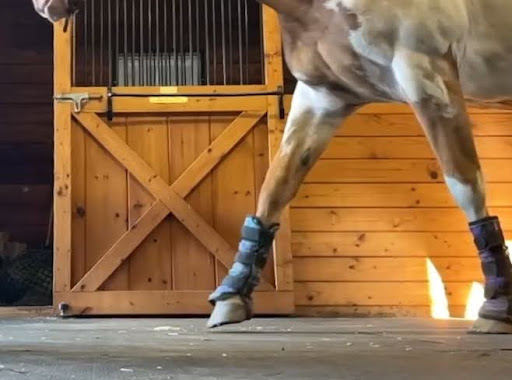
Slow motion video has become one of the most valuable tools in modern hoof rehabilitation.
Many subtle landing abnormalities happen far too quickly to reliably assess in real time. Slow motion allows owners and professionals to:
- Review landing timing repeatedly
- Compare left and right limbs
- Observe mediolateral balance
- Evaluate stride length and posture
- Monitor changes over time
- Detect subtle asymmetries
Watching video over time can also help track rehabilitation progress and determine whether changes in trimming, protection, terrain, or management are improving comfort.
Achieving Better Landings
One big misconception in hoofcare is the idea that you can simply “trim a horse into” a heel first landing.
While you can technically trim a hoof to “force” a heel first landing, in reality, healthy movement should come from improving comfort, not forcing mechanics. This helps to not force a horse to load a weaker structure before it’s ready, or change movement in a limb that is compensating for something else going on. If a horse avoids heel loading because the back of the foot hurts, removing more hoof or aggressively reshaping the foot may actually worsen the problem. Instead, improving landing patterns can often be done by addressing the root cause of any discomfort.
That may involve:
- Aggressively treating thrush
- Improving frog health
- Addressing diet and metabolic issues
- Supporting healthier laminae connection
- Avoiding over-trimming
- Using boots and pads
- Changing terrain or footing to stimulate the foot
- Providing appropriate movement
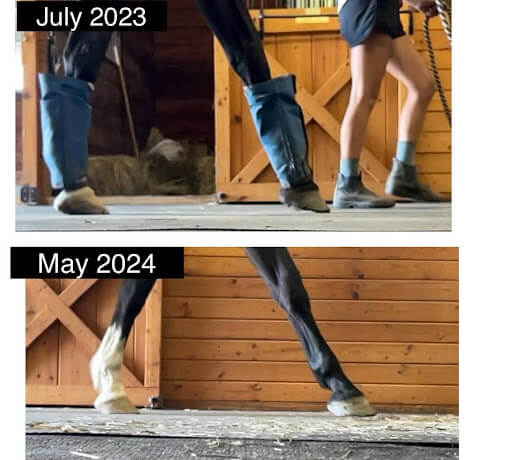
Protection can be especially valuable during rehabilitation. Boots and pads allow the horse to experience more comfortable movement while the hoof recovers and strengthens.
Interestingly, horses often show clear preferences regarding pad density and thickness. One day a horse may prefer thick, soft padding, while another day they may move better in firmer or thinner support. Paying attention to those preferences can provide important feedback about comfort and loading.
Heel First Landings as Communication
One of the most valuable mindset shifts in hoof rehabilitation is learning to stop viewing movement patterns as “good” or “bad” in isolation. Because the hoof (and our horses) are smart, they can change their movement and loading patterns to help preserve their soundness, not just avoid pain. These landings can tell us how the horse experiences the ground, reveal compensation, or point to areas we may need to explore more in depth.
When paying attention to our horse’s movement, it is important for us to ask questions like:
- Is the horse comfortable?
- Is the landing smooth and confident?
- Is the horse willing to load the back of the foot?
- Is the movement improving over time?
- Is the horse compensating somewhere else?
- What might the horse be trying to avoid?
When viewed this way, heel first landings become less about chasing an ideal and more about understanding the horse’s biomechanics and comfort honestly. Healthy movement is not something we force onto the horse, it is something the horse achieves when comfort, function, and support are working together.