
Author : Alicia Harlov
Alicia Harlov is one of Flex Boots’ Equine Educators and Barefoot Trimming Specialists, where she creates video content as well as written articles pertinent to barefoot hoof health and soundness. Outside of Flex Boots, Alicia is a PHCP-certified hoofcare provider and program mentor who lives on the North Shore of Massachusetts, where she runs a hoof rehabilitation facility with a special focus on navicular horses. She pursues continuing education for hoofcare, equine nutrition and biomechanics at every opportunity, from sources around the world.
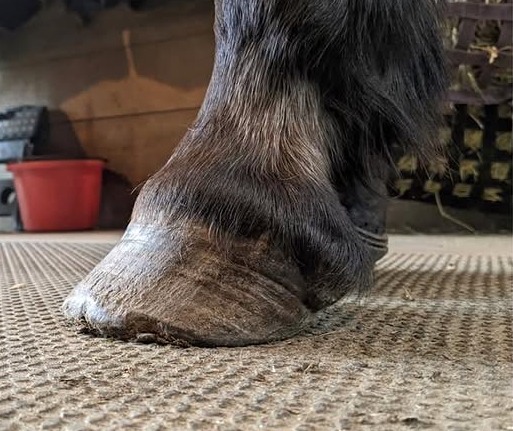
For many horse owners, hoof problems can become something that’s just part of the horse’s life.
“My horse just has bad feet.”
“He has to wear shoes or he’ll be sore.”
“She always has that wall crack.”
“He just has thin soles.”
Over time, these issues can become accepted as part of that horse’s normal… But they shouldn’t be.
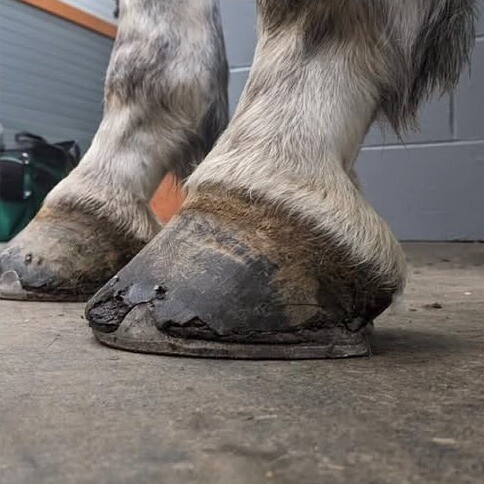
While genetics, previous damage and pathology, and certain diseases certainly influence hoof health, a healthy hoof is incredibly adaptable. The hoof is a complex, living structure that constantly grows, adapts, and responds to its environment. When we stop viewing hoof problems as inevitable defects and instead see them as symptoms, we can begin addressing the root causes rather than simply managing the consequences.
Hoof rehabilitation is not about pulling shoes off every horse or promising miracle cures. It’s a systematic approach to improving hoof function by identifying and addressing the factors preventing healthy hoof growth. That may include nutrition, trimming, movement, environmental management, metabolic management, and hoof protection when appropriate.
If your horse shows any of the following signs, it may be time to investigate what might be going on under the surface.
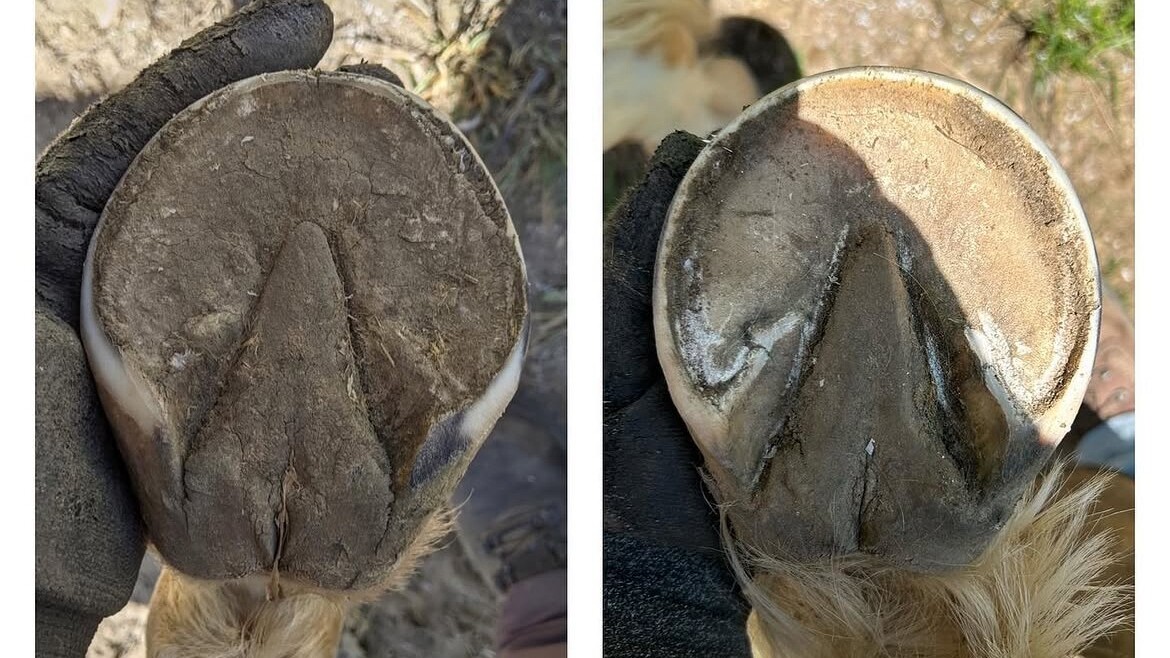
1. Your Horse “Needs Shoes” to Stay Comfortable
One common phrase heard around barns is: “He can’t go barefoot. If he loses a shoe, he’s immediately crippled.”
Many horses truly become uncomfortable without hoof protection. This shouldn’t be viewed as normal – in these instances, the most important question to ask is why.
Healthy hooves are designed to tolerate normal movement over a variety of surfaces. If a horse becomes painfully sensitive immediately after losing a shoe, that often indicates the foot itself is struggling, rather than proving the horse has a “deficiency of metal on the bottom of its foot.”
Possible reasons include:
- Thin or weak soles – often a symptom of diet or metabolic issues
- Metabolic issues leading to laminae weakness
- Weak frogs due to lack of engagement
- Poor digital cushion development
- Ongoing inflammation
- Nutritional deficiencies
- Previous damage that never fully healed
Shoes often provide immediate comfort by reducing sole loading or stabilizing the hoof capsule. It can be tempting to just put shoes on and assume the issue is “fixed.” However, comfort provided by a shoe should not prevent us from investigating why the foot required that protection in the first place.
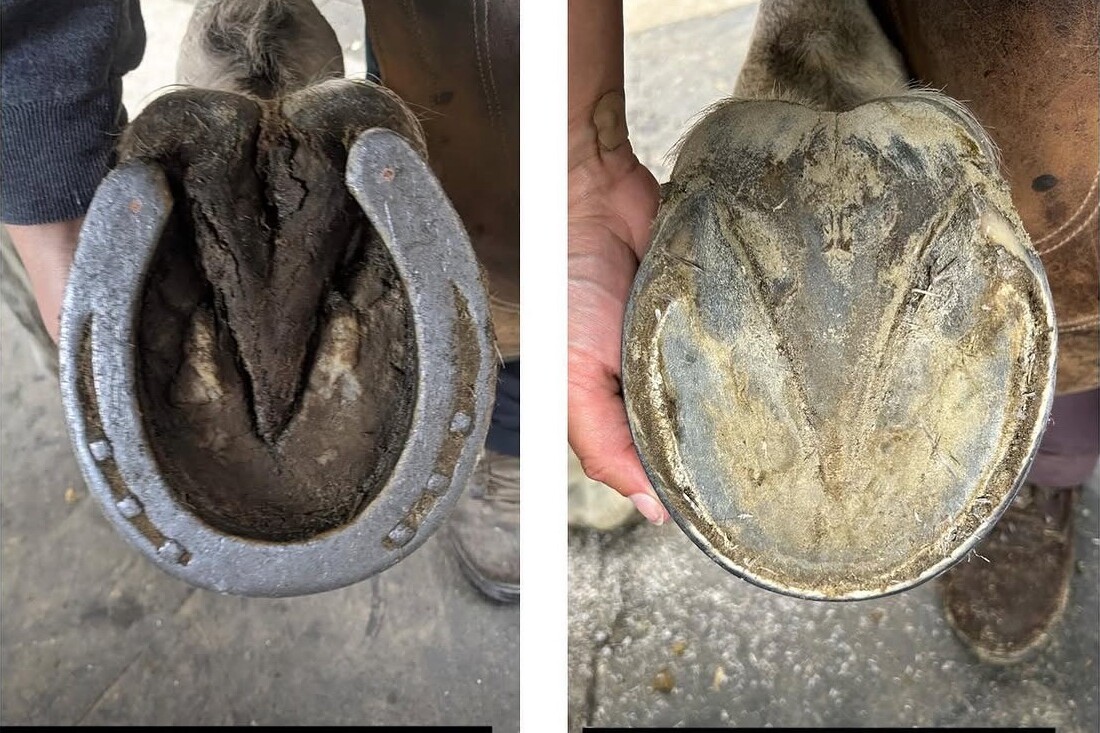
It’s important to look into if we can improve the hoof enough that it becomes stronger, healthier, and more resilient over time.
Not every horse can be comfortable barefoot, but every horse deserves the opportunity to maximize the health of the structures within the foot that is beneath that shoe.
2. White Line Separation Keeps Coming Back
Many owners spend years fighting white line separation. They clean it out, apply topical treatments, pack separation, and treat the infection.. And then a few months later, it returns.
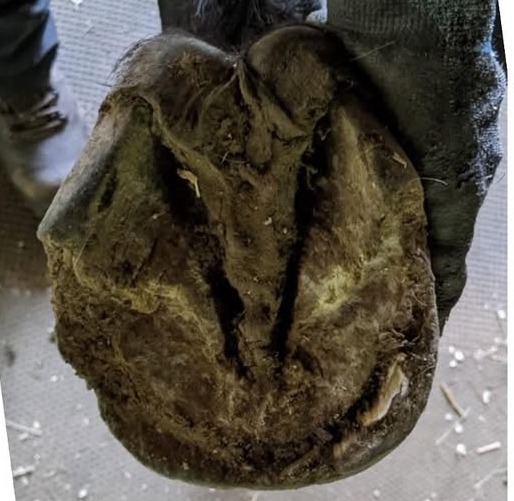
This might come as a surprise to some (ha ha), but the white line itself isn’t actually supposed to separate!
It functions as the connection between the hoof wall and the internal structures of the foot. White line separation means there is a lack of integrity in that connection, and finding the reason why is important for growing a healthier hoof.
Common contributing factors include:
- Chronic laminae inflammation (due to diet or metabolic issues)
- Long hoof wall creating leverage
- Metabolic disease or disorder
- Poor trimming balance
The bacteria or fungi often receive the blame because they are visible, but in reality, a healthy hoof should be able to combat the microbes it meets daily in its environment. If they are able to take hold, that usually means there was something compromising the hoof health to start. Treating only the infection without correcting the mechanical or metabolic cause is much like repainting a water-damaged wall without fixing the leaking roof. You will keep seeing the damage over and over again until the root cause is addressed.
Successful rehabilitation focuses on restoring a healthier connection by addressing the underlying reasons the white line failed in the first place.
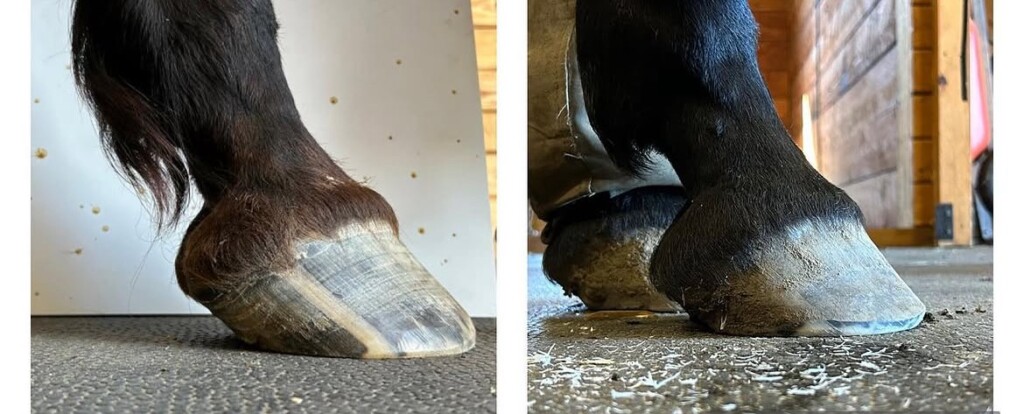
3. Your Horse’s Hooves Always Have Cracks, Rings, or Poor-Quality Growth
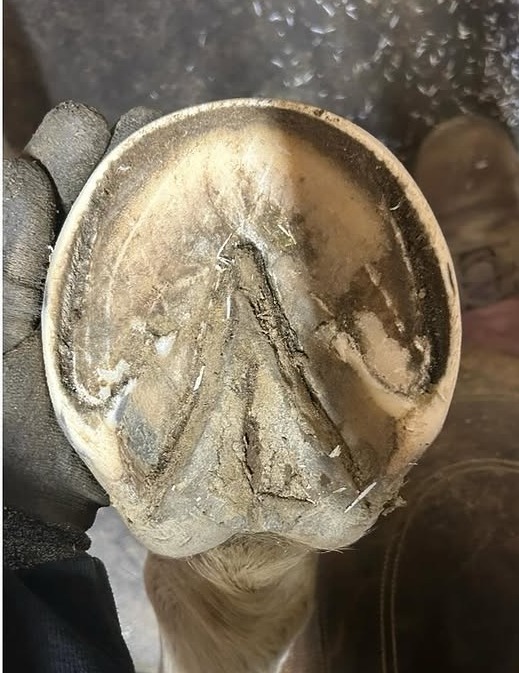
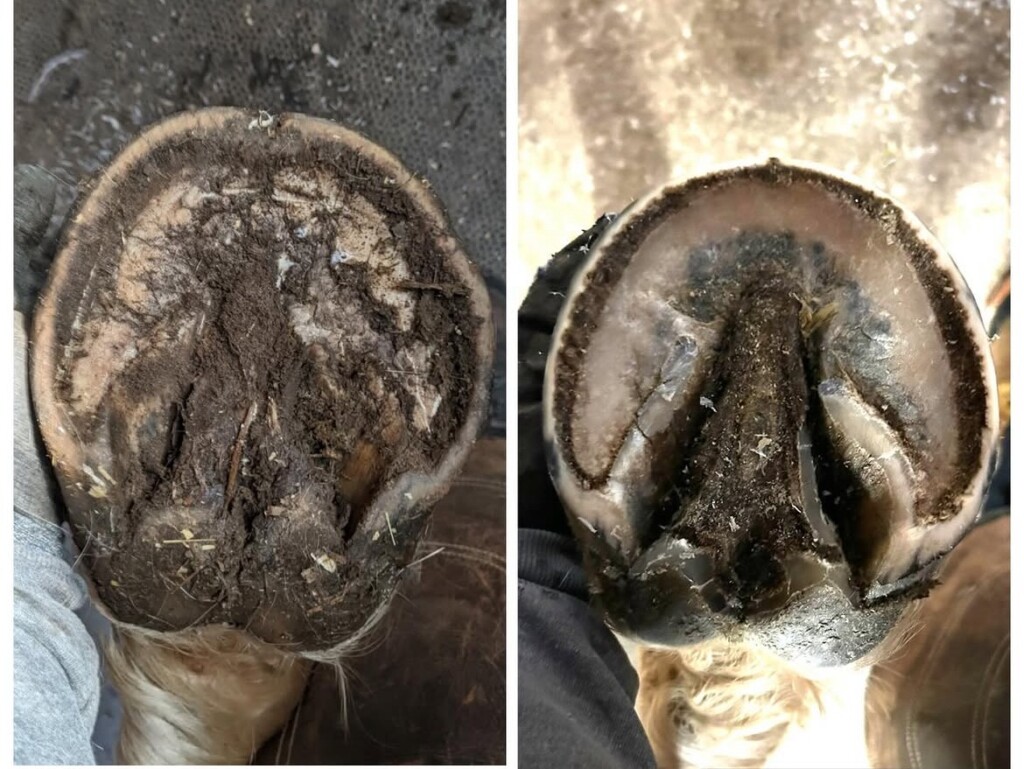
The hoof wall tells a story. Every new inch of horn reflects the conditions under which it grew. While small cosmetic imperfections can happen occasionally, persistent abnormalities likely means something else is going on.
Examples or warning signs include:
- Horizontal event lines
- Deep growth rings
- Frequent wall cracks
- Shelly or crumbly horn
- Frequent wall chipping
- Uneven growth around the hoof
These changes often indicate the hoof either experienced some inflammation while growing, or wasn’t provided with the building blocks needed to grow healthy wall.
That may result from:
- Illness
- Dietary changes, deficiencies, or imbalances
- Metabolic dysfunction
- Laminitic episodes
- Chronic inflammation
- Improper hoofcare or cycle length
One event line after a fever isn’t necessarily concerning, since you can pinpoint the cause and know it likely won’t happen again. On the other hand, repeated rings appearing trim after trim suggest the hoof is continually responding to some ongoing challenge. A rehabilitation plan works to create consistent, healthy growth rather than simply removing damaged hoof at each appointment. After all, every healthy hoof starts with healthy new growth.
4. Your Horse Has Thin Soles or Is Frequently Sensitive
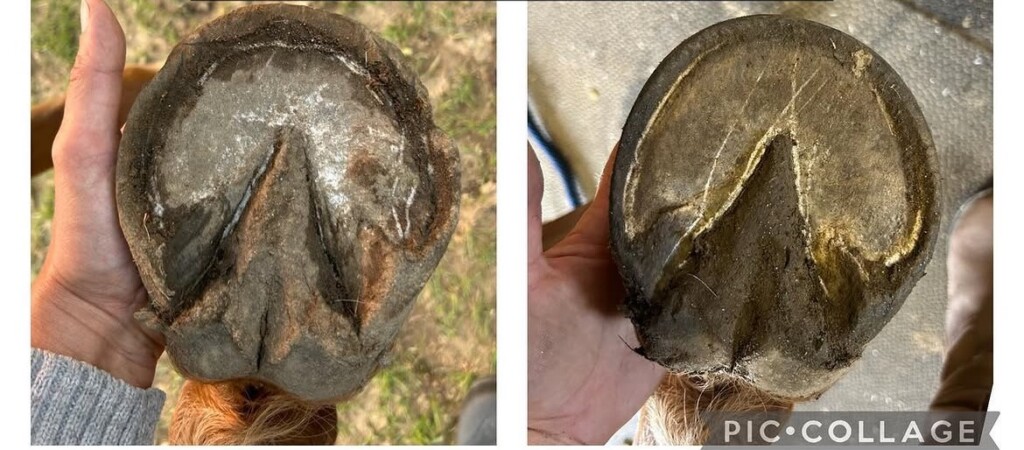
Some horses seem to bruise every time footing changes. Others become sore after trimming. Some can’t comfortably walk across gravel without protection.
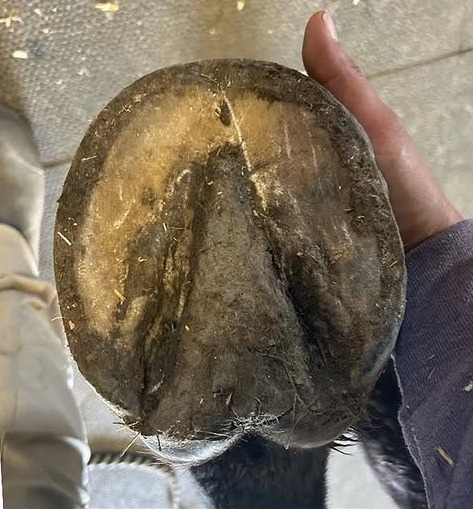
Thin soles are often accepted as an inherited trait that cannot be changed. While genetics absolutely influence sole thickness, many horses can develop healthier, stronger soles than they currently have.
Thin soles may develop or worsen because of:
- Excessive sole removal during trims
- Chronic inflammation within the foot (often due to diet or metabolic issues)
- Limited stimulation during development
- Weak digital cushion structures due to lack of stimulation
- Nutritional deficiencies
- Chronic laminitis
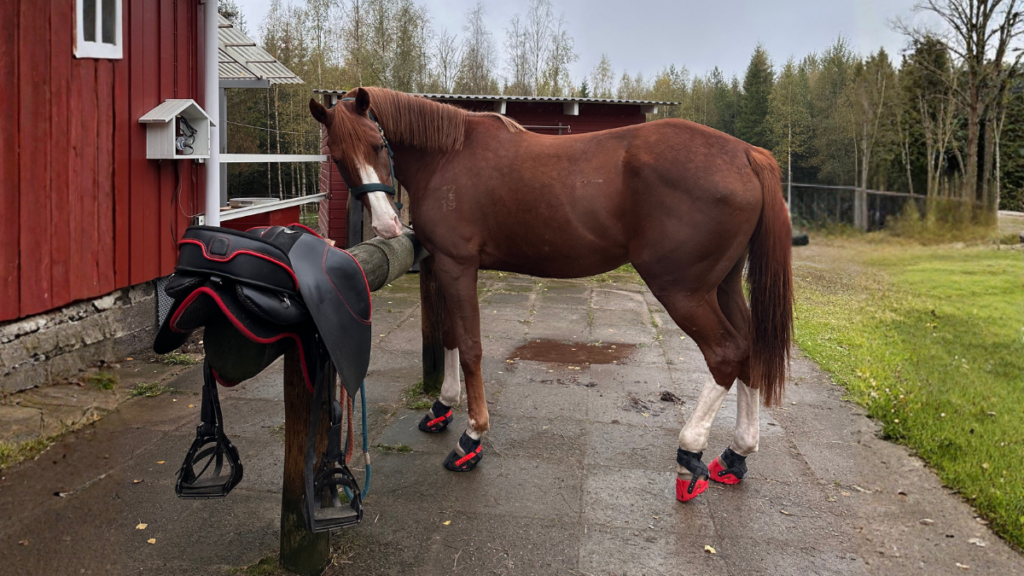
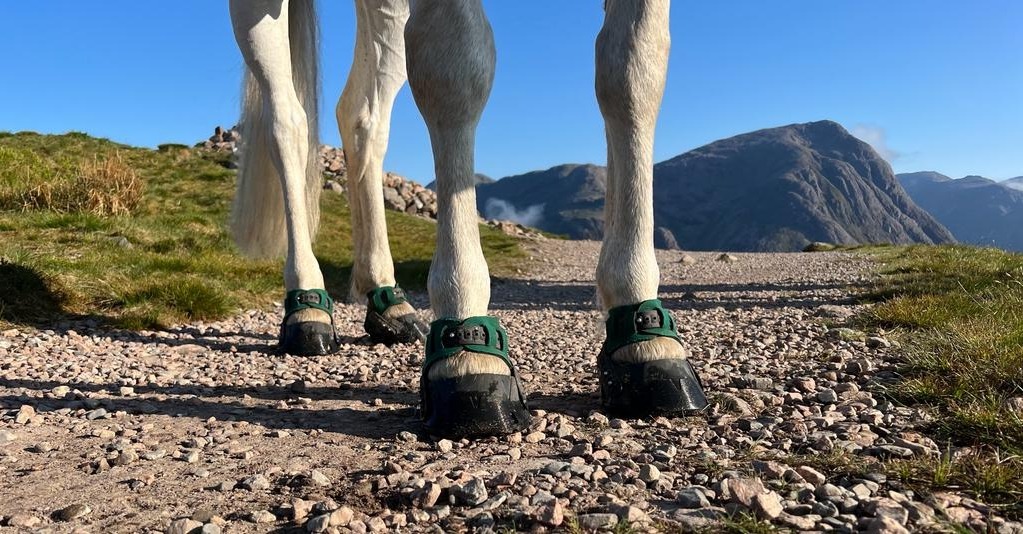
The sole is not simply dead material, it is living tissue constantly being produced. If the sole is thin or not sufficient, it’s important to look into why it’s not being produced properly. Protecting the sole while encouraging healthier growth often allows horses to gradually develop stronger, more resilient feet over time, and options like boots and pads can be incredibly important while the building blocks are put in place to get the foot stronger.
We don’t want to force horses onto uncomfortable terrain to “strengthen their feet,” we want to provide enough protection and appropriate stimulation, diet, and environment that allows healthier structures to have the opportunity to develop.
5. Your Horse Never Quite Stays Sound
Perhaps the biggest sign a horse needs rehabilitation isn’t a visible hoof problem at all, it’s a horse that never seems completely sound.
Maybe they’re:
- Frequently short-strided.
- Reluctant on hard ground.
- Stumbling more than expected.
- Landing toe first.
- Performing well one month and sore the next.
- Repeatedly diagnosed with bruises or abscesses.
- Constantly requiring injections, medications, or shoeing changes just to stay usable.
These horses often get labeled as “high maintenance,” but chronic discomfort should never become normal or just an acceptance of a part of management. The hoof forms the foundation for the entire musculoskeletal system, and when the foot isn’t functioning efficiently, every structure above it ends up compensating.
A rehabilitation plan looks beyond the immediate lameness and asks:
- Is the hoof balanced for this individual horse?
- Is there chronic inflammation?
- Is nutrition supporting healthy horn production?
- Is the horse’s movement appropriate?
- Is the environment encouraging healthy feet?
- Are there underlying metabolic issues?
- Is the workload too much for this horse right now?
Sometimes the hoof is the primary problem, and sometimes it is simply reflecting problems elsewhere in the horse. Either way, ignoring the warning signs rarely leads to lasting soundness.
Rehabilitation Isn’t About Perfection
Not every horse will grow perfect textbook hooves. Not every horse will become comfortable barefoot. Not every crack will disappear overnight.
And some horses will always benefit from therapeutic options like boots and pads because of previous injuries, conformational challenges, or medical or metabolic issues.
Hoof rehabilitation isn’t about proving a philosophy. It’s about giving each horse the healthiest, most functional feet possible based on their unique circumstances. That means asking better questions, addressing root causes whenever possible, and making management decisions that support long-term comfort rather than simply masking symptoms.
Healthy hooves are built through consistent, thoughtful management over time.
If your horse is showing one – or several – of these signs, it may be time to move beyond symptom management and develop a rehabilitation plan that addresses why those problems developed in the first place. Every horse deserves the opportunity to stand, and move, on the healthiest feet possible.