
Author : Alicia Harlov
Alicia Harlov is one of Flex Boots’ Equine Educators and Barefoot Trimming Specialists, where she creates video content as well as written articles pertinent to barefoot hoof health and soundness. Outside of Flex Boots, Alicia is a PHCP-certified hoofcare provider and program mentor who lives on the North Shore of Massachusetts, where she runs a hoof rehabilitation facility with a special focus on navicular horses. She pursues continuing education for hoofcare, equine nutrition and biomechanics at every opportunity, from sources around the world.
Walk through any tack store or browse horse social media for a few minutes, and you’ll quickly find shelves and advertisements filled with hoof oils, dressings, hardeners, conditioners, and “miracle” supplements promising stronger, shinier, healthier hooves. For horse owners struggling with poor hoof quality, these products can be incredibly appealing and seem like a convenient fix. After all, when we care deeply about our horses’ comfort and soundness, it’s natural to want a quick and simple solution.
Many hoof products are marketed with bold claims, like stronger hooves, instant moisture balance, tougher soles, or dramatic improvements in hoof quality. Some owners see a darker, shinier, smoother hoof and assume the topicals “must be working!” While it can be satisfying to see a shiny foot, cosmetic improvement is not necessarily the same thing as true hoof health.
The reality is that healthy hooves are usually built slowly over time through nutrition, movement, environment, trimming, and overall management, not simply through products painted onto the outside of the hoof wall.
Why Hoof Oils Cannot Change Hoof Quality Overnight
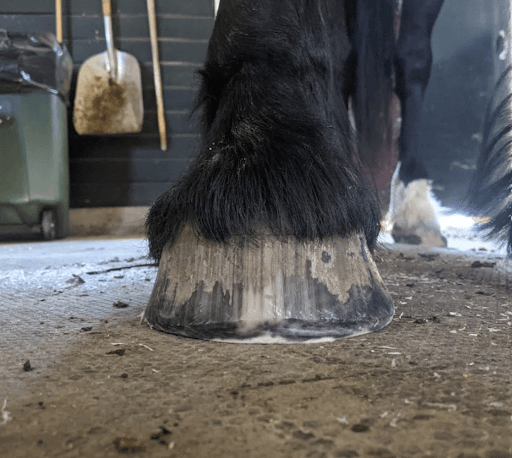
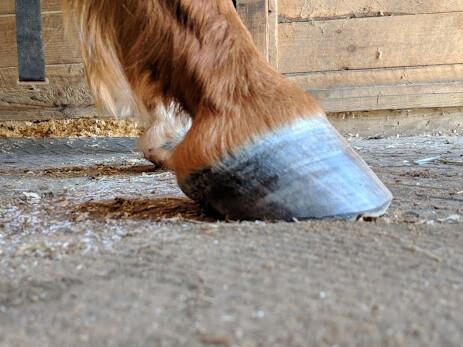
Understanding why hoof oils may not be all they’re cracked up to be starts with understanding what the hoof wall actually is. The visible hoof wall is primarily made of dead keratinized tissue, much like human fingernails or hair. Once that hoof wall has grown down from the coronary band, it is no longer living tissue capable of being “healed” or fundamentally transformed by topical products. Just like your chipped fingernail can’t repair its cracked areas without growing in a new healthy nail, the hoof is the same.
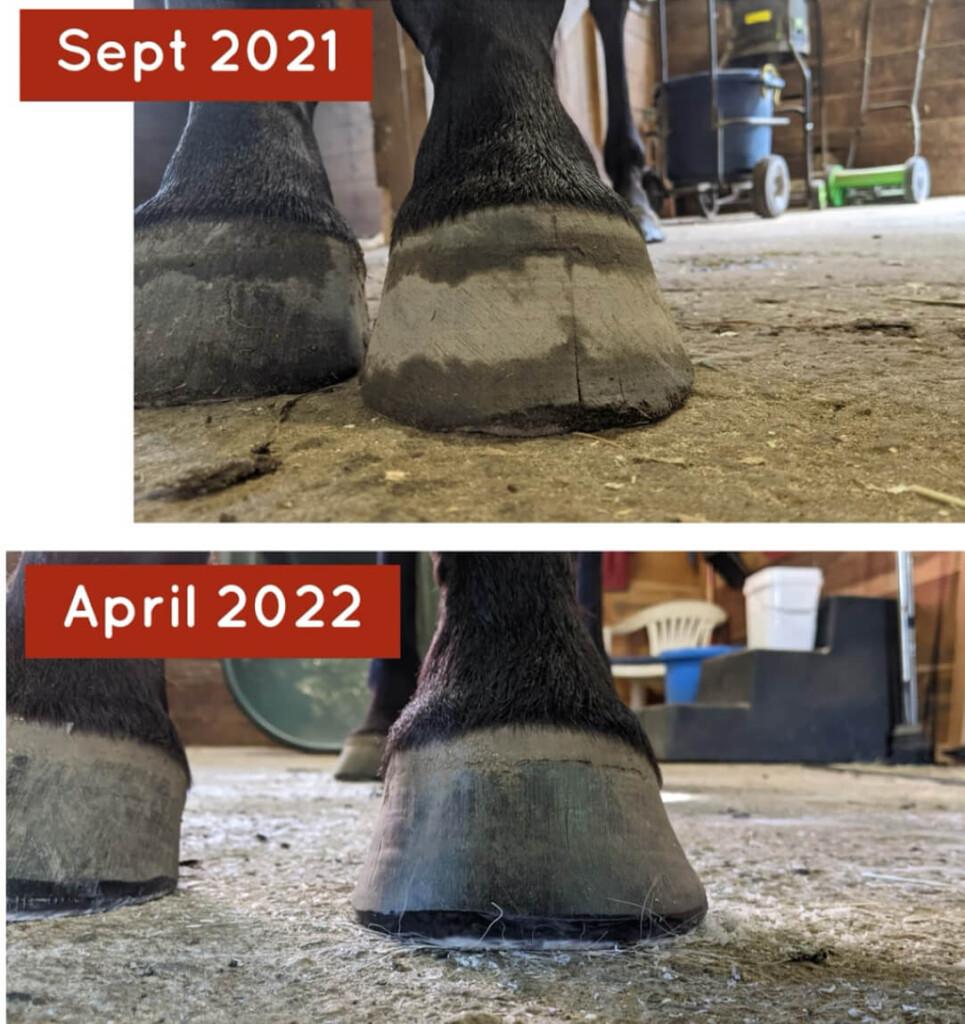
True hoof quality is created at the coronary band and corium, where new hoof is produced. The structures and cells responsible for growing healthy hoof horn are influenced internally by blood flow, nutrition, metabolic health and overall equine health.
On average, a horse grows approximately 6-10 millimeters of hoof wall per month, though growth rates vary depending on the individual horse. A full hoof wall replacement from coronary band to ground may take anywhere from 6–12 months, and sometimes longer in compromised horses. Because of this timeline, any product claiming to completely transform hoof quality in just days or weeks is unfortunately wishful thinking.
What Topical Hoof Products May Actually Do
This does not mean topical products do absolutely nothing. Some hoof oils and dressings can temporarily improve the appearance of the hoof by adding “shine” or darkening the hoof wall. Others may alter moisture exchange at the surface level for a short period of time. Certain hardeners may temporarily stiffen the outer layers of the hoof wall or sole. However, these effects are generally superficial and temporary. They do not necessarily improve the quality of the new hoof being produced internally at the coronary band. Not only that, but this can all come at the price of ultimately drying out the hoof, leaving room for microfissures to form that can allow microbial issues.
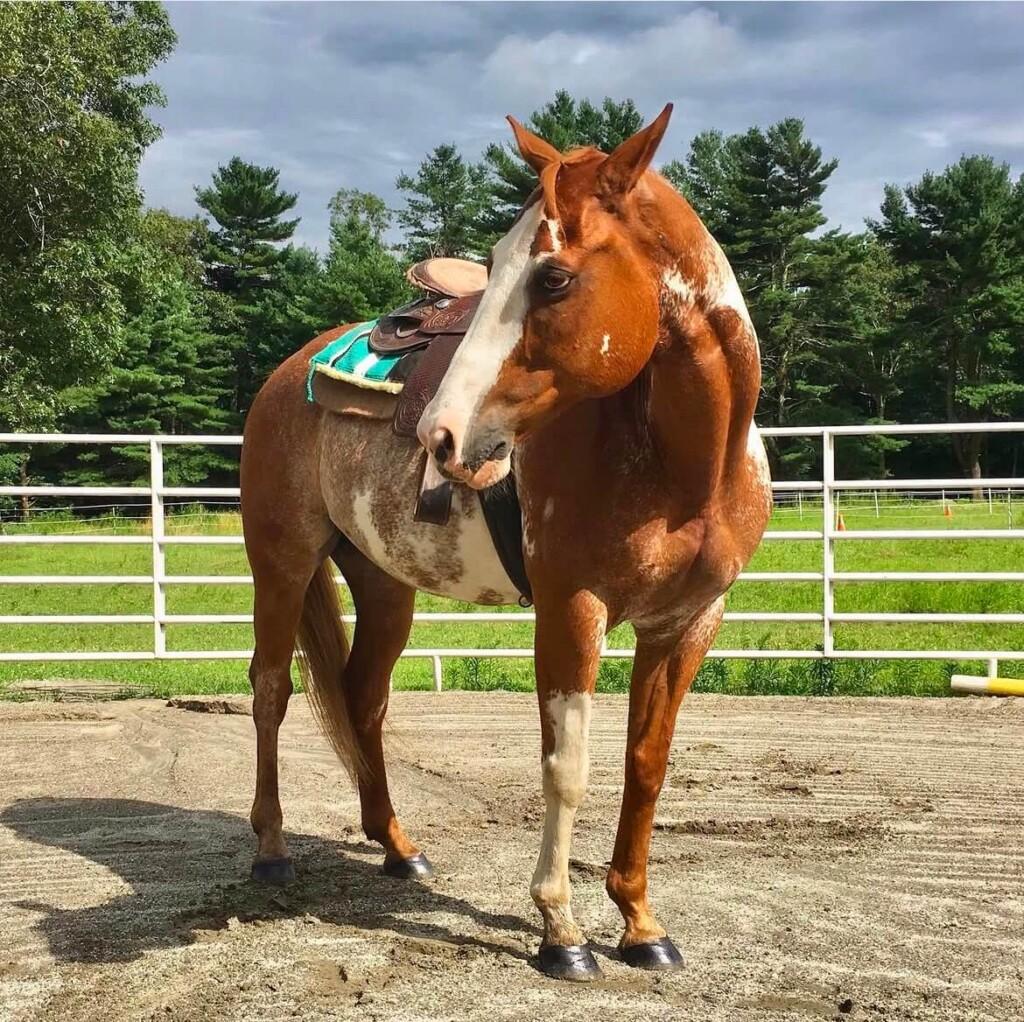
In some cases, topical products may help manage specific short-term situations. For example, certain antimicrobial products may assist with surface-level bacterial or fungal issues, and some sole tougheners may temporarily “harden” the hooves (by drying them out), and help horses working in particularly abrasive or wet conditions. But these products should generally be viewed as management tools rather than cures, and as mentioned above, can come with a price.
Another challenge is that cosmetic changes can sometimes create the illusion of improved hoof health while the underlying causes of poor hoof quality remain unresolved.
Hard Feet Do Not Equal Healthy Feet
A very common misconception in hoof care is the idea that harder hooves are always healthier hooves. In reality, healthy hooves need both strength and flexibility.
The equine hoof is designed to deform slightly during loading. Expansion, flexion, and shock absorption are all normal parts of hoof function. When the hoof lands, the structures within the back of the foot help dissipate force and reduce concussion throughout the limb. This natural deformation is an important part of healthy biomechanics.
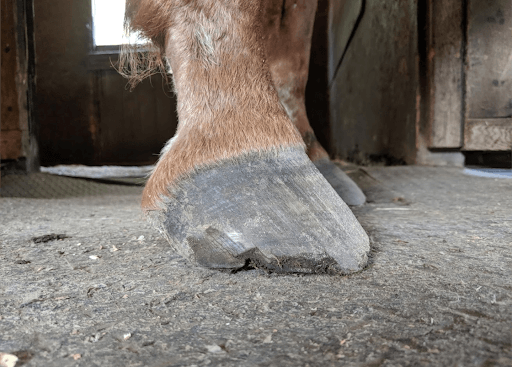
Overly dry, rigid, or brittle hooves may actually become more prone to cracking and chipping because they lose some of their ability to flex and absorb stress. In some cases, aggressive drying products or excessive use of hardeners can contribute to this brittleness.
A hoof that is naturally functional is not necessarily rock hard. The hoof has to have a delicate moisture balance to maintain both strength and function.
Commonly Over-Marketed Hoof Products
Many hoof products fall into categories that are heavily marketed toward owners searching for quick answers:
Hoof Oils and Dressings
These products often create a polished appearance and may temporarily alter surface moisture exchange, but they do not rebuild damaged hoof internally.
“Miracle” Hoof Hardeners or Tougheners
Some products may provide temporary protection or desensitization, but they cannot instantly create thick, healthy sole where internal structures remain compromised. While these may temporarily stiffen the sole or wall, this can open up the door to microfissures, a greater risk of microbial infections, or cracking or chipping.
Instant-Fix Supplements
Nutrition absolutely matters for hoof quality, but no supplement can override severe metabolic issues, poor forage balance, inadequate movement or chronic inflammation overnight.
Aggressive Disinfectants and Drying Products
Strong chemicals intended to “kill everything” may disrupt the natural balance of the hoof environment and sometimes contribute to excessive drying or irritation when overused.
Nutrition Matters
Unlike many topical products, nutrition truly does play a major role in hoof development. Deficiencies or imbalances in minerals, amino acids, protein, or excessive sugar and starch can absolutely affect hoof growth and quality.
For example, inadequate copper, zinc, essential amino acids, or poor overall forage balance may contribute to weak hoof horn, slow growth, or poor structural integrity. Horses with metabolic issues or chronic inflammation may also struggle to produce healthy hoof tissue.
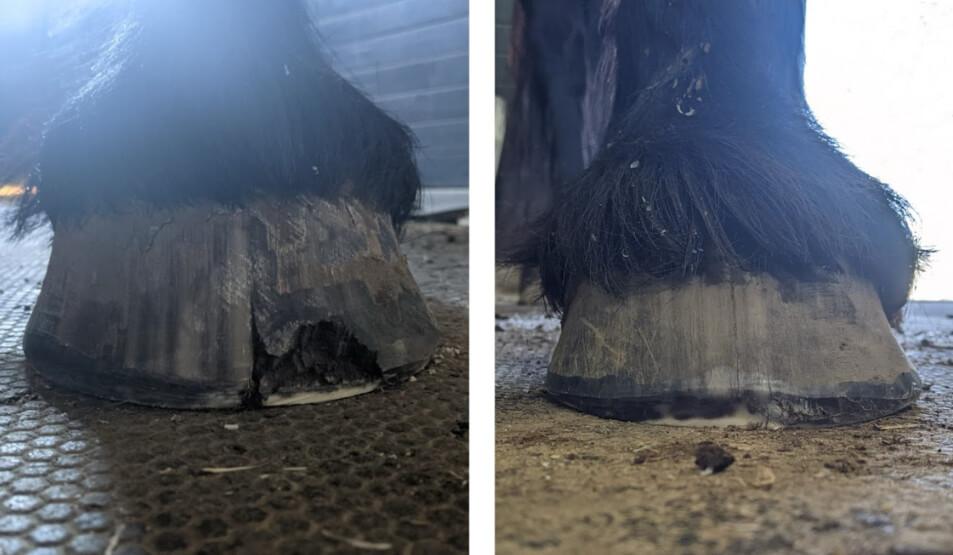
However, supplements are not magic solutions either. Adding a hoof supplement while ignoring underlying management problems likely won’t help hooves much at all. A horse with a poor overall diet, standing in chronically wet conditions, experiencing excessive leverage forces from long trim cycles, struggling with metabolic issues, or lacking adequate movement may continue to have poor hoof quality regardless of supplementation.
This is why balanced nutrition and forage analysis are often far more valuable than simply purchasing the most popularly marketed hoof supplement on the shelf.
Environmental and Management Factors Matter
Like nutrition, environment and management play enormous roles in determining hoof quality and comfort.
Repeated wet-to-dry cycling can weaken hoof walls and contribute to cracking or flaring. Poor hygiene may predispose horses to thrush, white line disease, and wall separation. Limited movement can reduce circulation and impair healthy hoof development. Long or inconsistent trim cycles may increase leverage forces and mechanical distortion.
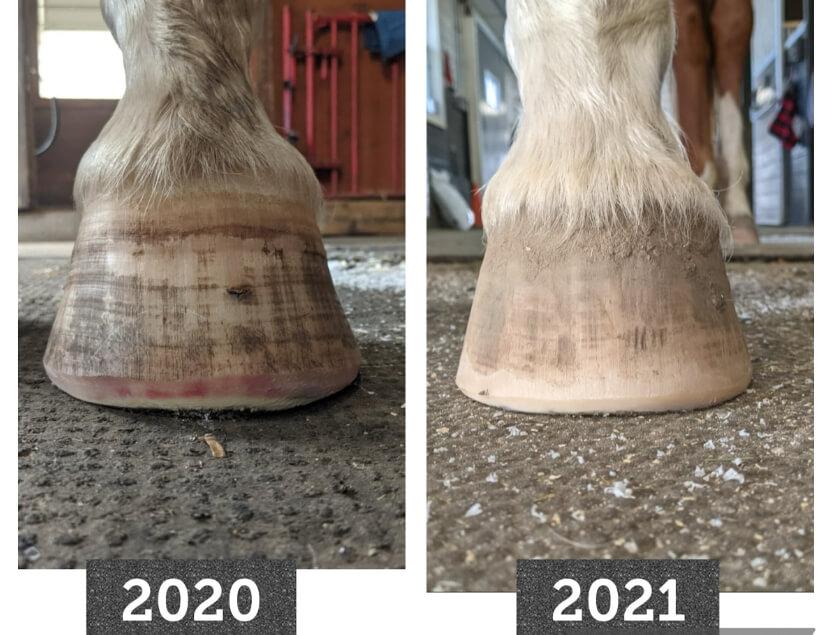
Metabolic health is also a major factor that is often overlooked. Horses with insulin resistance or PPID may show ongoing hoof quality problems regardless of topical treatments.
Healthy hooves are usually the product of many systems working together.
The Importance of Trimming and Mechanics
Mechanical forces have a tremendous impact on hoof quality. Even a well-grown hoof can become damaged when excessive leverage, imbalance, distortion, or abnormal movement and loading patterns are present. These can all increase stress on the hoof wall and internal structures. Cracks and wall separation are often heavily influenced by these mechanical forces.
This is one reason why topical products alone frequently disappoint owners. Painting products onto the hoof cannot compensate for these movement and balance issues.
Maintaining appropriate hoof shape and movement over time through thoughtful trimming and management is often far more influential than any dressing or oil.
Support for Weak Hooves
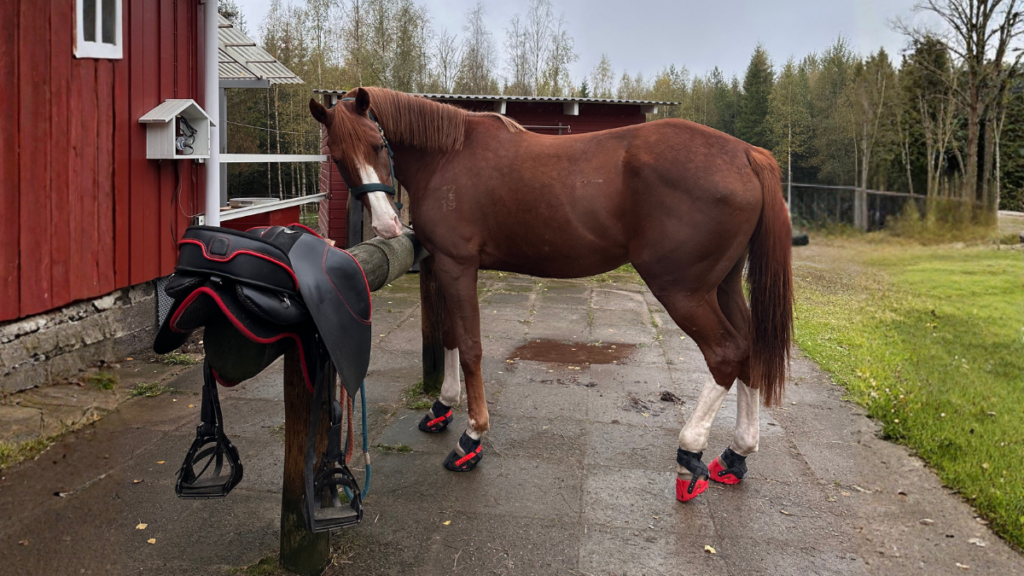
While it is tempting to just trial a topical dressing when your horse has weak hooves, it is important to recognize that some horses need temporary support while stronger hoof structures develop. Hoof boots and pads can play a very valuable role during this process.
Providing comfort is important. Comfortable horses move more freely, and movement helps stimulate circulation, tissue development, and healthier hoof growth. Boots and pads can help protect sensitive structures while allowing horses to continue moving comfortably during rehabilitation or transition periods.
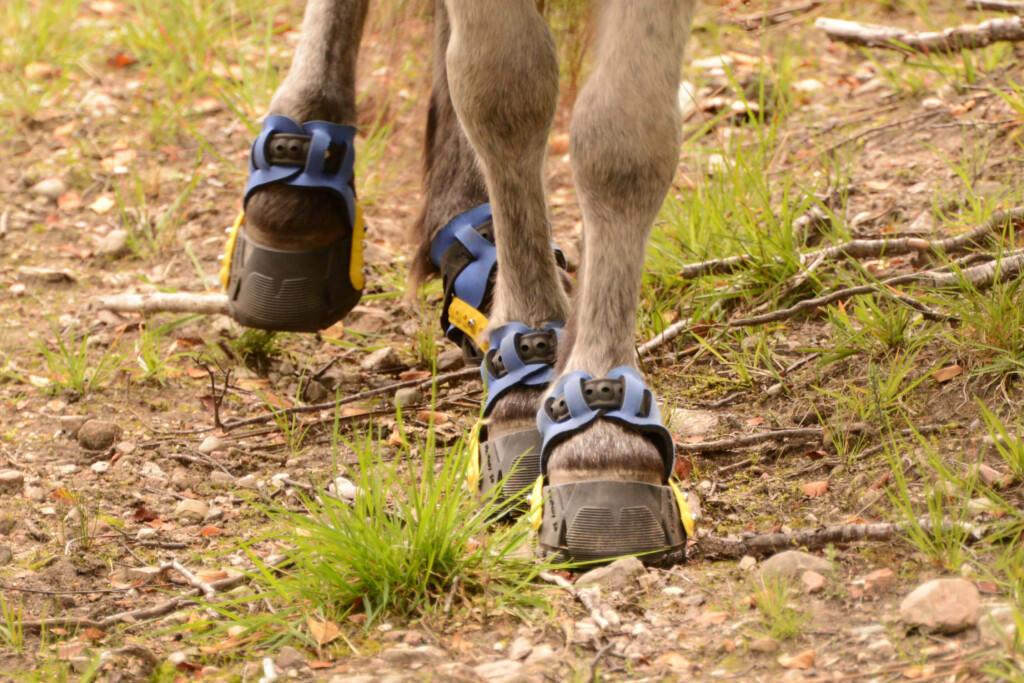
Using supportive tools when needed is not a failure. In many cases, it is part of a thoughtful long-term approach to improving hoof health.
Realistic Expectations and Long-Term Thinking
One of the hardest truths in hoof care is that there is rarely one single product that fixes everything. Hoof health is multifactorial. Nutrition, environment, movement, trimming, comfort, metabolic health, and time all work together to grow the healthiest hooves possible for each individual horse.
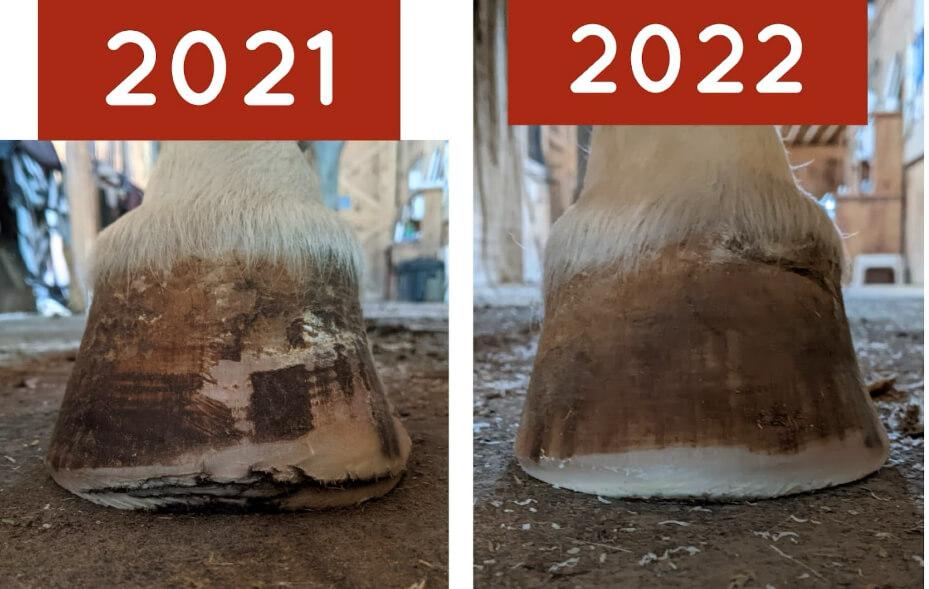
That can feel frustrating in a world full of before-and-after photos and miracle marketing claims. But in many cases, the horses with the healthiest hooves are not the ones receiving the most products, they are the ones benefiting from consistent management over months and years.
Healthy hooves are grown, not painted on.
While some topical products may have specific situational uses, long-term hoof quality is most often the result of good nutrition, balanced mechanics, healthy movement, appropriate environment, and patience.