Author : Alicia Harlov
Alicia Harlov is one of Flex Boots’ Equine Educators and Barefoot Trimming Specialists, where she creates video content as well as written articles pertinent to barefoot hoof health and soundness. Outside of Flex Boots, Alicia is a PHCP-certified hoofcare provider and program mentor who lives on the North Shore of Massachusetts, where she runs a hoof rehabilitation facility with a special focus on navicular horses. She pursues continuing education for hoofcare, equine nutrition and biomechanics at every opportunity, from sources around the world.
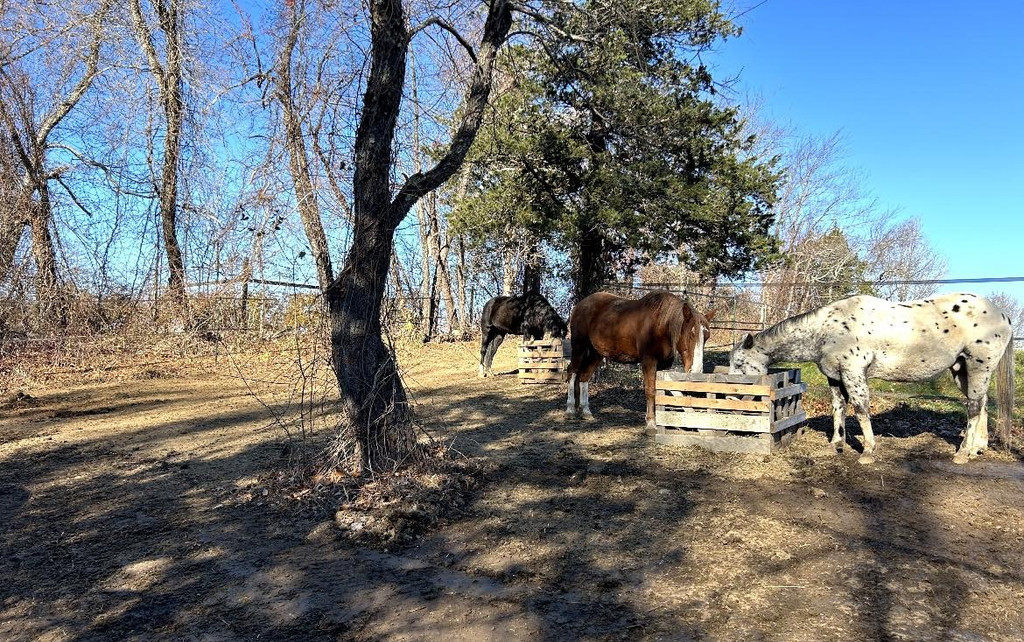
Spring is a beautiful time of year, but for horses with metabolic issues, it can also be one of the most dangerous.
As fresh grass starts to grow, it becomes high in sugars. For horses with conditions like EMS, this can trigger an excessive insulin response. That response can lead to laminitis, one of the most painful and potentially devastating conditions affecting the equine hoof.
And here’s where things often get confusing. Laminitis and founder/rotation are not all the same thing, and often they get confused for each other.
So let’s break it down to parse out which is which and what they mean.
What Is Laminitis Really?
Laminitis isn’t a disease by itself, it’s a symptom of something going wrong in the body.
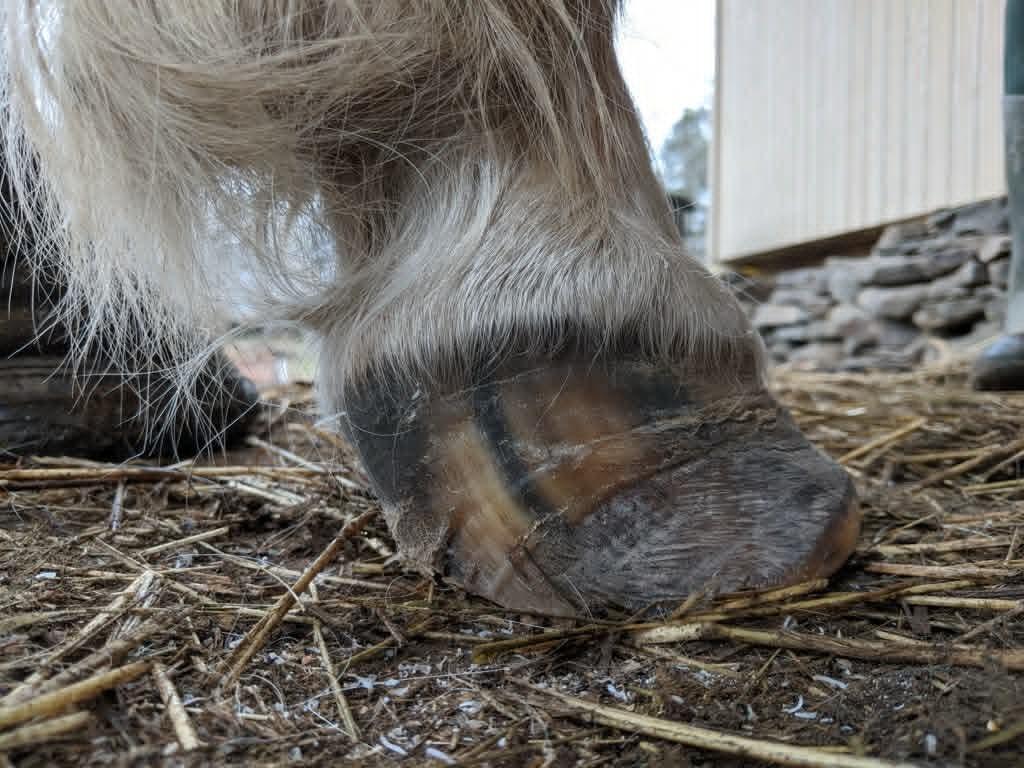
At its core, laminitis is a failure of the connection between the hoof wall and the coffin bone. This connection is made up of tiny interlocking structures (the laminae), often described like a zipper. When that “zipper” weakens, whether from metabolic issues, illness, inflammation, or other causes, the integrity of the hoof begins to break down.
In metabolic cases, this isn’t just random inflammation, it’s often driven by elevated insulin, which causes the laminae to elongate and weaken.
What Is Founder?
Here is where we get into the nitty gritty of terminology.
- All horses with founder have laminitis
- But not all laminitic horses have foundered
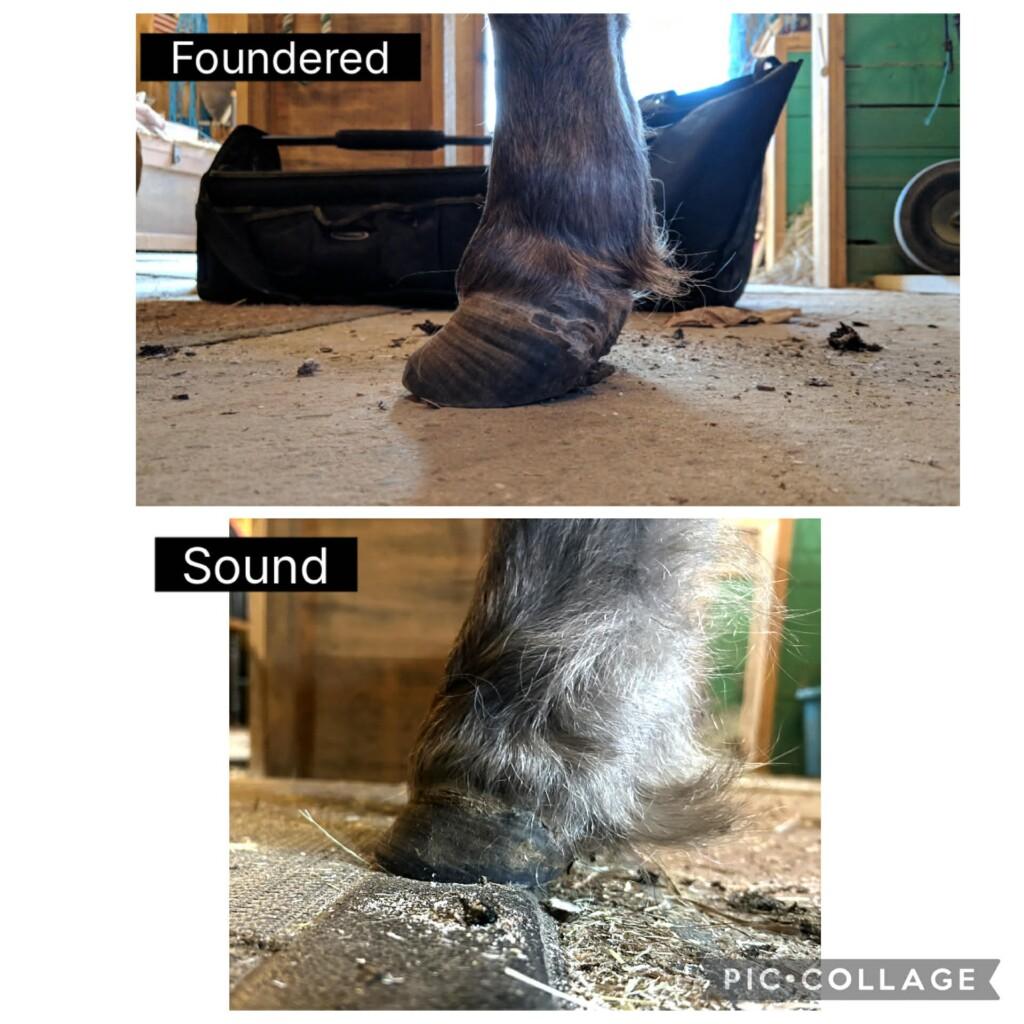
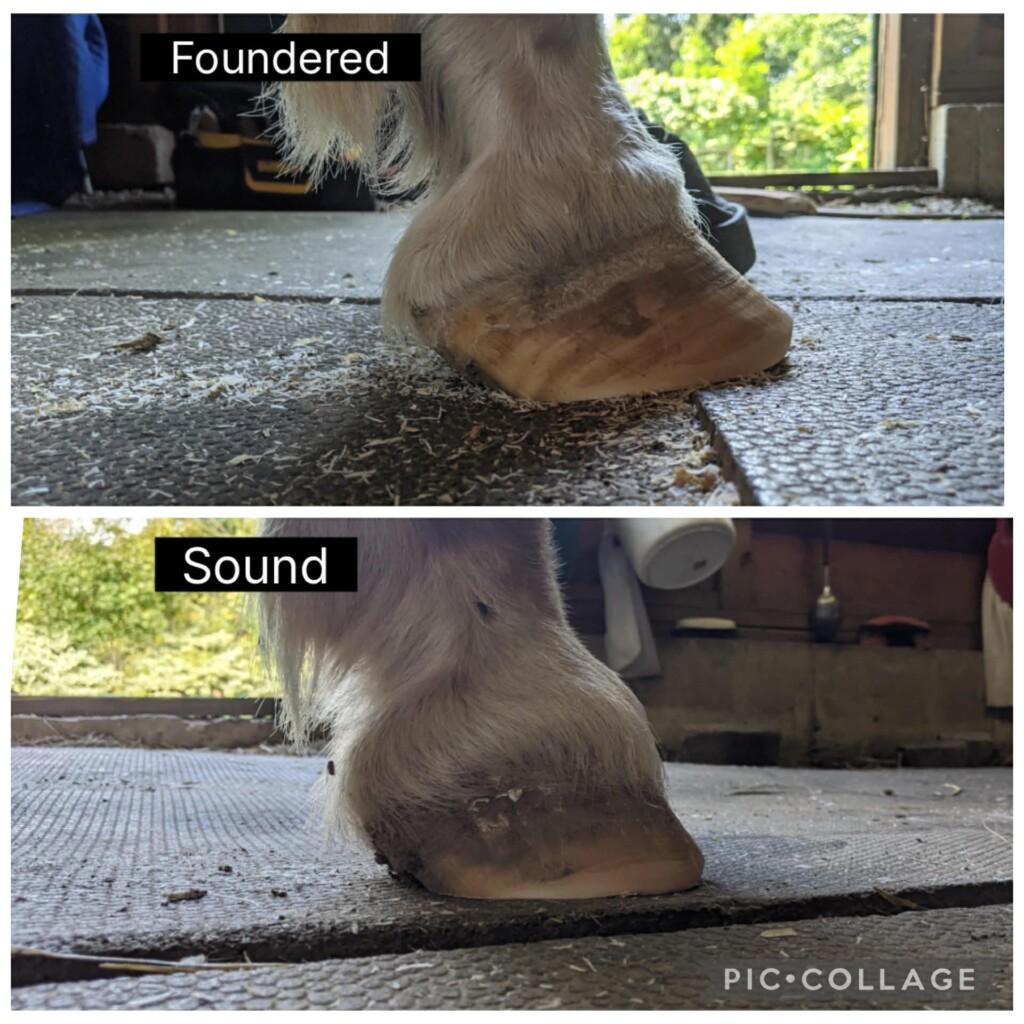
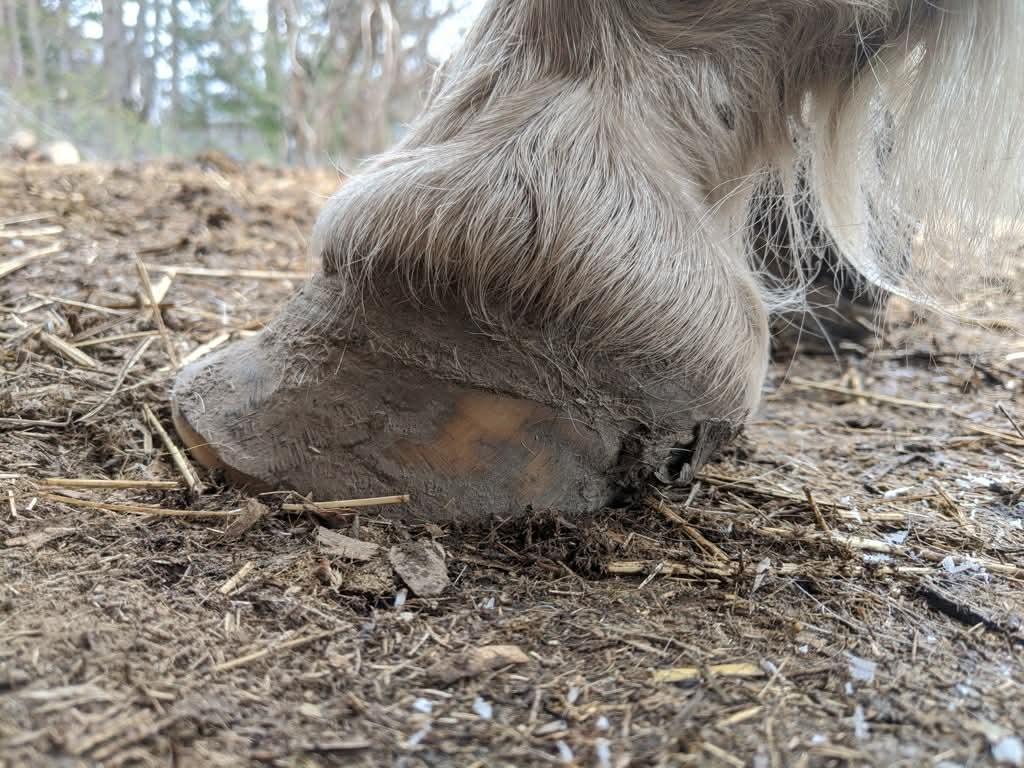
Founder refers to the evidence of rotation inside the hoof, specifically when the coffin bone loses its normal relationship with the hoof capsule. Often, we see on radiographs that the coffin bone is no longer parallel with the hoof wall.
This can show up as:
- Rotation
- Sinking (distal descent)
- Or both
And once that structural failure happens, things become much more serious.
Understanding Founder as “Rotation”
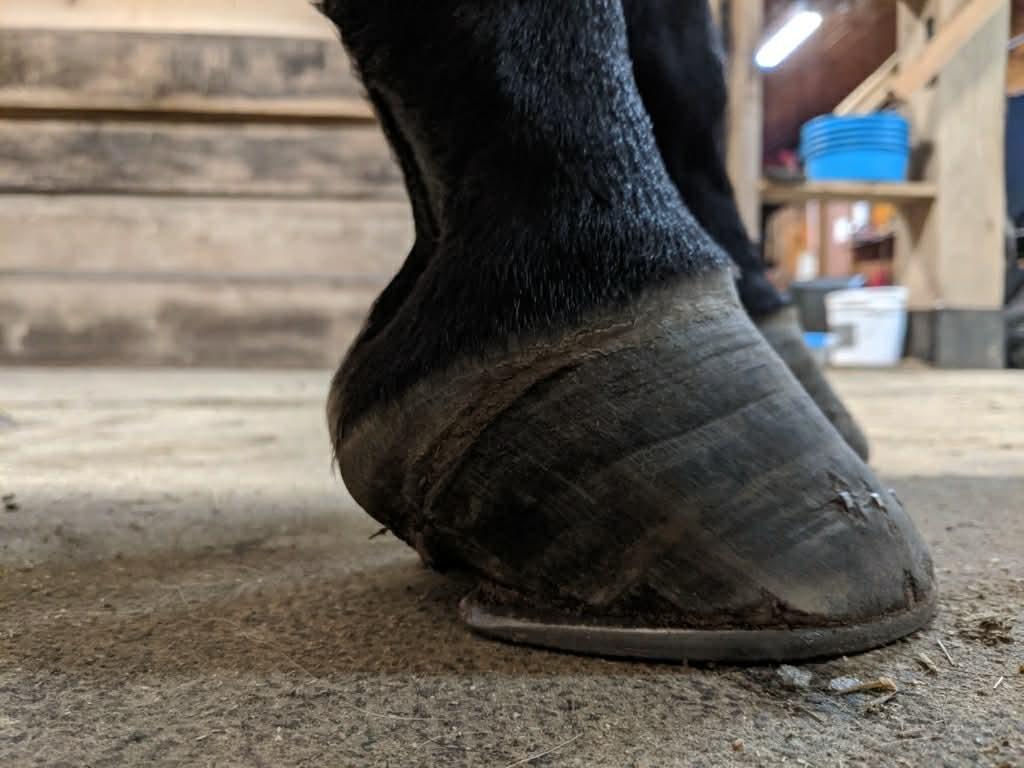
When people hear “rotation,” they often think of one thing, but there are actually multiple ways the hoof can change.
1. Phalangeal Rotation
This is when the bones themselves lose their normal alignment with each other.
In a textbook explanation of alignment in the limb, the long pastern, short pastern, and coffin bone form a straight line.
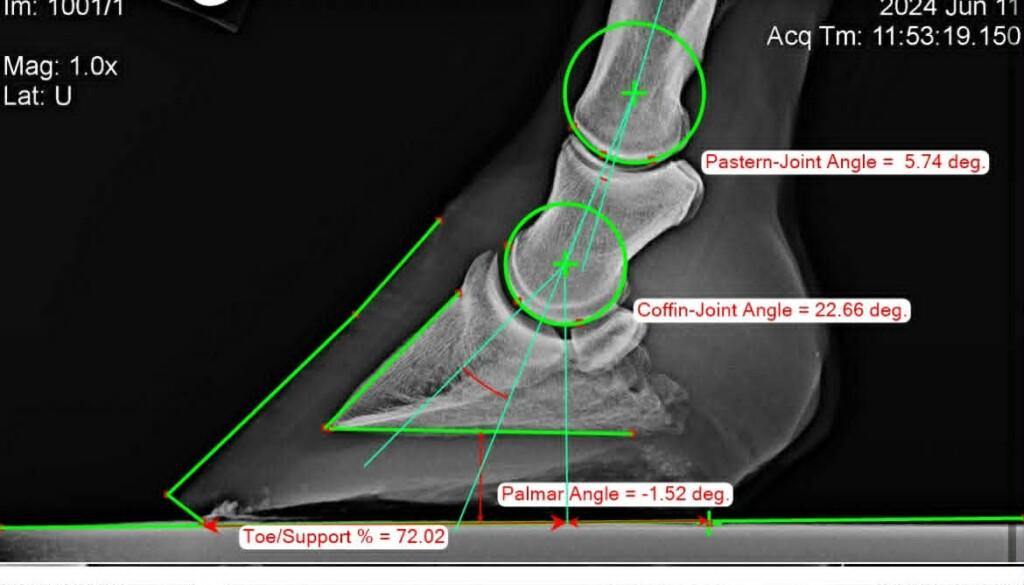
When that line tips forward at the pastern or coffin joint (or both!), it’s called a broken forward alignment, and in laminitis cases, that can indicate phalangeal rotation.
But there is an important distinction:
Not every horse with a “broken” alignment is laminitic or painful.
Symptoms and clinical presentation can help parse out if this broken forward alignment is actually true laminitic rotation.
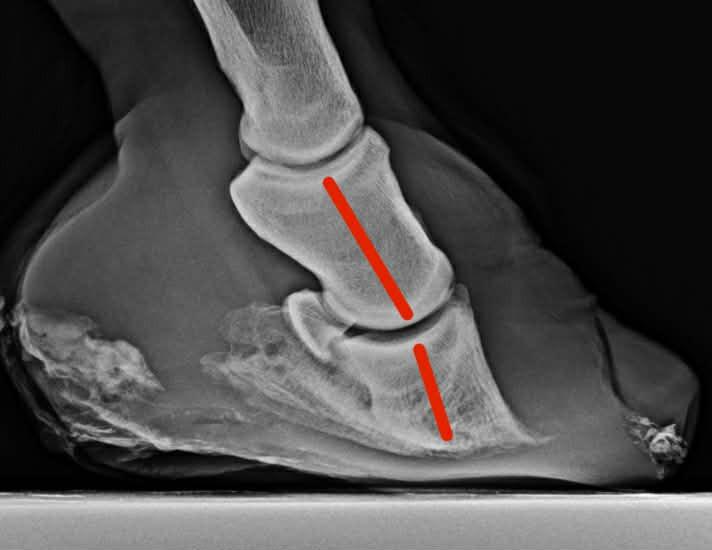
2. Hoof Capsule Rotation
This is one of the most important (and often overlooked) indicators.
It happens when the coffin bone stays relatively stable but the hoof wall seemingly pulls away from it.
On radiographs, this shows up as changes in the horn-lamellar (HL) zone, the space between the bone and the hoof wall.
- A healthy HL zone is uniform from the top of the hoof to the ground surface
- A thicker or uneven HL zone (wider toward the ground) suggests loss of connection
This is a hallmark of laminar failure.
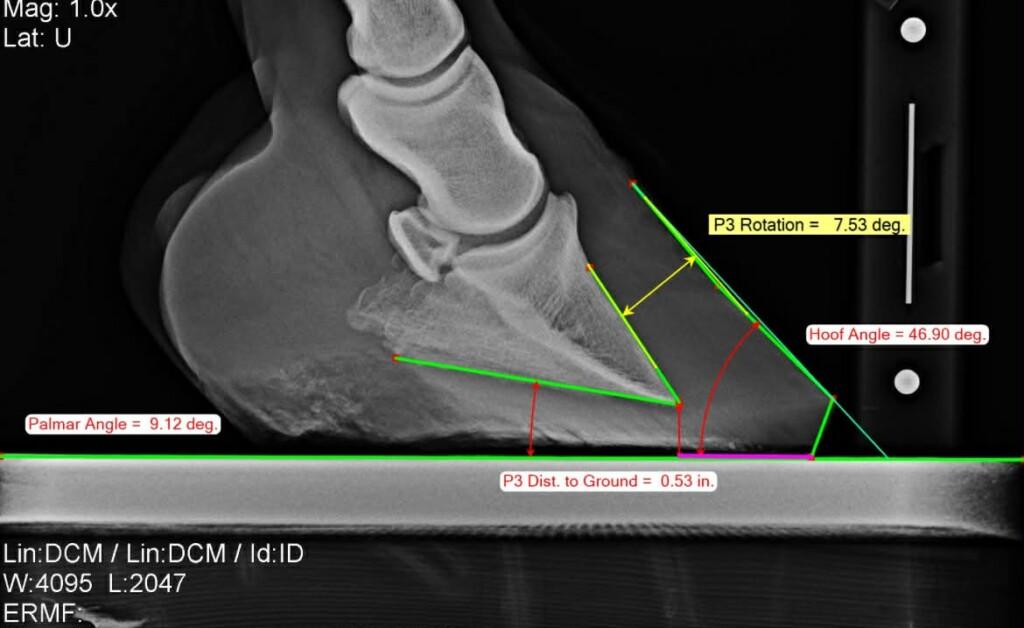
3. Distal Descent (Sinking)
Another critical measurement is the distance between:
- The coronary band (hairline)
- The top of the coffin bone
If that distance increases significantly, it suggests the bone is not properly suspended within the hoof capsule.
This is often referred to as sinking, and it can have serious implications for comfort and soundness, and take more consideration in rehab.
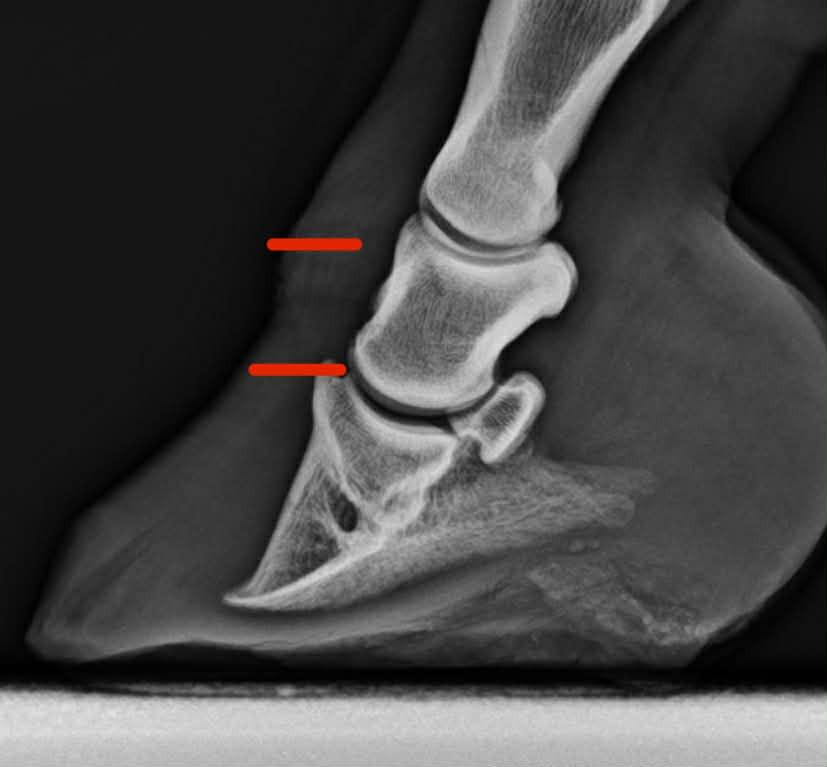
Coffin Bone Changes
Chronic laminitis can actually change the bone.
On radiographs, you might see:
- Loss of concavity (a “flattened” bottom)
- A “ski tip” appearance at the front of the bone
These changes indicate the hoof has been under stress for an extended period of time.

Common Misconceptions (That Cause Big Problems)
❌ “A positive palmar angle means rotation”
Not true.
The palmar angle on a healthy, sound foot is typically positive. The palmar angle can vary from horse to horse, and is not the sole indicator of rotation or laminitis.
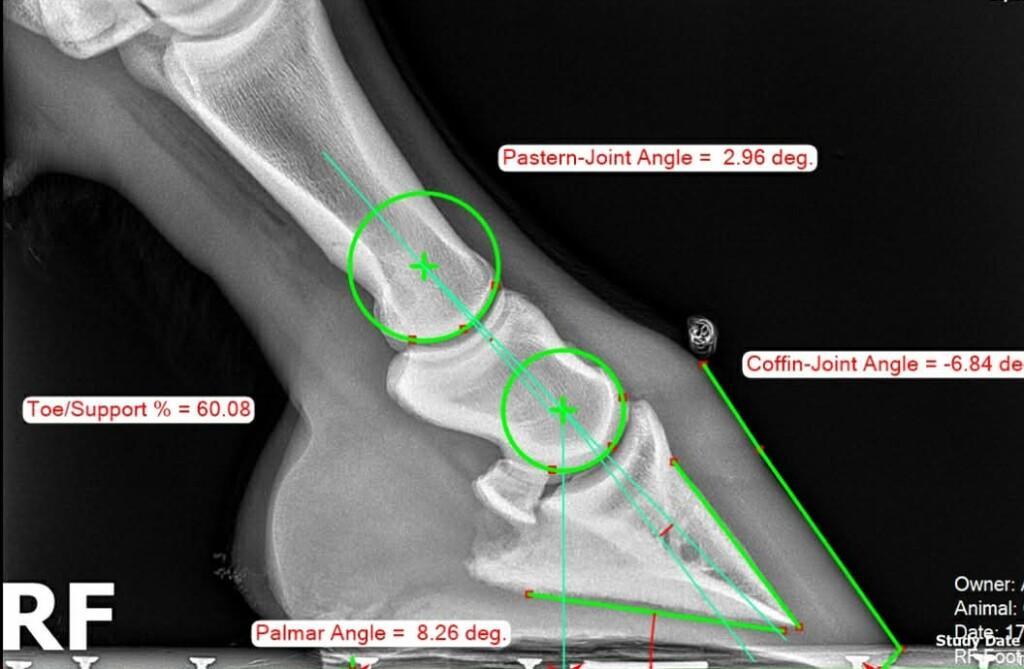
❌ “A flat (0°) palmar angle means everything is fine”
Also not true.
In some cases, a low palmar angle may actually indicate weakness in the back of the foot.
❌ “A trim can fix rotation”
This is a big one.
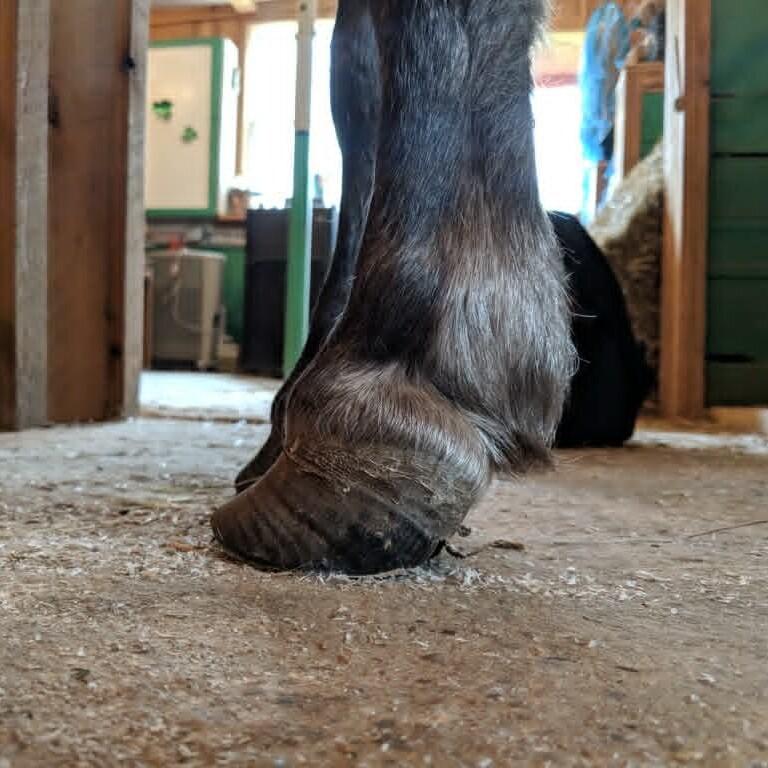
Trimming can improve mechanics and comfort, but it does not reverse internal damage to the laminae.
You can rasp the hoof to look better…
…but that doesn’t change what’s happening inside.
The Takeaway
Laminitis is complex, but understanding it helps to empower owners to take a better approach to rehab.
When you understand:
- The cause (like unmanaged metabolic issues)
- The structural changes (HL zone, alignment, descent)
- And the early warning signs
You can step in sooner and give your horse a much better outcome.
With the right approach in diet management, movement, metabolic support, and thoughtful hoofcare, many laminitic horses can return to comfort and full soundness.
Laminitis rehabilitation is a deep and complex topic, and this article only scratches the surface.
For more in-depth learning about metabolic horses, radiographs, hoof mechanics and rehabilitation approaches, explore the educational content inside the Hoof to Horse Academy.