Author : Alicia Harlov
Alicia Harlov is one of Flex Boots’ Equine Educators and Barefoot Trimming Specialists, where she creates video content as well as written articles pertinent to barefoot hoof health and soundness. Outside of Flex Boots, Alicia is a PHCP-certified hoofcare provider and program mentor who lives on the North Shore of Massachusetts, where she runs a hoof rehabilitation facility with a special focus on navicular horses. She pursues continuing education for hoofcare, equine nutrition and biomechanics at every opportunity, from sources around the world.
If you spend enough time looking at your horse’s hooves, you will inevitably find something to worry about. A piece of hoof wall chips off. The frog starts peeling. The periople looks ragged and overgrown. The heel bulbs suddenly look pale, soft, or almost “wet.” Your horse seems like they haven’t grown much hoof since the last trim.
It is easy to look at these changes and wonder: Is something wrong? Interestingly enough, many of the things that catch an owner’s eye aren’t necessarily the things that concern experienced hoofcare professionals the most.
That doesn’t mean owners shouldn’t pay attention to their horse’s feet. Quite the opposite! Owners are often the first people who have the opportunity to notice a change. That being said, learning to distinguish between normal cosmetic changes and potential signs of compromised hoof function, comfort, or health can help you know when something deserves closer attention.
In many cases, owners worry about what the hoof looks like. Professionals tend to worry about what the hoof is telling us about the horse.
Owners Worry About: Chipping Hoof Walls
A chipped hoof wall can look dramatic, especially on a barefoot horse. A piece of wall breaks away and suddenly the hoof looks uneven, ragged, or even “broken.” But a small chip is not automatically a hoof emergency.
The hoof wall is constantly growing, wearing, flexing, and responding to the terrain underneath the horse. Minor chipping can simply be part of normal wear, particularly when a horse is approaching the end of a trim cycle, has extra wall length – especially during something like “fly stomping season” we are experiencing right now, or has some mineral imbalances that can lead to a weaker wall.
If the horse is comfortable and the chip is superficial, a hoofcare professional may be far less concerned about the missing piece of wall than the owner is.
What would make us pay closer attention?
Repeated chipping that breaks off excessive hoof wall, significant flaring, wall separation, cracks extending into the inner hoof wall or white line, or a hoof wall that consistently cannot maintain integrity may tell us there is something more going on.
The chip itself isn’t always the important part. The potential causes behind it is.
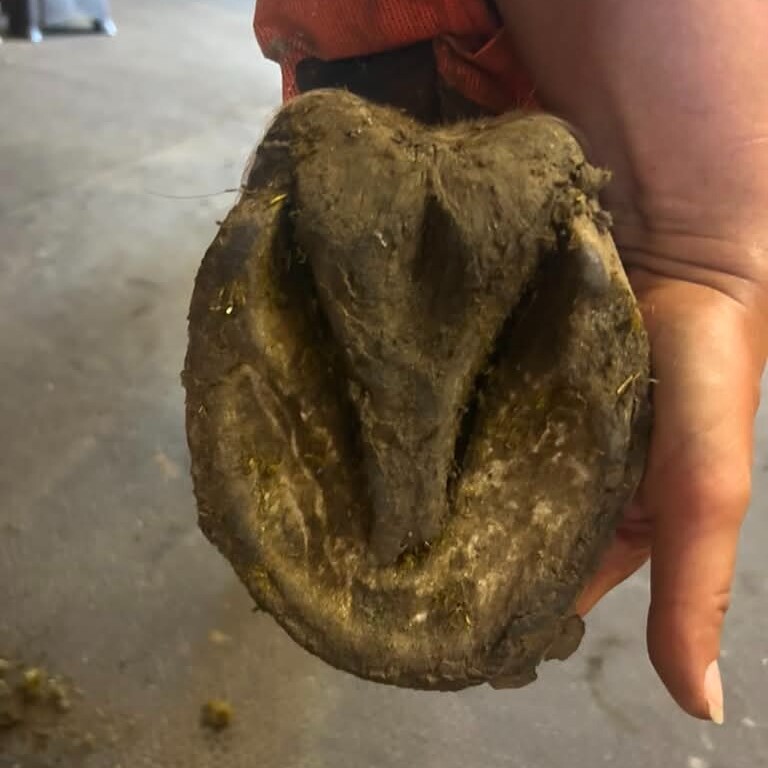
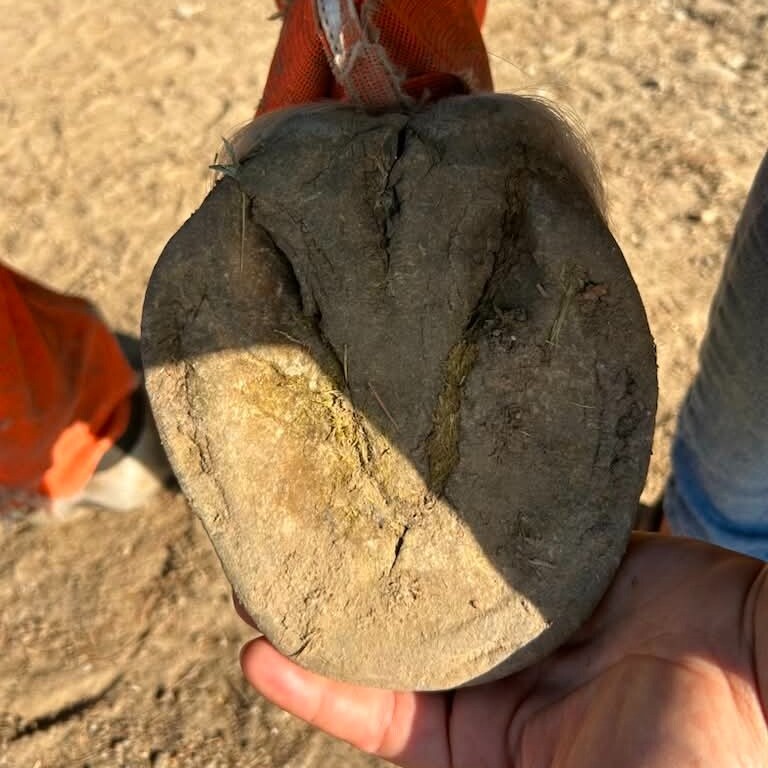
Owners Worry About: A Shedding Frog
Frogs can look pretty alarming when they shed.
Large pieces may peel away, leaving strange-looking grooves, flaps, or a dramatically different frog underneath. Owners sometimes worry that the frog is falling apart or that too much tissue has been lost.
While it may look concerning, it shouldn’t be – frogs naturally exfoliate. Old frog material can become loose and shed as newer tissue develops underneath. Changes in moisture, terrain, movement, season, and environment can all affect how dramatic this process appears.
Instead of worrying simply because frog tissue is peeling, professionals are more interested in what is underneath it. Is the remaining frog healthy and reasonably robust? Are there deep central sulcus cracks? Is there foul-smelling or unhealthy tissue? Is the horse sensitive through the back of the foot? Are the heels contracted? Is the frog participating appropriately in loading?
A weird-looking frog isn’t necessarily a problem. A painful or poorly functioning back of the foot can be a red flag.
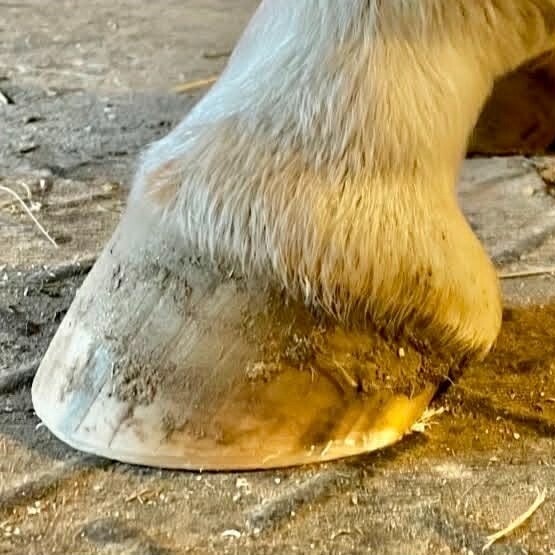
Owners Worry About: An Overgrown or Ragged Periople
The periople is the softer protective tissue around the upper portion of the hoof wall near the coronary band. Think of it like your cuticle: the periople helps protect the newer hoof wall as it grows down from the coronary band. Its appearance can change considerably with weather and moisture.
Unless there is heat, injury, discharge, or another abnormality involving the coronary band itself, an untidy periople usually isn’t high on a hoofcare professional’s list of concerns.
Sometimes the periople can grow more, dry out, or become waterlogged, and all can change its appearance. They don’t have to look freshly polished to be healthy.
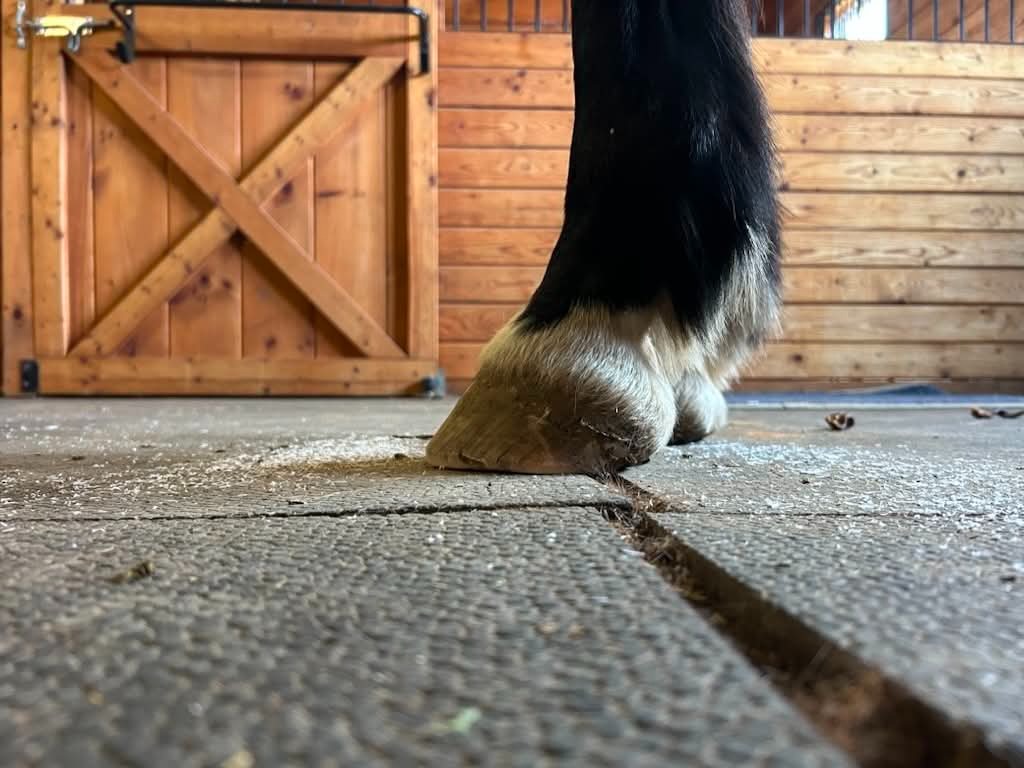
Owners Worry About: White or “Wet” Heel Bulbs
After exposure to mud, wet footing, snow, or prolonged moisture, the heel bulbs can sometimes become pale, whitish, or soft-looking.
Understandably, this can look concerning, but moisture temporarily changes the appearance and texture of various parts of the hoof, including the heel bulbs. Think about what happens to your own skin after spending a long time in water.
The appearance alone isn’t necessarily a problem. A professional is more likely to ask whether there is persistent irritation, painful tissue, deep cracks, infection, heat, odor, or changes in the horse’s comfort.
The context is important. A heel bulb that looks white after standing in wet footing is very different from unhealthy tissue associated with pain or infection.
Owners Worry About: “My Horse Isn’t Growing Any Hoof”
This is another common concern, especially when an owner compares one trim cycle to another. Sometimes there really isn’t much hoof to remove.
Hoof growth and wear can change depending on season, movement, terrain, nutrition, age, metabolic status, and countless other factors. A horse moving extensively over abrasive terrain may also wear away a significant portion of what they grow.
With all that in mind, “there wasn’t much to trim” doesn’t necessarily mean “my horse isn’t growing hoof.”
Professionals tend to look at the bigger picture. Has growth actually changed compared with this horse’s normal pattern? Is hoof quality changing? Are there new growth rings? Is the coronary band healthy? Has the horse’s diet, environment, health, workload, or movement changed? If the growth pattern significantly changes, it’s important to let your hoofcare provider know, but if your horse’s “status quo” is “not much growth,” that may be just fine for them.
What Hoofcare Professionals Actually Worry About
While owners are understandably drawn to visible changes, experienced hoofcare professionals tend to become much more interested when we see changes involving comfort, function, structure, or patterns that repeat over time.
These are the things that deserve attention.
Professionals Worry About: Hoof Sensitivity
This is a big one.
A horse that is consistently uncomfortable barefoot should not simply be dismissed as a horse that “just needs shoes.” Likewise, saying a horse is sore because they “just have thin soles” doesn’t answer the more important question: Why?
Why are the soles thin?
Why is the horse sensitive?
Has something changed?
Is there metabolic disease? Internal inflammation? Dietary imbalance? Inappropriate trimming? Environmental factors? Pathology within the foot?
Of course, hoof protection can be an extremely useful – and sometimes necessary – part of keeping a horse comfortable. Boots and pads can be the perfect “stop gap” until the trigger for the hoof sensitivity is found and resolved.
Protection should not prevent us from asking why the horse needs protection in the first place. Sensitivity is important information, like the horse’s “check engine” light.
If a horse suddenly becomes uncomfortable walking across surfaces they previously navigated easily, that deserves attention even if the hoof itself doesn’t look dramatically different.
Professionals Worry About: Changes in Comfort
As mentioned in the last section, one of the most important things an owner can tell a hoofcare professional is: “This is different for my horse.”
Maybe the horse used to trot happily across the driveway and now hesitates. Maybe they are shortening their stride. Maybe they are landing differently. Maybe they are standing differently at rest. Maybe they suddenly seek out softer footing. Maybe they turn differently, become reluctant going downhill, or seem uncomfortable immediately before or after trimming.
Those changes can be far more meaningful than a cosmetic imperfection in the hoof capsule. Professionals don’t only look at feet. We look at the horse attached to them.
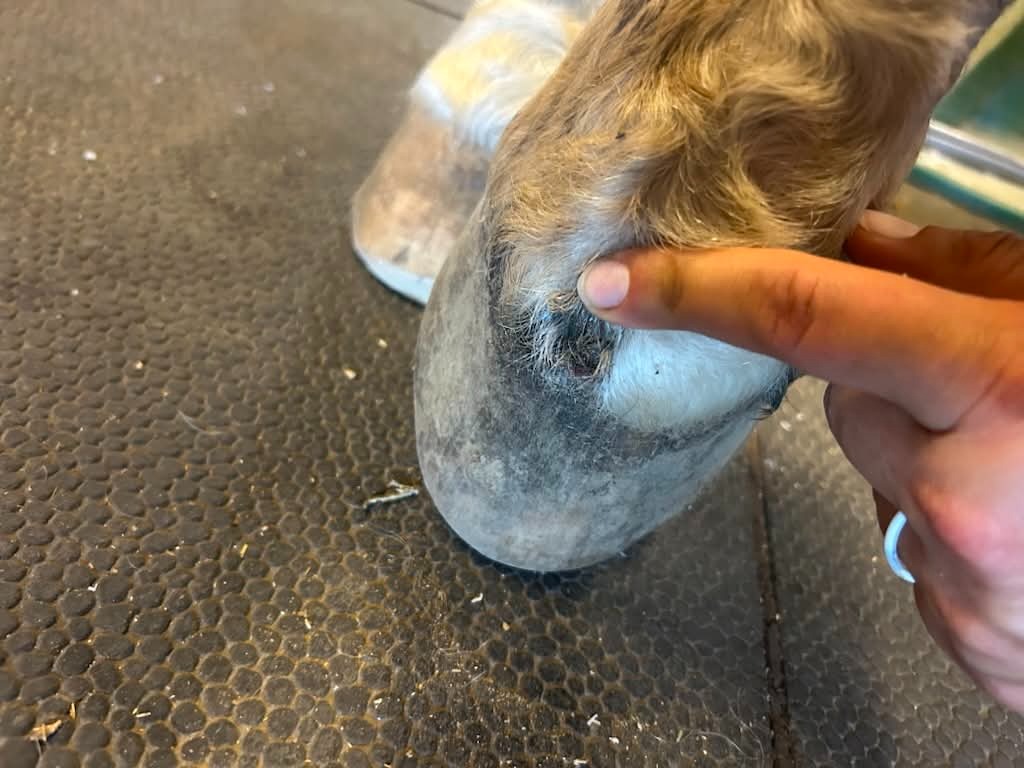
Professionals Worry About: Recurring Abscesses
An occasional abscess can happen. Repeated abscesses are different.
If a horse continually develops abscesses – particularly in the same foot or same general location – we should start asking why.
Recurring abscesses may warrant investigation into recurring infection, metabolic concerns, laminitis, foreign material, metabolic issues such as IR or PPID, or other underlying issues.
Repeatedly treating the abscess without considering why it keeps happening risks focusing on the symptom rather than the cause.
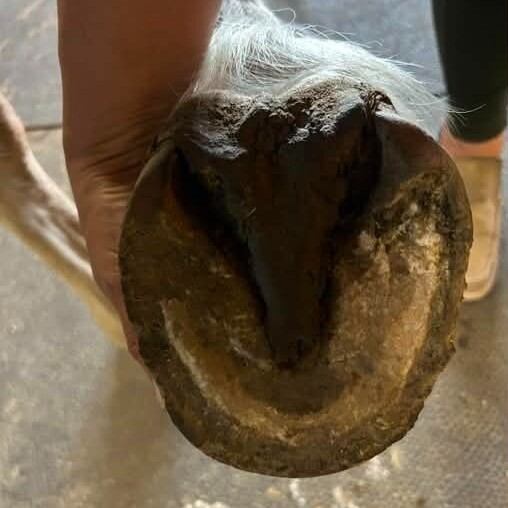
Professionals Worry About: Changes in the Sole
The sole provides valuable information about what is happening inside and underneath the hoof.
Professionals may pay attention to changes in sole depth, concavity, bruising, exfoliation, stretching around the toe, unusual coloration, areas of sensitivity, or changes in the relationship between the sole and hoof capsule. A horse that previously maintained a thick, robust sole and suddenly develops a flatter, thinner, or more sensitive sole deserves further investigation.
Again, change from that horse’s normal can be incredibly important. A hoof doesn’t exist as a static structure. We should be watching how it changes over time.
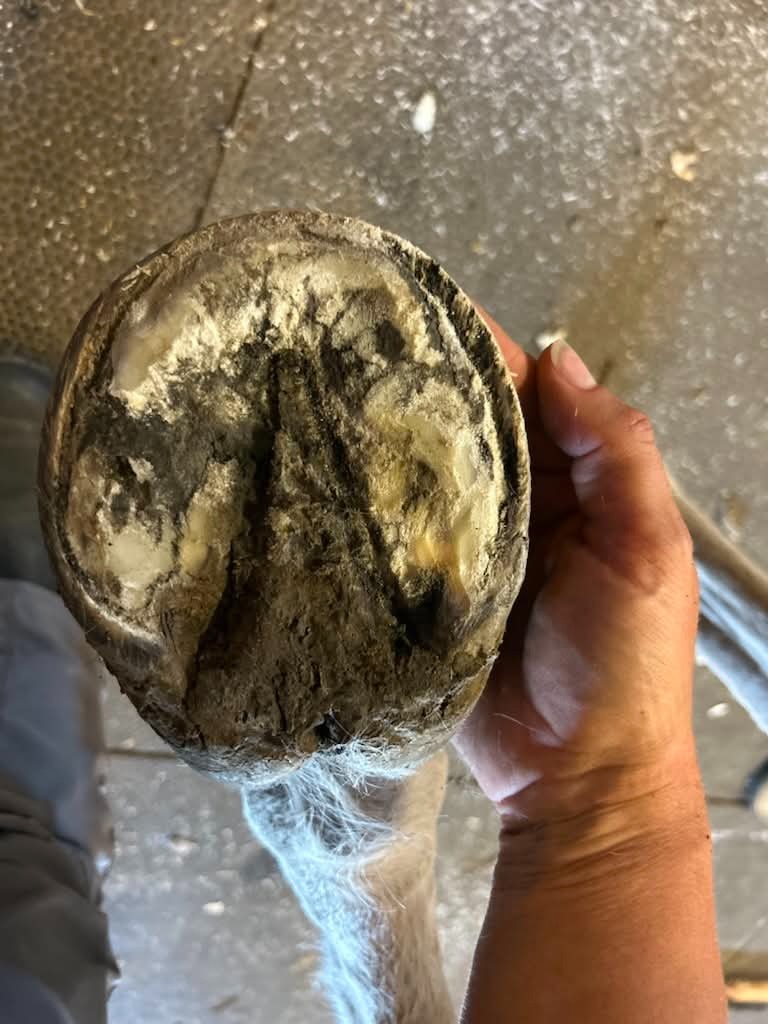
Professionals Worry About: White Line Separation
A little superficial wall chipping may not bother us much. A widening or separating white line absolutely gets our attention.
The white line represents an important connection between the hoof wall and the internal structures of the foot. Stretching or separation can occur for multiple reasons, including metabolic issues, early indication of laminitis, mechanical leverage, or other systemic issues.
Where is the separation?
How deep is it?
Is it getting better or worse?
Is it localized or affecting a large portion of the hoof?
Is debris packing into it?
Is there evidence of infection?
What does the growth coming down from above look like?
White line separation isn’t simply a cosmetic flaw to rasp away. It can be a clue that something about the hoof’s mechanics, health, or internal laminae connection needs attention.
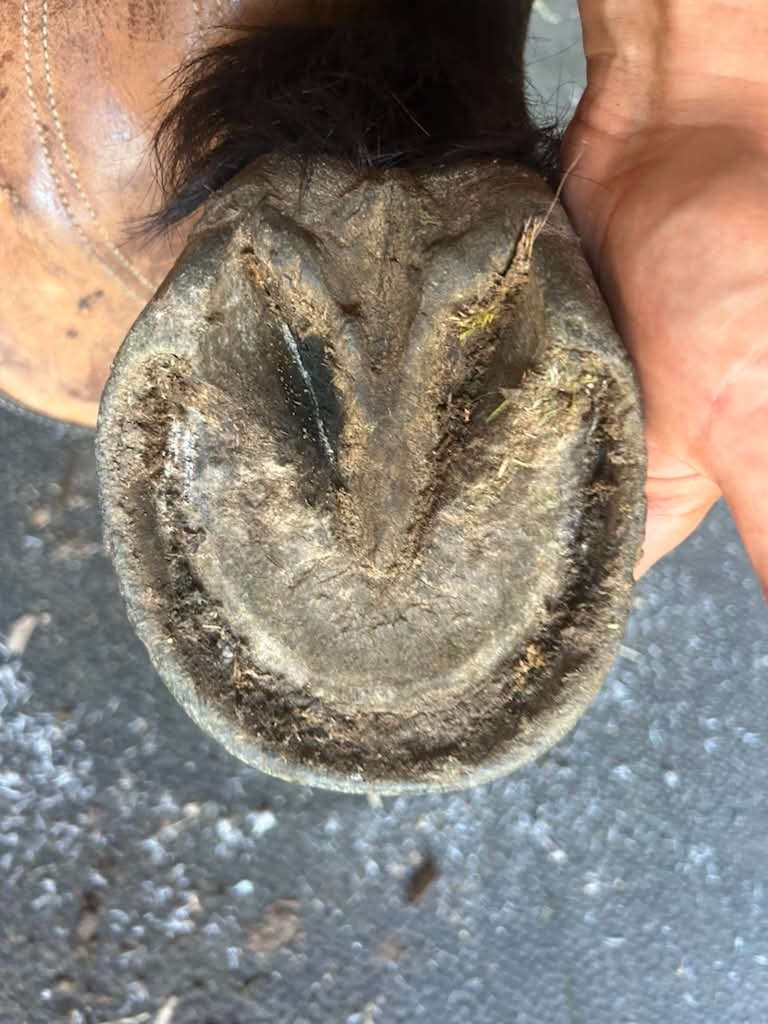
Professionals Worry About: Flaring
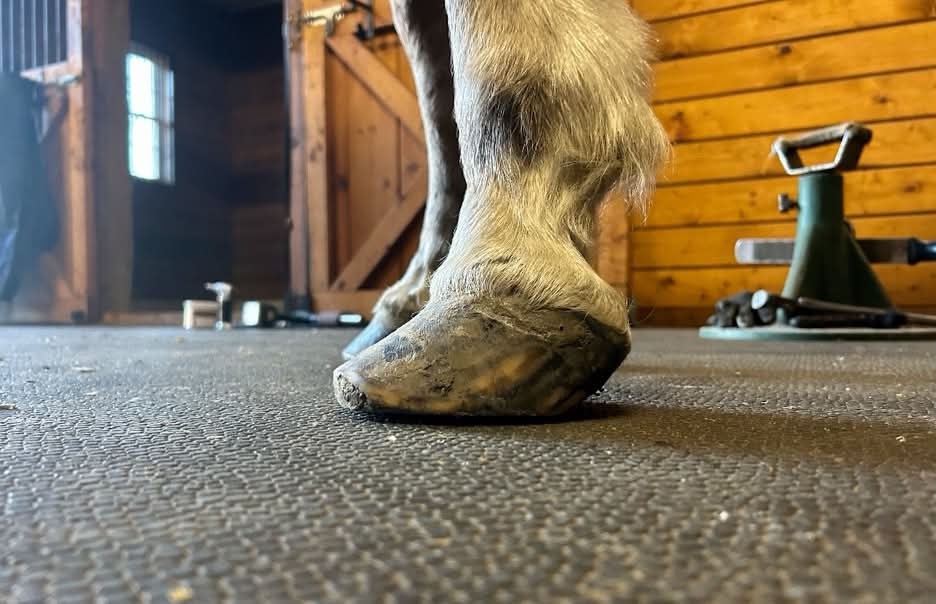
Flares are another example of something that can easily be viewed as purely cosmetic.
A professional isn’t worried because a flare makes the hoof look “ugly.” We’re interested in why the flare developed. Flaring can indicate inflammation or issues within the hoof capsule and may be associated with leverage, imbalance, asymmetric loading, changes in movement, laminae stretching, or compensation elsewhere in the body. Simply removing the visible flare doesn’t necessarily address why it developed. If it repeatedly grows back in the same place, that’s useful information. If the entire hoof is flaring, that’s a red flag for significant internal issues. The hoof may be telling us something about laminae health, systemic health, or how that limb is loading and moving.
Professionals Worry About: Changes in Landing and Movement
This is something owners can become incredibly helpful at identifying. How does your horse land? Do they land heel first, flat, or toe first? Is one side of the hoof consistently contacting the ground first? Has that landing changed?
A hoof can look beautiful while the horse is moving poorly. Conversely, a hoof can look imperfect while the horse is moving comfortably and confidently. Function should always be part of our assessment.
Professionals Worry About: Patterns
Perhaps the biggest difference between how an owner and an experienced professional looks at a hoof is that professionals learn to look for patterns. For example, one event line might not mean much. Repeated event lines? That can be significant.
One chip might not matter. A wall that breaks in exactly the same place every trim cycle is more interesting.
One abscess may happen. Five abscesses in a season deserve investigation.
A horse taking one awkward step isn’t necessarily concerning. A horse consistently unloading the same foot, altering their landing, or becoming progressively more sensitive is different.
Our goal isn’t to get owners to panic over every abnormality. It is to recognize patterns, progression, and changes from normal.
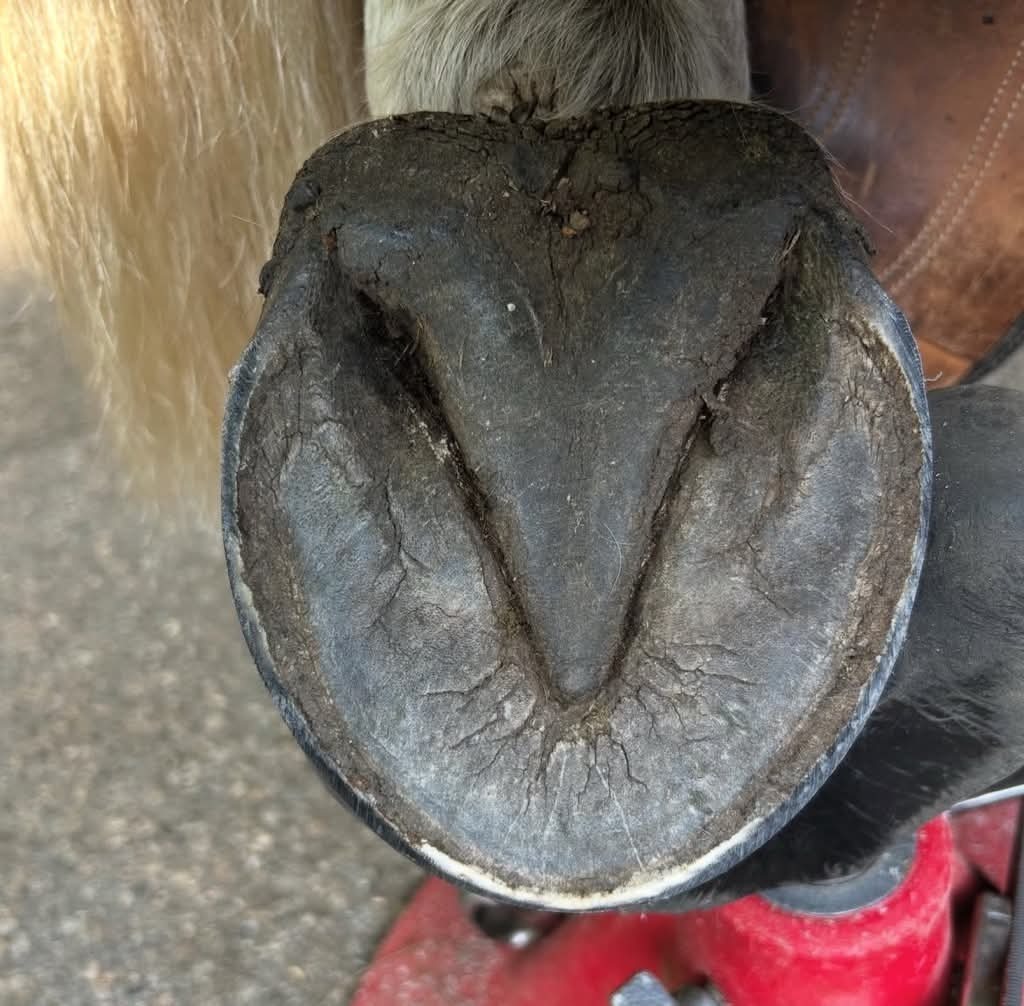
Pretty Hooves Aren’t Necessarily Healthy Hooves
A hoof can be beautifully shaped, freshly rasped, polished, and aesthetically pleasing – and still belong to an uncomfortable horse. Another hoof might have some superficial chips, a shedding frog, an ugly periople, and dirt packed everywhere, and belong to a horse comfortably galloping over rocks. We cannot evaluate hoof health on aesthetics alone.
The main question should be: “Is this hoof functioning well for this horse?”
That requires us to consider comfort, movement, landing, hoof capsule integrity, sole depth, internal structures, environment, diet, workload, metabolic health, trim history, and changes over time.
None of this means owners should stop paying attention to their horse’s hooves. In fact, an observant owner is one of the greatest assets a hoofcare professional can have. You see your horse every day, while your hoofcare provider only sees them periodically, which means you may be the first to notice subtle changes in comfort, movement, landing, or how your horse navigates different surfaces.
Keep taking pictures, watching your horse move, and learning what is normal for your horse. If something changes or concerns you, ask. A good hoofcare professional would much rather explain why a shedding frog or superficial wall chip isn’t concerning than have an owner overlook a meaningful change. The goal isn’t to worry less, it’s to learn what deserves your attention most, because the things that look the scariest aren’t always the biggest concerns, while subtle changes can sometimes tell us the most.