
Author : Alicia Harlov
Alicia Harlov is one of Flex Boots’ Equine Educators and Barefoot Trimming Specialists, where she creates video content as well as written articles pertinent to barefoot hoof health and soundness. Outside of Flex Boots, Alicia is a PHCP-certified hoofcare provider and program mentor who lives on the North Shore of Massachusetts, where she runs a hoof rehabilitation facility with a special focus on navicular horses. She pursues continuing education for hoofcare, equine nutrition and biomechanics at every opportunity, from sources around the world.
Although horses can’t speak the way we can, they are constantly communicating with us. Their behavior, body language, and daily activities can tell us a lot about how they are thinking and feeling. Beyond that, they can also communicate with us about how their hooves are feeling, if we know how to pay attention.
The hoof is far more than just an outer “shell” that grows and needs trimming every few weeks. It is a living, dynamic part of the horse that responds to everything around it – things like movement, environment, nutrition, and overall health can determine the foot you have in front of you. The shape of the hoof, the quality of the hoof wall, the way the horse moves, and even how the horse stands can provide valuable clues about what is happening inside the foot and throughout the body.
Learning to “listen” to the hoof can help us identify problems earlier, make more informed management decisions, and better support our horses’ long-term soundness.
What Hoof Comfort Can Tell Us
One message a hoof can communicate with us is whether the horse is comfortable.
Discomfort isn’t always as obvious as overt lameness. Many horses adapt remarkably well to discomfort, making subtle changes that can be easy to overlook unless you’re looking for them. Paying attention to a horse’s willingness to move, or even how they stand, can reveal a great deal about how their feet are feeling.
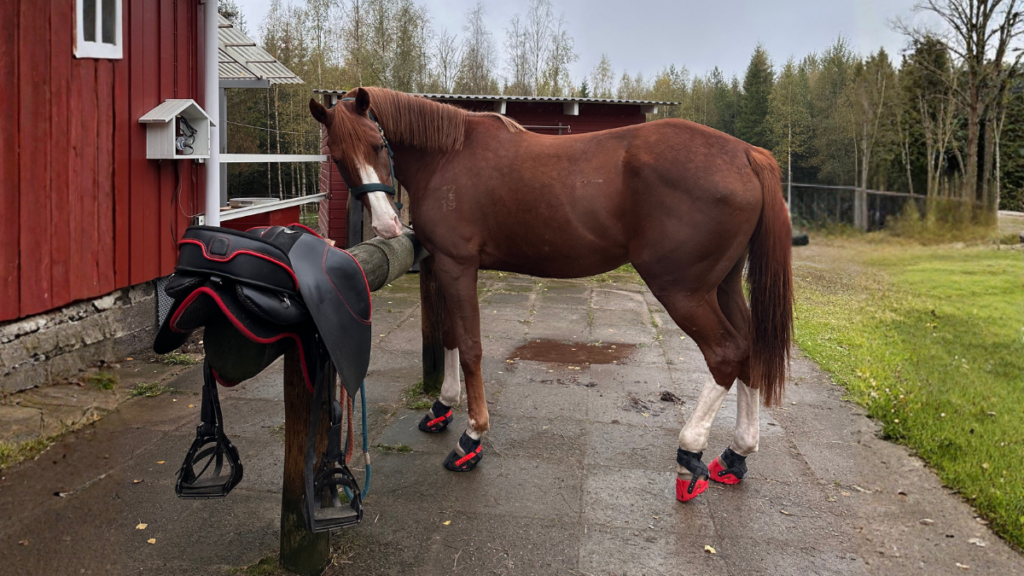
Does your horse eagerly walk across different types of terrain, or do they hesitate when encountering hard ground, gravel, or rocky footing? A horse that shortens their stride, carefully picks their way across rough surfaces, or prefers softer footing may be telling you that their feet are sensitive.
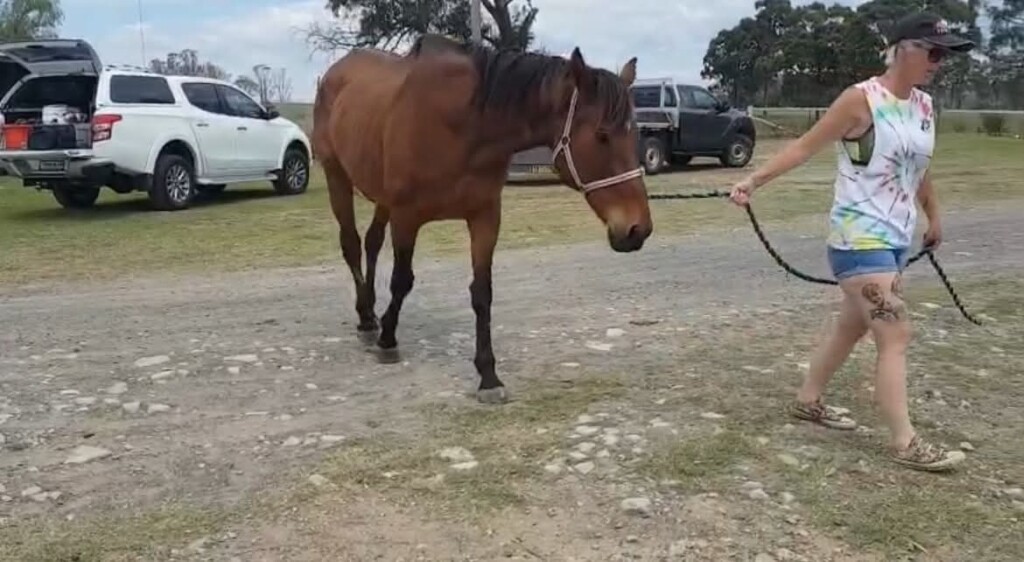
Even if a horse doesn’t seem to be overly uncomfortable on different surfaces, the way they move can show clues to compensation. Reluctance to fully extend the limb or a shortened stride, subtle stiffness or hesitation when moving or when turning, or perceived “laziness” may all indicate that the horse is compensating for discomfort somewhere within the hoof.
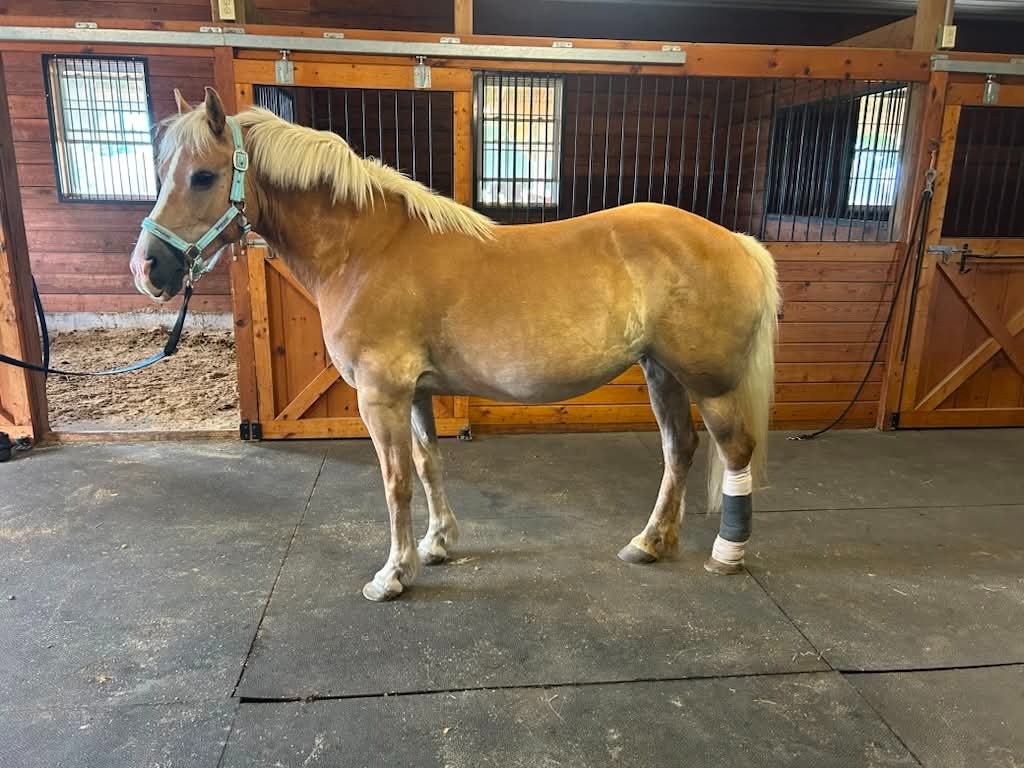
Posture can also offer important clues. Horses that frequently shift their weight, stand camped under or camped out, rest one foot excessively, or consistently load certain feet differently may be trying to reduce discomfort.
The horse may not be speaking, but how they use their body often tells us a lot.
What the Back of the Foot Can Tell Us
The caudal hoof, or the back half of the foot that includes the frog, heel bulbs, and digital cushion, plays a critical role in shock absorption, circulation, and overall hoof function.
Healthy caudal structures help a horse move comfortably and confidently. Weak or unhealthy caudal structures often result in compensation and reduced performance, and if even injury from compensatory movement.
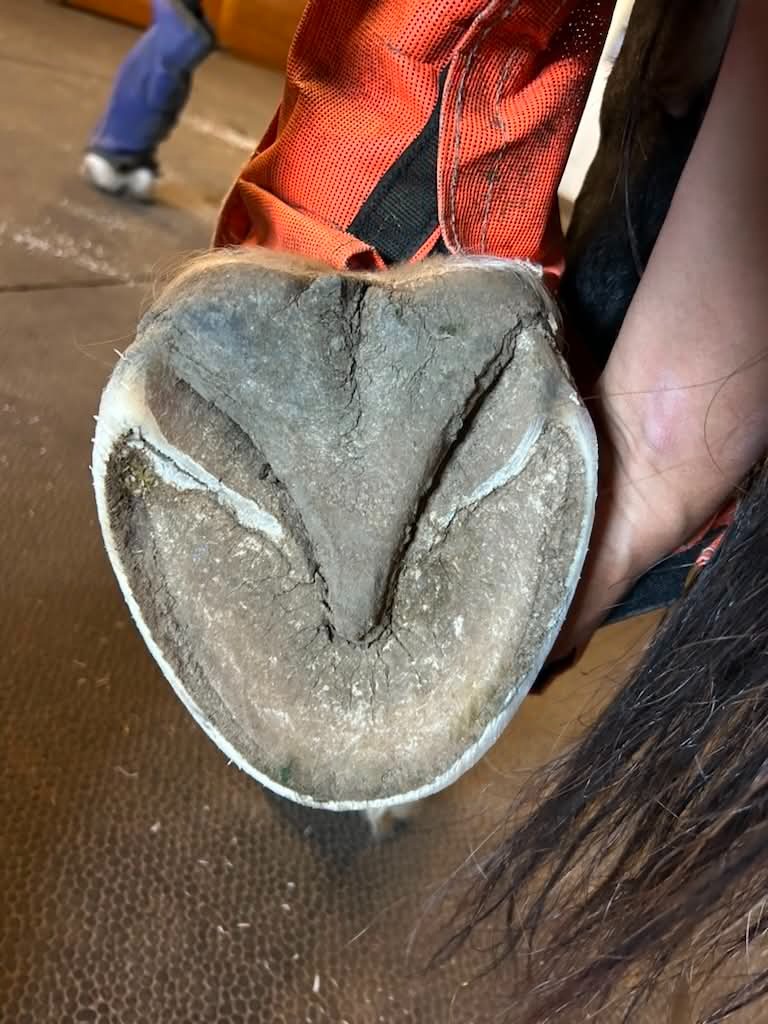
One simple way to assess the health of the back half of the foot is through careful palpation. Gently feeling and pressing the frog and heel bulbs can help us tell the strength of the digital cushion, the shock absorber located in the back half of the foot. Healthy structures generally feel firm, like a rubber eraser, and well developed. Heel bulbs that are contracted, a weak frog, or an overall atrophied back half of the foot in general can lead to compromised hoof function.
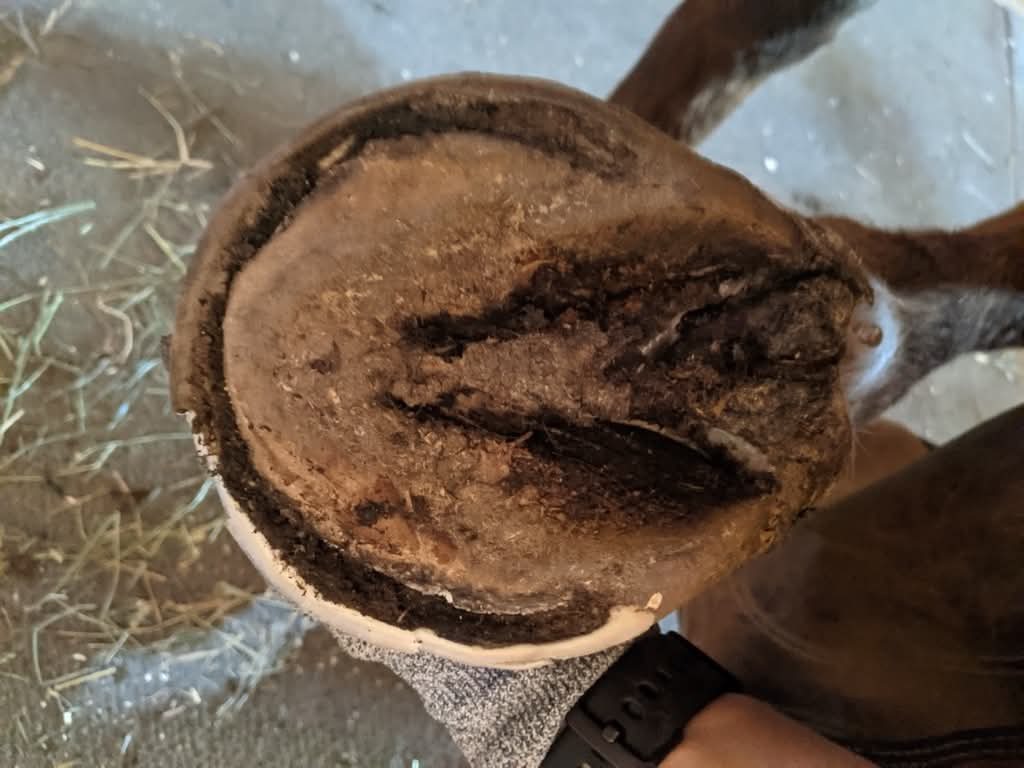
The appearance and condition of the frog itself can also tell a story. Deep central sulcus cracks, “swiss cheese”-type pockets, or general unhealthy frog tissue may indicate bacterial or fungal infections that can contribute to discomfort and a change in healthy movement.
Observing the horse’s landing pattern is also valuable. Ideally, most horses should comfortably land at least subtly heel first at a forward walk on flat, level ground – without inclines or declines. A horse that consistently lands toe first may be attempting to avoid loading painful or weak structures in the back of the foot.
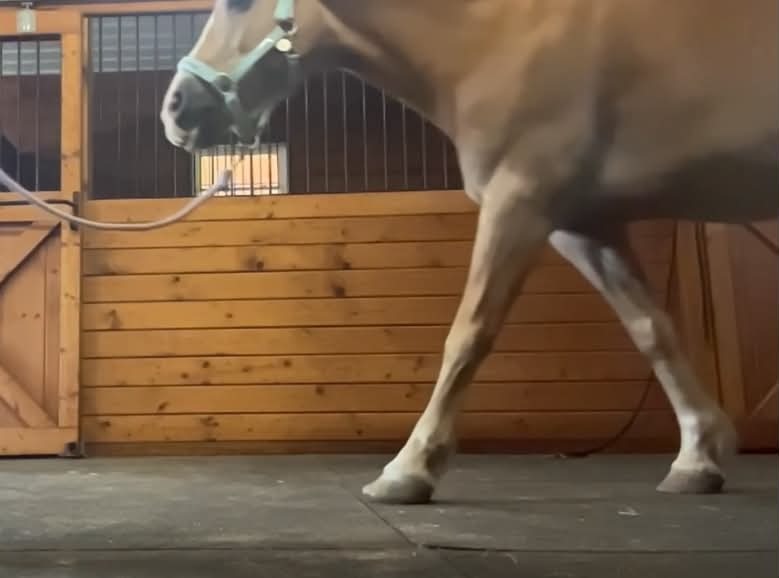
Frequent tripping can also provide information. While tripping has many possible causes, horses that are uncomfortable in the caudal hoof often struggle to fully extend the limb and confidently engage the back of the foot during movement. This can cause them to trip over themselves.
What the Hoof Can Tell Us About Diet and Metabolic Health
The hoof is constantly growing, which means it serves as a long-term record of what has been happening inside the horse’s body.
There are many different aspects of the hoof capsule that can give clues into the health of the foot, but one area that can offer a lot of information is the white line. A tight, well-connected white line generally reflects a healthy attachment between the hoof wall and the coffin bone. White line stretching, separation, or widening can sometimes indicate things like excessive length, compensation issues, or maybe more significantly – diet or metabolic challenges that affect hoof quality.
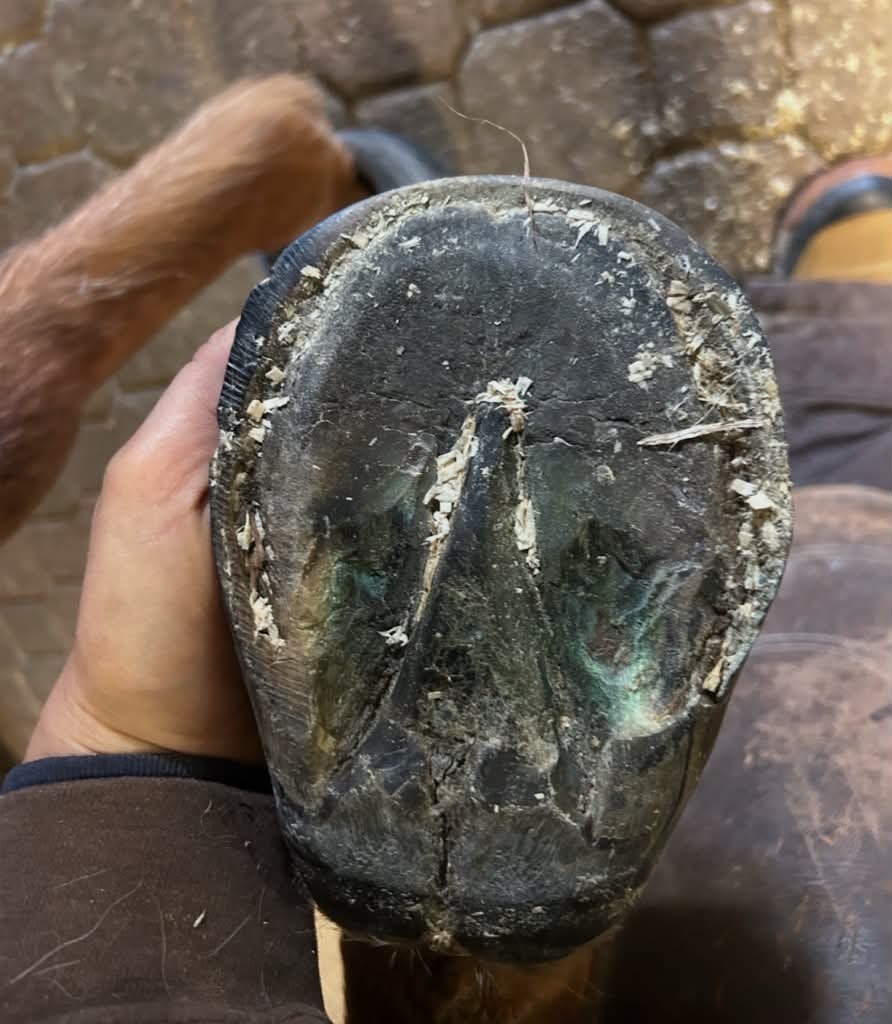
Changes in sole concavity can offer additional clues. While the concavity of the coffin bone can directly correlate to the concavity of the sole itself, reduced concavity can also correlate to diet or metabolic issues as well, especially if the concavity changes over time. A hoof that had some natural concavity (a “bowl” type shape) which seems to flatten or lose its depth can indicate inflammation or a loss of healthy laminae connection. This most commonly happens due to metabolic concerns, and can improve when these are addressed and controlled.
Collateral groove depth can also tell us about internal hoof health, when evaluated alongside the rest of the hoof. Shallow grooves may suggest a thinner sole, while deeper grooves often accompany healthier sole depth. These observations should never be viewed in isolation, but they can contribute to a larger picture of hoof health.
Event lines (“growth rings”), changes in hoof angles, wall quality issues, and sensitivity on gravel or firm surfaces may all reflect issues with nutrition, metabolic status, or overall hoof health.
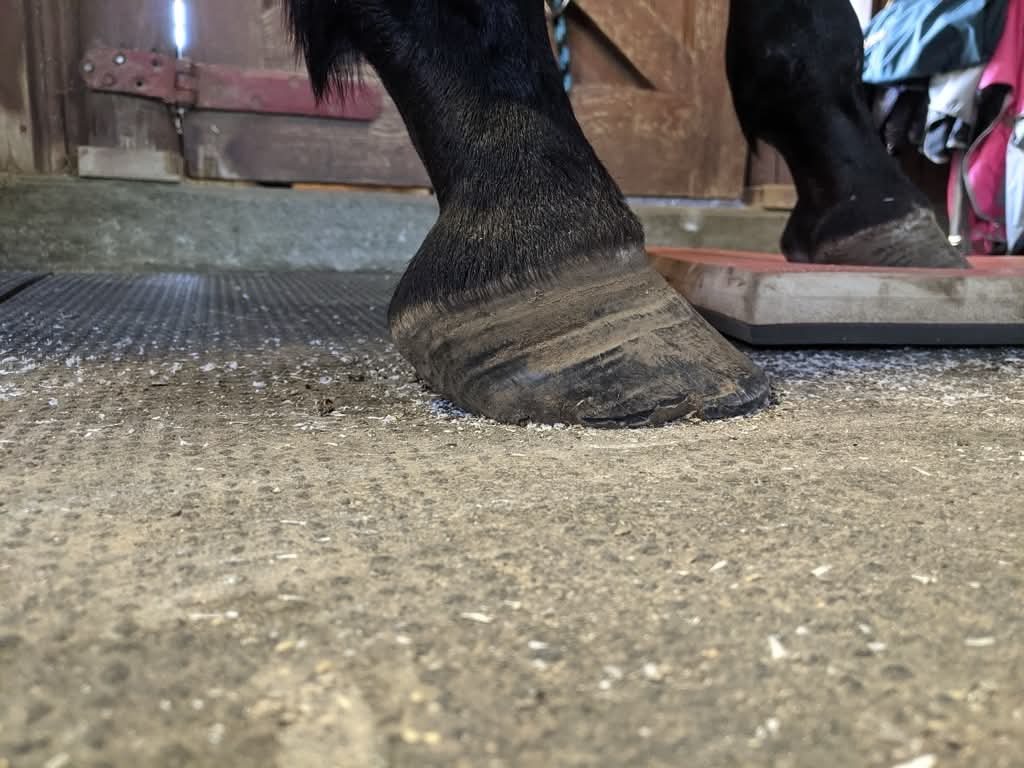
In many cases, the hoof provides evidence of dietary or metabolic challenges long before more obvious clinical signs appear. As Pete Ramey says, the hoof is like the “canary in the coal mine,” telling us about the horse’s systemic health. If we view the hoof as a Check Engine light, we can address issues before they become overt lameness.
What Wear Patterns Can Tell Us About Movement
The hoof is also constantly recording how the horse moves.
Wear patterns, flares, chips, and asymmetries can provide valuable information about compensatory movement patterns occurring elsewhere in the body.
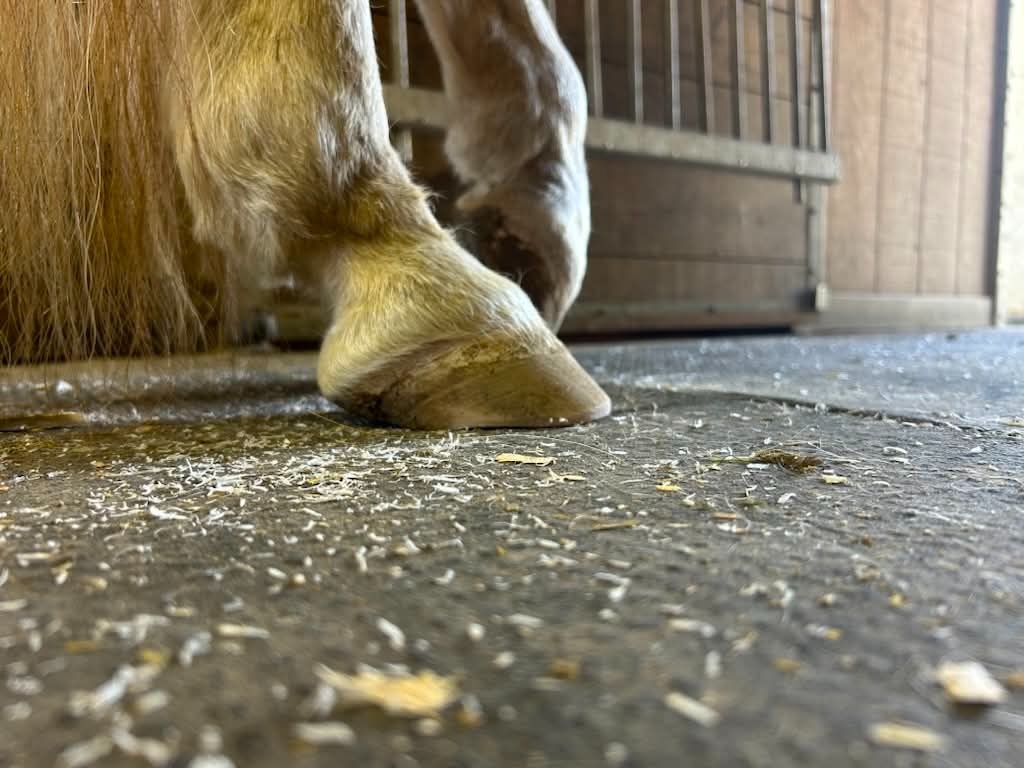
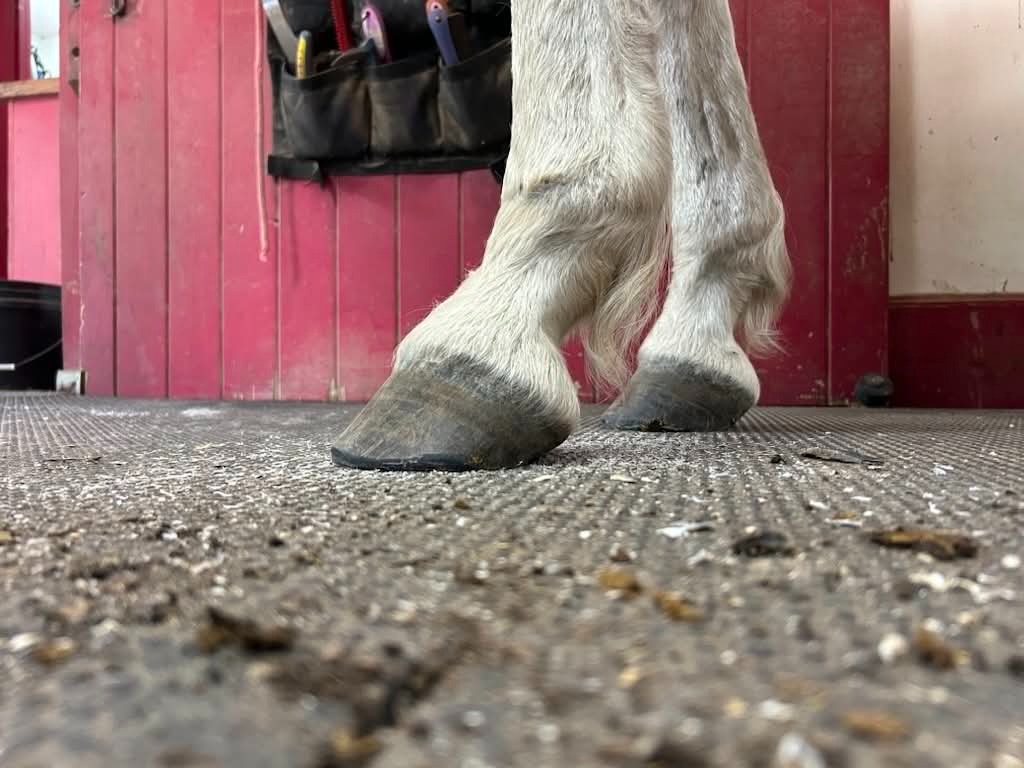
For example, one side of the hoof may become steeper while the opposite side develops more flare. One side may chip more frequently, wear faster, or develop a thinner hoof wall. These patterns often reflect uneven loading rather than a problem with the hoof itself.
A hoof with a steep and flared side of the foot
A horse dealing with discomfort in a shoulder, neck, back, pelvis, or the limb or hoof itself may alter how they load the foot. Over time, the hoof adapts to those forces and begins to reveal the compensation.
Repeated flaring in the same location, uneven wall thickness, asymmetrical growth, and persistent imbalance from side to side can all serve as clues that the horse may not be moving symmetrically.
Rather than simply trimming away these signs, it is important to ask why they are occurring. The hoof is often reflecting movement patterns that originate elsewhere in the body.
Learning to Listen
Every hoof tells a story.
The challenge is learning how to interpret the information rather than focusing solely on what the hoof looks like. Comfort, movement, nutrition, metabolic health, tissue quality, and compensation patterns can all leave their mark on the foot.
When we begin to view the hoof as a source of information instead of just something to maintain, we gain a deeper understanding of the horse as a whole. The hoof becomes more than a structure to trim – it becomes a conversation.
And if we’re willing to pay attention, our horses are often telling us far more than we realize.