Author : Alicia Harlov
Alicia Harlov is one of Flex Boots’ Equine Educators and Barefoot Trimming Specialists, where she creates video content as well as written articles pertinent to barefoot hoof health and soundness. Outside of Flex Boots, Alicia is a PHCP-certified hoofcare provider and program mentor who lives on the North Shore of Massachusetts, where she runs a hoof rehabilitation facility with a special focus on navicular horses. She pursues continuing education for hoofcare, equine nutrition and biomechanics at every opportunity, from sources around the world.
Understanding Toe Dragging
Toe dragging is one of those subtle signs that can be easy to dismiss at first. You might hear it before you see it, sounding like a quiet scuff against the ground, or notice unusual wear at the toe of the hoof or boot. Some think it is just a “lazy” horse that needs some ground poles to “learn where its feet are.” Some may assume it is just a trim issue – and it’s tempting to assume the solution is simple, and just ask the hoofcare provider to shorten the toe, adjust the trim, and move on. But in reality, toe dragging is rarely just a hoof issue or a behavioral issue – it is a movement issue, and movement is influenced by the entire horse, from the brain to the back to the limb itself. When a horse drags its toe, it is not fully lifting the limb during the swing phase of motion. That can happen because the horse cannot lift the limb easily, does not want to due to discomfort, lacks awareness of where the limb is in space, or is compensating for pain elsewhere. While it can be tempting to just chase the symptom, finding the root cause is important in order to ensure the soundness and quality of life for the horse.

Hind Limb Toe Dragging
When toe dragging shows up in the hind limbs, it’s important to start by looking at the horse’s “engine.” The hind end is responsible for propulsion, engagement, and power, so any limitation here can affect how the limb moves forward.
Stifle issues are a common contributor. Conditions such as locking patella, meniscal injury, or ligament strain around the stifles can interfere with the horse’s ability to flex and advance the limb smoothly. Instead of lifting cleanly, the limb may drag or be placed later than normal, leading to a worn toe or that “scuffing” sound in movement.
Similarly, sacroiliac (SI) pain can disrupt the connection between the hind limb and the spine. When the SI joint is unstable or painful, the horse often avoids fully loading or engaging the hind end, leading to reduced impulsion and incomplete hind limb lift in movement.

Back stiffness also plays a major role. A horse with a tight or painful back will struggle to round through the topline and use its body effectively. When the back cannot move freely, the limbs often lose fluidity as well. Sometimes a horse can seem to move as if they are a stick figure – four stiff, tight limbs attached to a hollow back and body. This can often be back pain, and the lack of fluidity through the body can lead to toe dragging. There can be many causes for back pain, including saddle fit issues, poor fitness or training, or even pathology such as kissing spine or spinal malformation. These would require a more extensive work up with a veterinarian, and not just a simple trim “fix.”
Muscle weakness is another factor that is often overlooked. Weakness in the topline, hamstrings, or gluteal muscles reduces the horse’s ability to properly move the hind limb, especially in horses returning from time off or dealing with chronic discomfort. Joint pain, particularly in the hocks or hips, can further limit stride length and flexion. In these cases, toe dragging is not laziness, it is the horse protecting itself from discomfort.

Neurological Causes
In some cases, toe dragging is not about strength or pain, but about bodily awareness. Neurological conditions such as Equine Protozoal Myeloencephalitis, Lyme disease, and Wobbler syndrome can interfere with proprioception, or the horse’s ability to sense where its limbs are in space. When that is compromised, the horse may drag its toes, place its feet inconsistently, or appear uncoordinated. This type of toe dragging often presents differently than pain-based movement; it may be inconsistent, paired with stumbling, or accompanied by other neurological signs. This is not something that can be corrected through trimming alone and requires veterinary investigation as well.

Front Limb Toe Dragging
Toe dragging in the front limbs is often quickly attributed to long toes or poor hoof balance. While hoof shape can certainly contribute, it is rarely the whole story. A long toe can delay breakover and increase the effort required to lift the limb, which may lead to a worn toe, which is often thought of as dragging. While the horse may be dragging the front feet, it can also simply be the hoof wearing through movement over extended breakover.
It’s important to note, however, that focusing only on the trim can overlook deeper issues. Heel pain is a significant factor in many front limb worn toe cases. Conditions such as navicular issues or even severe thrush affecting the frog can make the horse reluctant to load the back of the foot properly. This alters how the limb moves and can contribute to an overly worn toe.

Shoulder restriction or pain can also limit the horse’s ability to advance the limb. When the shoulder does not move freely, stride length shortens and the limb may not clear the ground effectively. This can also happen with knee arthritis or other carpal issues, limiting range of motion, and leading to the hoof not clearing the ground in movement.
As with the hind limbs, neurological causes must also be considered. Inconsistent dragging, coordination issues, or changes in limb placement can point toward a problem beyond the hoof itself.

Why Trimming Alone Isn’t the Answer
It’s easy to see toe wear and assume the solution is simply to bring the toe back. In some cases, appropriate trimming can help improve breakover and reduce strain, but when toe dragging is driven by pain, weakness, or neurological dysfunction, trimming alone will not resolve the issue. In fact, focusing only on the hoof can sometimes mask the real problem or even make the horse more uncomfortable if the underlying cause is not addressed. The hoof reflects what is happening in the body, it does not always cause it. Toe dragging should always be viewed in the context of the entire horse. Movement patterns, muscle development, symmetry, and behavior all provide important clues. Pay attention to where the horse is most comfortable, such as on soft versus firm footing, and whether the dragging is consistent or changes over time. Observe how the horse moves in different situations, both in-hand and under saddle. These details help determine whether the issue is localized to the foot or part of a larger systemic problem. Asking the right question is critical: is this truly a hoof issue, or is the hoof simply showing the result of something else?

When to Investigate Further
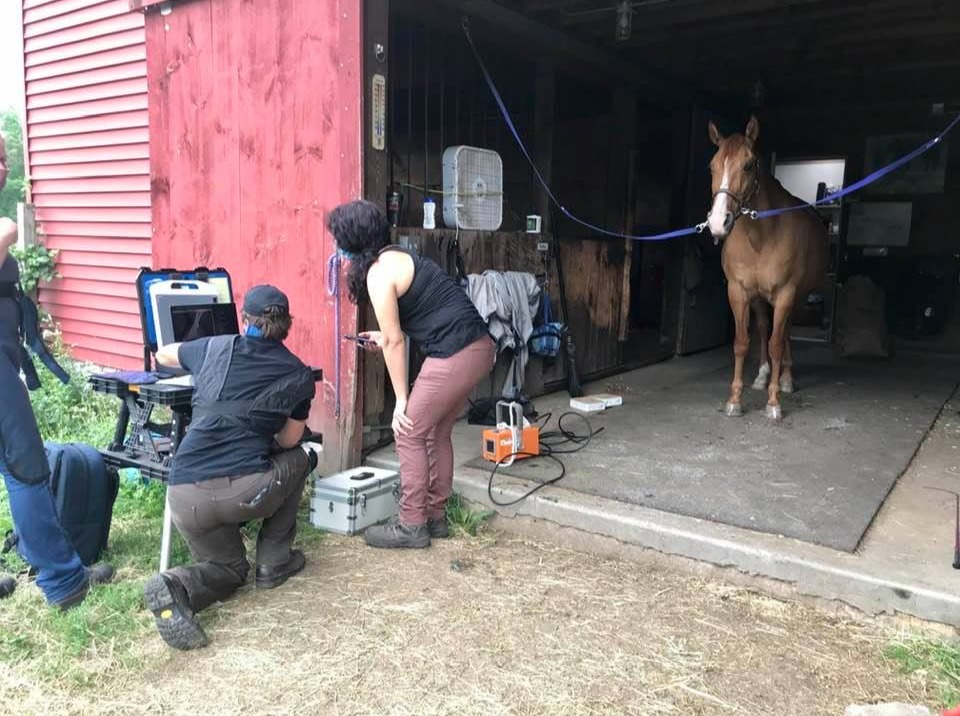
Toe dragging becomes more concerning when it is new, worsening, or asymmetrical, or when it is accompanied by tripping, stumbling, or visible discomfort. If it does not improve with appropriate hoof care, or if other signs are present, it is important to involve a veterinarian. Collaboration between hoofcare providers, veterinarians, and bodyworkers often provides the clearer picture and a plan moving forward to help the horse. Each perspective adds another layer of understanding, helping to identify the root cause rather than just managing the symptom.
Final Thoughts
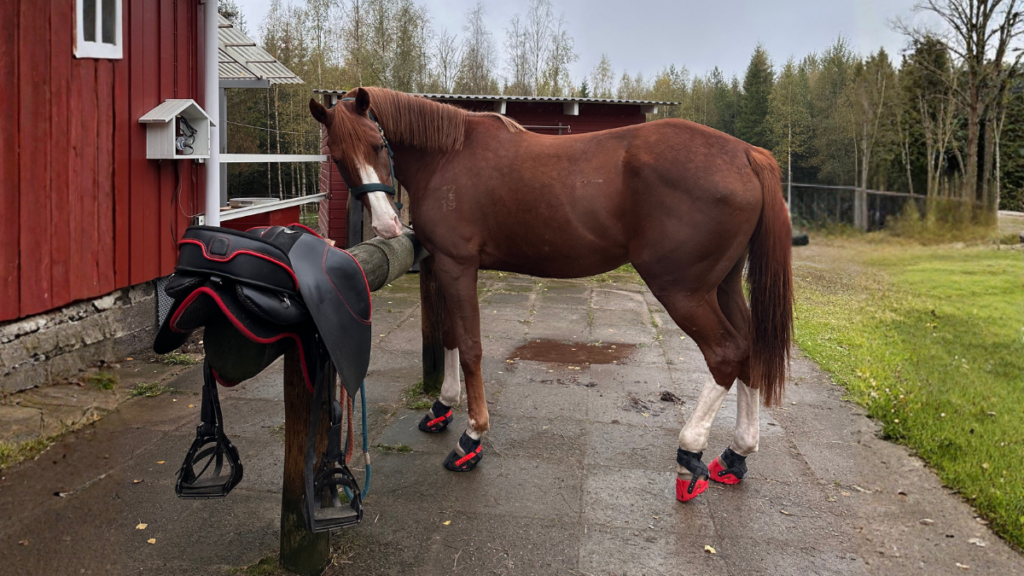
Toe dragging is not just a cosmetic issue or a trimming problem, it is often information that something is going on with the body. It reflects how the horse is moving, loading, and functioning as a whole. Rather than focusing solely on the toe itself, the goal should be to understand why the horse is unable or unwilling to lift the limb properly. Keeping an eye on the wear patterns of both the hoof and the hoof protection or boots you use can help find an issue before it becomes a larger problem. When you address the underlying cause, you don’t just improve the hoof, you improve the horse’s comfort, movement, and overall wellbeing.