Author : Alicia Harlov
Alicia Harlov is one of Flex Boots’ Equine Educators and Barefoot Trimming Specialists, where she creates video content as well as written articles pertinent to barefoot hoof health and soundness. Outside of Flex Boots, Alicia is a PHCP-certified hoofcare provider and program mentor who lives on the North Shore of Massachusetts, where she runs a hoof rehabilitation facility with a special focus on navicular horses. She pursues continuing education for hoofcare, equine nutrition and biomechanics at every opportunity, from sources around the world.
If you have been around horses for any amount of time, you have probably seen a few with toe cracks. They seem to be one of the most common hoof wall defects, and can be one of the most puzzling issues to deal with. Many times, cracks seem to appear “out of nowhere,” and can even stay the same length on the wall, no matter how much the rest of the wall grows out. They often can appear harmless, while other times they can become deep, unstable, and even seemingly painful for the horse. While some cracks may look minor, it’s important to realize that even the most “superficial” crack is your horse’s hoof telling you that something isn’t quite right. The hoof is a mirror into the health of the horse, and a toe crack can reveal a systemic issue.
What Is a Toe Crack?
Before we dig into what causes toe cracks and how to approach them, first we need to consider what they are. A toe crack is a vertical crack that forms in the front (toe) portion of the hoof wall. They can be anything from a faint surface line or shallow split that barely goes through the outer hoof wall, to a deep crack that penetrates through to the white line or sole. Some toe cracks can be treated and grow out just fine, while others seem to worsen or even destabilize over time. To determine the best treatment plan, it’s important to consider what is causing them.

Common Causes of Toe Cracks
- Nutrition and Hoof Health
Nutrition plays such a large role in the health of the hoof that we see growing down, and a strong hoof wall grows from providing the horse with the proper building blocks. A diet that isn’t providing the daily NRC requirements of nutrients can lead to weak hoof horn that is susceptible to breakage and cracking, and allows microbes to take hold and exacerbate the damage.
So what kind of diet is necessary? At the bare minimum, any horse’s diet should be meeting the daily requirements of protein and major and minor minerals to ensure the wall quality is the healthiest it can be. The gold standard to make sure the diet is adequate is to test the horse’s daily forage, and balance their diet based on that hay test. In some cases, however, horse owners are unable to test their hay due to inconsistent supply. In those cases, it may be beneficial to at least supply your horse with good levels of copper and zinc, as well as the limiting amino acids: lysine, methionine, and threonine. For more in depth information on nutrition and the hoof, you can explore our nutrition lessons in the Hoof to Horse Academy.
- Metabolic Issues
Another significant factor in hoof health – including wall health – is the horse’s endocrine system. A horse can have a minerally balanced diet and still struggle with wall health issues if they have an underlying metabolic disorder that is not properly managed. The two main metabolic concerns to consider include IR, or insulin resistance, and PPID, also known as Cushing’s Disease. In an IR horse, excessive sugar and starch can lead to inflamed laminae, stretched white line, and flaring, all of which can predispose a hoof to excess leverage and cracking. If the root cause of the inflammation – the insulin issue – isn’t addressed, these cracks can be incredibly difficult to grow out.
PPID horses can also deal with weak hoof wall, due to excessive production of a hormone called ACTH, from a malfunctioning pituitary gland (specifically, the pars intermedia). If diagnosed, the best course of treatment for these horses is management with medication, which can not only slow the progression of PPID itself, but also often clear up chronic hoof issues, including toe cracks.
- Microbial Infection
While healthy hooves typically can handle the microbes they meet in their everyday environment, even subtle hoof health issues can leave a hoof susceptible to microbial infections. Some toe cracks are a product of this opportunistic bacteria or keratin-digesting fungi. This can look like a toe crack that has black or brown “gunk” that seems to eat away at the toe itself, often called “seedy toe,” a name for a white line disease infection at the toe.
In these cases, addressing nutrition and metabolic health can help grow in a healthier hoof wall from the coronary band down, while topical treatments and soaks – and even debridement in some cases – can help address the toe crack at the ground level.
- Coffin Bone Loss / “Crena”
One particularly frustrating cause of toe cracks is coffin bone loss or a toe “crena.” A crena can be congenital, where a horse is born with a naturally occurring bone defect at the toe, while in some cases the bone loss can come from prolonged inflammation of the coffin bone (such as from pedal osteitis or chronic laminitic issues).
These issues are especially frustrating because it can feel as though nothing helps them to grow out. As soon as it seems the hoof is making progress, even one week later, the crack can reappear. This is likely due to disorganized or damaged papillae where the bone itself is damaged. The papillae’s job is to provide nutrients to the hoof and help with growth, and if these are damaged, the white line and wall connection may never be perfect. These cases often benefit the most from weekly toe rasping alongside a tight diet, and regularly microbial treatment to keep cracks at bay.
- Other Hoof Imbalance
Some cracks are not from just an overly long hoof or long toe, but from uneven trimming or hoof loading. An imbalance in the wall can cause a horse to overload a certain area of the foot, putting unnecessary pressure in that spot. The hoof can react by “splitting” because of these uneven forces.
As with issues of toe or wall length, the best approach with this is to keep a short trim cycle and ensure the hoof is carefully balanced at each trim. It’s also important to watch the horse move before and after the trim, to ensure the horse is landing and loading its feet in a way that allows even distribution of ground reaction forces.
- Compensation
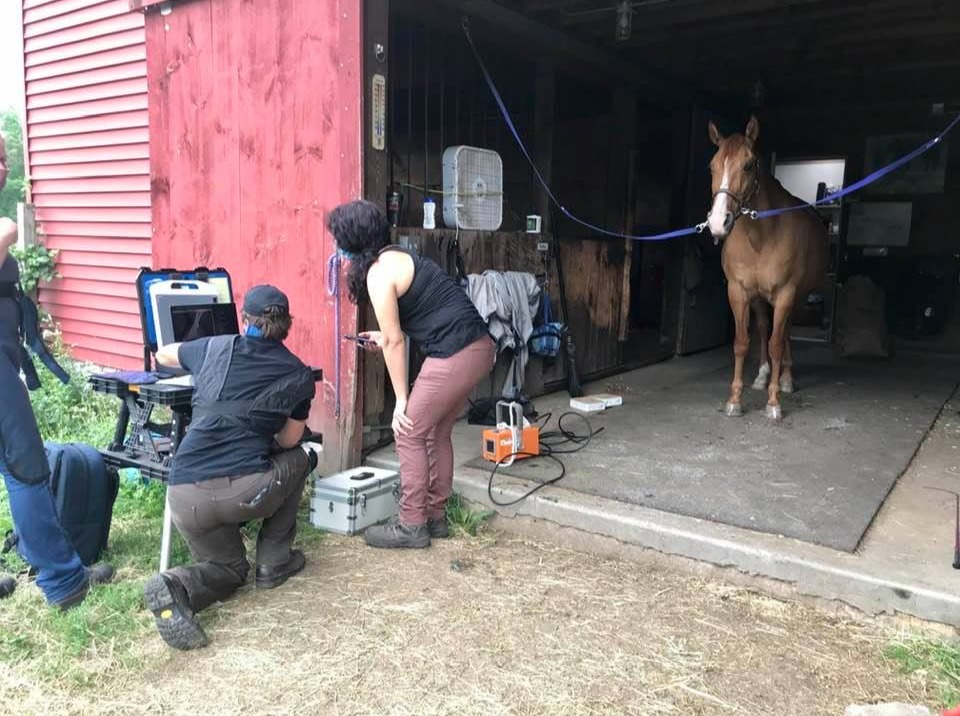
Sometimes, it seems the diet is great, the horse isn’t metabolic, and the trim is great, yet there is still a toe crack lingering in a certain front foot. For some of these cases, compensation from another limb can be playing a role. For example, a horse struggling with arthritis in a right hind limb may overload their left front foot to compensation, resulting in a toe crack in that foot. The same can be said about offloading one front foot – often due to pain – and overweighting the other front. In these cases, the cracks can be difficult to remedy until the source of the compensation is addressed. Diagnostics, bodywork, and rehabilitation exercises can help alleviate the load on the toe crack, and eventually lead to it growing out.
As we can see, toe cracks can happen for many reasons, and they often carry important information. Instead of starting with asking, “How do I fix this crack?” a better question to start with is, “Why did this crack form in the first place?” When you follow that question, you often find the most effective treatment.