Author : Alicia Harlov
Alicia Harlov is one of Flex Boots’ Equine Educators and Barefoot Trimming Specialists, where she creates video content as well as written articles pertinent to barefoot hoof health and soundness. Outside of Flex Boots, Alicia is a PHCP-certified hoofcare provider and program mentor who lives on the North Shore of Massachusetts, where she runs a hoof rehabilitation facility with a special focus on navicular horses. She pursues continuing education for hoofcare, equine nutrition and biomechanics at every opportunity, from sources around the world.
A barefoot transition for a horse can be an important step toward healthier hooves, but it’s not always as simple as pulling the shoes and walking away. Every horse responds differently, and the key to a successful transition is preparation, observation, and comfort management.
Below is an overview of one way to approach pulling shoes and helping a horse adjust to barefoot life.

Address Hoof Health Before the Appointment
If you started with the Transition to barefoot -article, you know that changing diet prior to pulling shoes can help minimize hoof inflammation, and give a kickstart to healthier hoof growth. While that can take 8-10 months to grow in, there are other aspects of hoof health an owner can focus on prior to the shoe pull appointment.
One of the most common issues we can see in a horse that is shod is thrush, especially central sulcus thrush (a deep crack in the center of the frog). This is common because often, the branches of the shoe prevent the front from interacting with the ground, and allow bacteria to take hold. Thrush can make a horse sore before starting the barefoot transition, so treating it early can make a big difference.
To set their horse up for success, owners should address frog health and treat for thrush as soon as possible. This helps ensure the horse isn’t dealing with avoidable sensitivity when the shoes come off. Thrush may seem minor, but it can directly cause lameness and make the transition harder.
When choosing a thrush treatment, the best options will avoid caustic ingredients or drying agents. Treatment can be as benign as a 50:50 mixture of apple cider vinegar and water, or you can utilize zinc oxide (such as in Desitin diaper cream), Red Horse Products such as Hoof Stuff and Artimud, or other clays or similar products that use more gentle, yet effective, ingredients. Treating daily before shoe pull can help give your horse’s hooves a good head start in comfort.

Assess Your Horse Before Shoe Removal
When your hoofcare provider arrives to pull shoes, it’s often helpful to start with a movement assessment:
- If there’s a safe, flat surface, film the horse in slow motion to study hoof landings.
- Watch the horse in shoes, immediately after pulling shoes (before any trim), and again after trimming. This can allow you to see if there is any change in comfort before or after the trim, or if the horse might need some temporary protection after shoe pull.
It is also important to take hoof photos – ideally before shoes come off and after trimming – to track changes over time.

Removing Shoes with Care
When pulling shoes, especially when the horse is going barefoot, remove each nail individually with crease nail pullers. This preserves as much hoof wall as possible, which allows for maximum protection while the hoof adjusts.
For the first trim after pulling shoes, be conservative:
- As most horses adjust, a simple bevel and roll to the wall to prevent chipping can keep the horse more comfortable than doing a bigger trim.
- It is rare to touch the sole at this stage, as the horse already has to adjust to not having shoes. Thin or sensitive soles need all the protection they can get.
Add Protection When Needed
Not all horses walk out of shoes without missing a beat. Some need extra comfort and protection, especially if they:
- Have thin soles
- Have a history of laminitis, founder, or navicular
- Show signs of inflammation in the hoof capsule due to diet imbalances or metabolic concerns
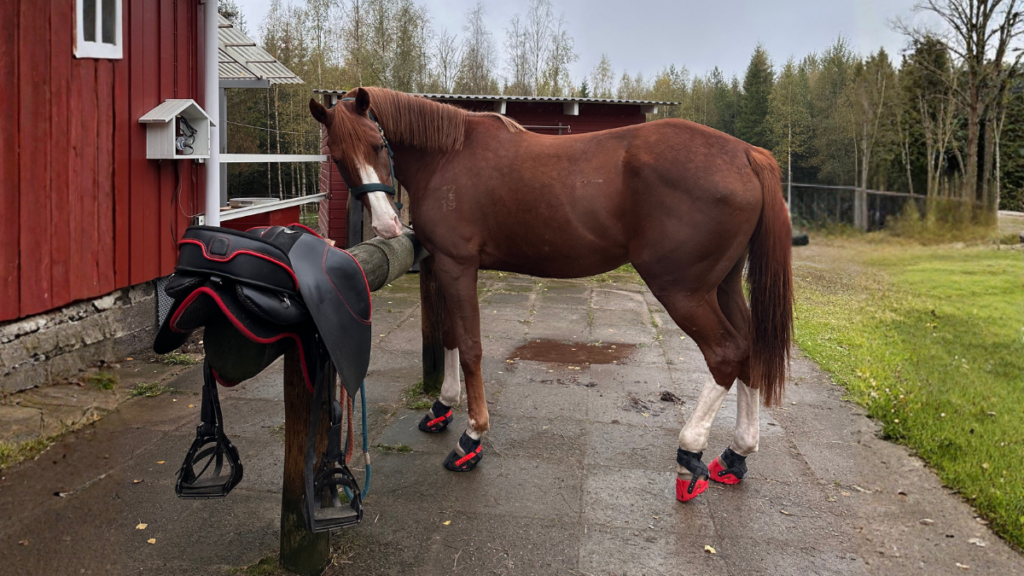
In these cases, horses can benefit from extra protection such as hoof boots and pads, or adding a callous layer through products like Hoof Armor (a Kevlar-based epoxy), or Red Horse StrongHorn. Try to avoid product that use drying agents like formaldehyde (which is included in some hoof hardeners!), as overly drying the sole at this stage can create microfissures in the sole that can allow bacteria or microbes to take hold.

Keep Communication Open
One of the most valuable parts of the process is collaboration between the owner, farrier/trimmer, and veterinarian. If diagnostics are needed, like radiographs or lameness evaluations, working together keeps everyone on the same page.
It is equally important for owners to share any changes or concerns right away. The worst thing is finding out later that the horse has been sore or struggling, so early feedback helps the team make adjustments before small issues become big setbacks.
It is also important for the owner to have realistic expectations during the barefoot transition. The hoof is a living structure. Its internal tissues, like the frog, digital cushion, and laminae, need time to strengthen, just like muscles in our own bodies.
A helpful guideline: allow about one month of transition time for every year the horse has been shod. Some horses adapt faster, but this gives a realistic framework for planning. This does NOT mean the horse should be living in pain for that amount of time. Pulling shoes should never mean asking the horse to “tough it out.” Forcing a sore horse to walk over uncomfortable surfaces can cause bruising, abscessing, or damage to sensitive tissues. The goal is to keep the horse moving comfortably while the hoof adapts, using whatever tools are needed, such as boots, pads, Hoof Armor, or other products, until the horse’s own hoof structures can provide protection.
Every horse is different, but with preparation, communication, and a focus on comfort, the transition to barefoot can be smooth and successful.

Quick Takeaways
✔ Prepare hoof health before pulling shoes
✔ Assess movement before and after removal
✔ Be conservative with the first trim
✔ Use protection if needed (boots, pads)
✔ Prioritize comfort throughout the transition