Laminitis is a severe condition affecting a horse’s hooves, potentially leading to prolonged health issues if untreated. It occurs when the lamellar layer in the hoof becomes inflamed and separates, which can damage the hoof structure.
This blog covers what laminitis is, how to recognise it, its causes and symptoms, and why early treatment is crucial. Additionally, we discuss how Flex Boots can aid in the rehabilitation of a horse suffering from laminitis and what else owners can do to address the problem.

What is laminitis?
Laminitis is inflammation in a horse’s hoof that occurs when the internal layers of the hoof, the lamellae, become inflamed and separate from each other. This can cause severe pain and damage to the hoof structure.
Stages of laminitis
Early stage: The horse may move cautiously and exhibit a pronounced digital pulse (this is detectable by palpation in the area above the hoof near the fetlock and pastern). A reddish ring may appear above the coronet band, and a horizontal groove (so called ‘event line’) may develop over time on the hoof wall.
In the photo below, you can clearly see that the coronet band is a more reddish colour, and the event lines are visible especially on the right side of the hoof.

Progression to more severe stages: The lamellae separate further, and the horse may shift weight to its hind legs. The tip of the coffin bone may rotate downward toward the sole, and in severe cases, it can penetrate the sole.
Sinking: This is the most critical form of laminitis, where the hoof structure collapses, and the coffin bone sinks toward the sole.
How to recognise laminitis
Diagnosis begins with checking the digital pulse. In healthy horses, the pulse is less noticeable, but with laminitis, it becomes stronger. The pulse should be checked after the horse has been standing still for a while.
Other signs include:
- A reddish ring around the coronet band.
- Stiff or cautious movement, especially on hard ground.
- Horizontal grooves on the hoof wall, indicating the severity of inflammation.

Causes of laminitis
- Nutritional causes:
- Excessive sugar and starch intake, particularly in spring when pasture grass is lush. High-sugar hay can also pose a risk.
- Mechanical stress:
- Long distances on hard surfaces can strain the lamellae and cause inflammation.
- Hormonal changes:
- In some mares, being in season can trigger laminitis.
- Improper hoof trimming:
- Excessive pressure on the lamellae due to poorly performed hoof trims can lead to laminitis.

Why it’s important to treat laminitis
Laminitis is a serious condition that can lead to permanent damage in the hoof and reduced mobility. Untreated, it can worsen and cause:
- Structural damage to the hoof, potentially leading to improper alignment of the coffin bone.
- Chronic pain, significantly reducing the horse’s quality of life.
- Sinking or detachment of the coffin bone, which may necessitate euthanasia.
In the worst case scenario, untreated laminitis can lead to euthanasia.
Flex Boots and their role in laminitis treatment
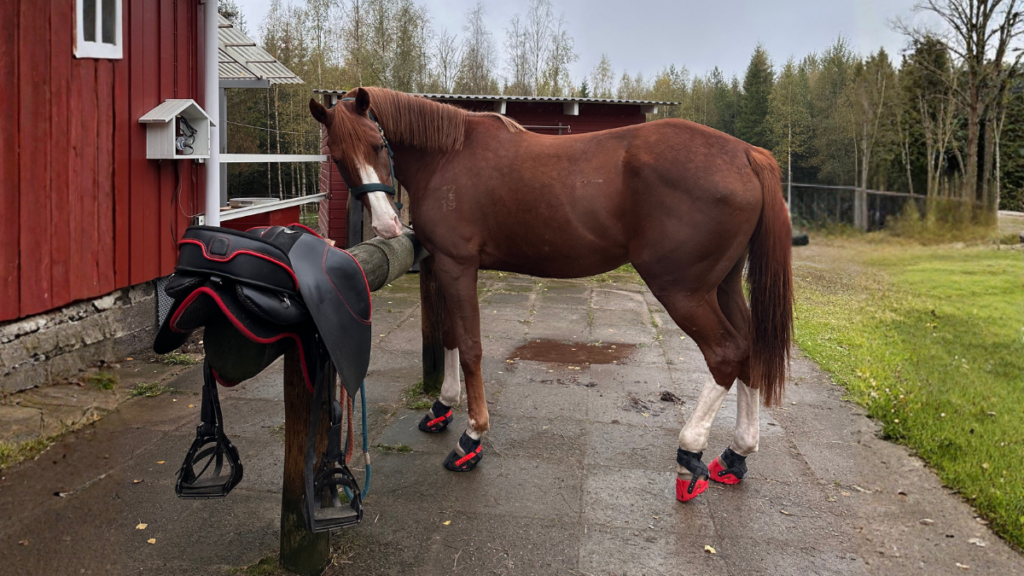
Flex Boots are designed so that they will also assist with laminitis treatment and can play a vital role in rehabilitation. Their patented sole design, flexibility, and protection enable horses to remain mobile while preserving hoof function and biomechanics.

Benefits of Flex Boots for laminitis:
- Sole protection and shock absorption: Flex Boots protect the sole and frog area, reducing pain and allowing movement on various surfaces.
- Flexible sole: The flexibility of the boots supports circulation within the hoof, speeding up recovery.
- Suitable for use 24/7: Flex Boots are designed for use in all conditions, including turnout.
How Flex boots help:
- They allow the horse to move comfortably even during laminitis, promoting circulation and accelerating hoof wall growth.
- If the hoof wall has flared, a larger boot size with additional pads can be used to protect the sole and provide cushioning for the joints.

Additional steps for treating laminitis
Balancing nutrition: For nutritionally induced laminitis, provide low-sugar hay and avoid early spring turnout.
Trimming and hoof care: Weekly rasping and maintaining proper toe and heel balance can help maintain hoof integrity and speed recovery.
Supporting treatment: If hormonal imbalances are the cause, consult a veterinarian for treatment options such as acupuncture or osteopathy.
When exercising the horse on hard surfaces: Use flexible hoof protection (e.g., Flex Boots) to reduce mechanical stress.
In conclusion
Laminitis is a severe condition requiring diligent care and timely intervention. Causes can range from nutritional factors to hormonal imbalances and mechanical stress. Early recognition is vital to ensure the horse receives treatment and to prevent further damage. Flex Boots can aid in laminitis recovery by providing protection and flexible support for the hooves. Owners can also contribute by managing the horse’s diet, maintaining hoof care, and consulting a veterinarian for additional treatment options.