Author : Alicia Harlov
Alicia Harlov is one of Flex Boots’ Equine Educators and Barefoot Trimming Specialists, where she creates video content as well as written articles pertinent to barefoot hoof health and soundness. Outside of Flex Boots, Alicia is a PHCP-certified hoofcare provider and program mentor who lives on the North Shore of Massachusetts, where she runs a hoof rehabilitation facility with a special focus on navicular horses. She pursues continuing education for hoofcare, equine nutrition and biomechanics at every opportunity, from sources around the world.
If you’ve spent any time around horses, you’ve probably heard advice that has been passed from owner to owner for decades. Some of it is rooted in good science, some of it is based on tradition, and some of it is simply a myth that refuses to die.
The problem with hoofcare myths is that they can lead owners to make decisions that don’t actually benefit their horses. Every horse is an individual, and good hoofcare isn’t about following rigid rules, but instead about understanding anatomy, biomechanics, nutrition, and what your horse needs.
Let’s take a look at five common hoof care myths and what the evidence actually tells us.
Myth #1: White Feet Are Weaker Than Dark Feet
This is one of the oldest myths in the horse world, and as a full-time hoofcare provider myself, I hear it all the time from owners.
“I can’t believe his feet are doing so well, even though they’re white!”
Or even something like, “Well it’s no surprise that foot abscessed. It’s the white foot.”
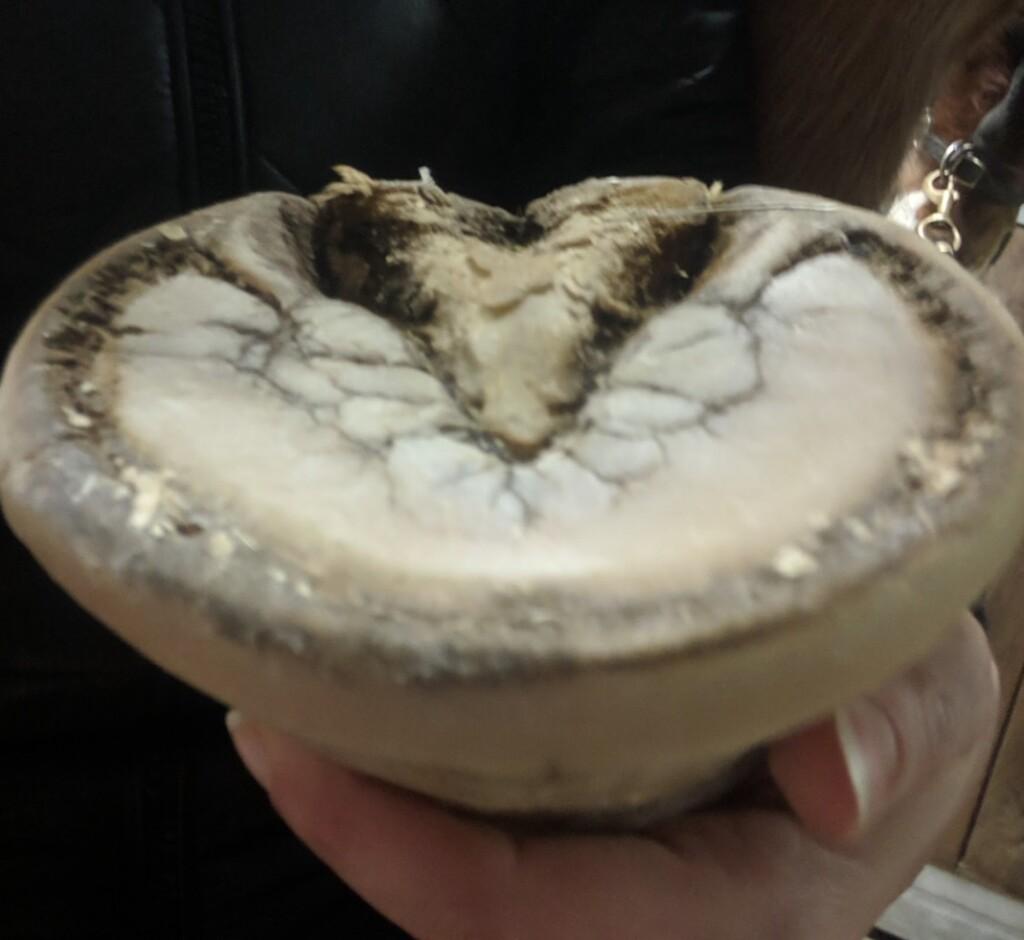
Many people still believe that white hooves are naturally softer, weaker, or more prone to issues simply because they lack pigment. Fortunately, science says otherwise.
The only real difference between a white hoof and a black hoof is the amount of melanin in the outer hoof wall. Melanin is responsible for pigment, but it is not responsible for hoof strength. The myth may have stemmed from the fact that we can see bruising more easily on white feet, but that doesn’t mean that darker feet don’t have the same amount of bruising – it is possible that it just can’t be seen!
There is no meaningful difference in the mechanical strength of pigmented versus non-pigmented hoof horn. A healthy white hoof can be just as strong, durable, and resilient as a black hoof. The quality of the hoof is influenced far more by nutrition, metabolic health, moisture balance, trimming, and environmental conditions than by its color.
Another aspect to consider is that many horses have striped hooves, where there is a blend of white and dark pigment. If the white portions were truly weaker, we would likely see the feet split at the change in pigment, with weaker areas!
If you’ve ever met a horse with four solid white feet that comfortably works on rocky terrain, you’ve already seen this myth disproven.
The takeaway: Judge a hoof by its quality, not its color.
Myth #2: Soreness After a Trim Is Normal
You’ve probably heard someone say: “They’re just adjusting.”
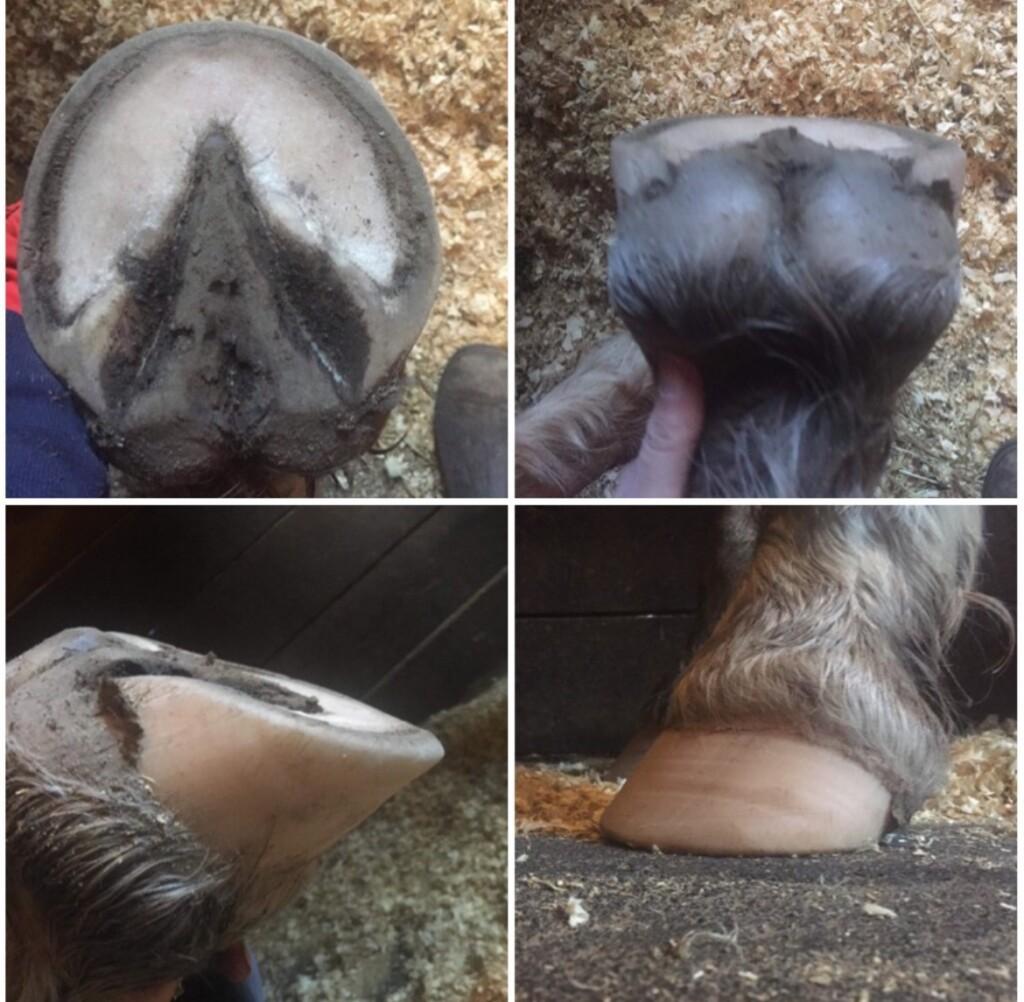
While a horse may move slightly differently after significant therapeutic changes, a routine trim should not leave a horse sore. The goal of trimming is to improve or maintain comfort, not create discomfort.
If a horse walks away significantly more sensitive than before the trim, it deserves a closer look. It is possible it could be from the trim itself; excessive sole removal, aggressive shortening of the toe, lowering the heels too quickly, or changing the angles of the hoof faster than the horse can comfortably adapt may all contribute to post-trim soreness.
This is an important consideration for ALL horses, but especially for those recovering from laminitis, thin soles, navicular-related pain, arthritis, or chronic compensation patterns. Sometimes less really is more. A good trim respects what the horse can comfortably tolerate today, while working toward healthier balance over time.
Sometimes pain does happen after a trim, but it has nothing to do with the trim at all. Even a minor trim can make a horse sore if they are already dealing with inflammation in the hoof capsule. A horse dealing with early or low grade laminitis can seem “crippled” after any trim, as even a small change can shift the horse’s weightbearing enough to flare inflammation. This, however, is not normal, and requires investigation into the source of the inflammation.
The takeaway: Your horse should generally be just as comfortable – or more comfortable – after a trim than before it.
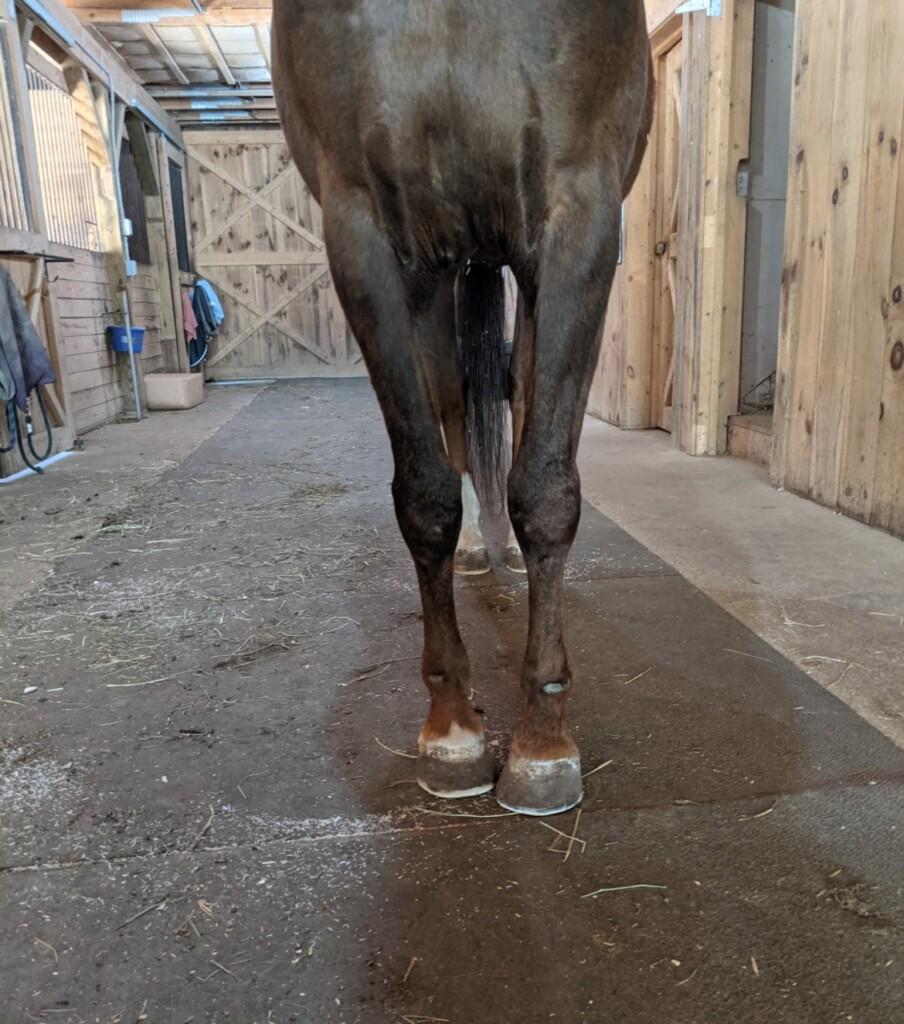
Myth #3: Every Horse Needs a Hoof Supplement
Walk into any feed store and you’ll find shelves full of hoof supplements promising stronger walls, faster growth, and healthier feet. But the truth is, many of these are all talk, and little substance once we read the actual labels.
Most horses don’t need a “hoof supplement.” What they need is adequate nutrition.
Healthy hoof horn is built from amino acids, vitamins, minerals, and energy. If the horse’s overall diet is deficient, or minerals like copper and zinc are out of balance because of excess iron, hoof quality will suffer no matter. While minerals and quality diet are needed to remedy this, most commercially available “hoof supplements” rarely address this balance in a proper way.
Rather than reaching for a hoof supplement first, start by asking:
- Is my horse receiving a diet that meets National Research Council (NRC) requirements?
- Has my hay been tested?
- Is the mineral balance appropriate?
- Is my horse getting enough quality protein?
Many horses improve dramatically once their overall diet is balanced, even without purchasing products marketed specifically for hoof health. Conversely, adding a hoof supplement to an already unbalanced diet often does little to solve the underlying issue.
The takeaway: Hooves grow from the inside out. Nutrition matters far more than marketing.
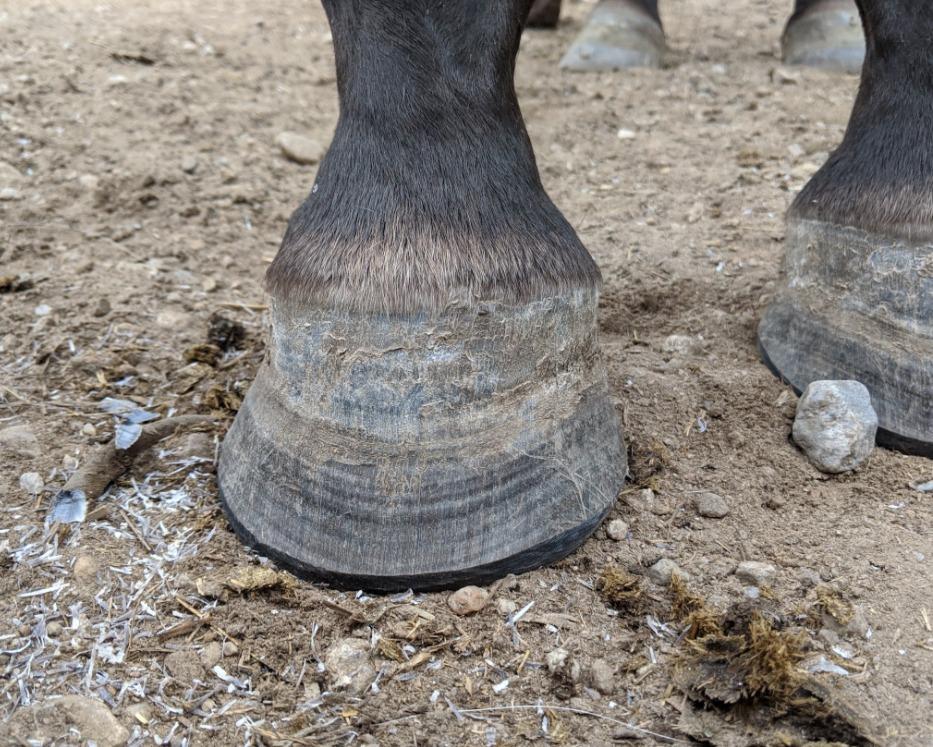
Myth #4: Barefoot Is Always Better
Barefoot has become increasingly popular, and for good reason. Many horses thrive without shoes. But barefoot isn’t necessarily the goal.. hoof health and comfort are.
There are horses recovering from laminitis, thin soles, navicular issues, or severe hoof capsule distortion or pathology that simply need additional protection while they heal. Thankfully, hoofcare has come a long way in the last few decades, and now protection isn’t limited to choosing between “barefoot” and “metal shoes.”
Modern hoof boots and pads have completely changed how we can handle comfort and soundness during rehabilitation. They allow horses to receive protection exactly when they need it while still allowing the hoof to function naturally during turnout or in appropriate conditions.
Some horses eventually transition comfortably to being completely barefoot. Others perform best with boots or other therapeutic options. There isn’t a single solution that works for every horse.
We can often see in hoof rehabilitation that hoof shape and loading adapt over time, and management decisions should be based on the horse’s individual needs rather than ideology.
The takeaway: Don’t ask whether barefoot is “better.” Ask what keeps this horse the most comfortable.

Myth #5: A 6-8 Week Trim Cycle Works for Every Horse
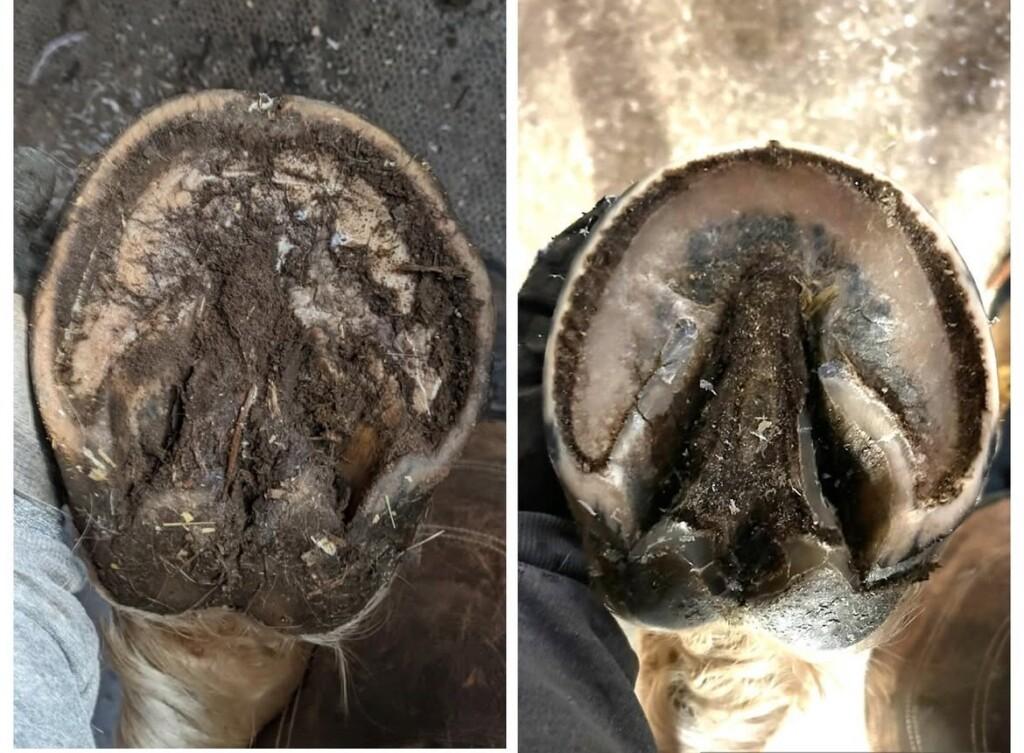
This recommendation is probably one of the biggest reasons many horses’ hoof health doesn’t improve over time. While some horses with excellent hoof quality, ideal conformation, and minimal workload may do well on a six-to-eight-week schedule, many simply don’t.
Hooves are constantly growing. Every week, leverage changes, breakover moves forward, heel height changes, hoof angles begin to shift.
Research has shown measurable changes in hoof conformation over just four to seven weeks, with alterations in hoof angles and loading that can influence the forces placed on tendons, ligaments, joints, and the internal structures of the foot. Studies suggest that shorter, consistent farriery intervals can help maintain better hoof balance and reduce excessive loading of the palmar structures of the limb.
For horses in rehabilitation, those with conformational challenges, metabolic disease, or chronic distortion, a four-week cycle – or even shorter “maintenance” visits – may dramatically improve long-term comfort. It’s usually much easier to make small corrections frequently than major corrections after months of change.
The takeaway: The best trim cycle is the one that prevents excessive distortion, not the one that fits the calendar.
The Bottom Line
Hoof care shouldn’t be guided by old sayings, social media debates, or one-size-fits-all advice. Instead, it should be based on careful observation of the individual horse standing in front of us. The strength of a hoof isn’t determined by its color, soreness should never be considered a normal outcome of a routine trim, and healthy feet are built through balanced nutrition, not simply by adding a hoof supplement. Likewise, while many horses thrive barefoot, it isn’t automatically the best solution for every horse or every stage of rehabilitation. Trim schedules should also be tailored to the horse’s rate of hoof growth and the changes occurring within the hoof capsule, rather than following an arbitrary six- or eight-week timeline. By replacing long-held myths with evidence-based practices and individualized care, we give our horses the best opportunity to remain comfortable, sound, and healthy for years to come.