
Author : Alicia Harlov
Alicia Harlov is one of Flex Boots’ Equine Educators and Barefoot Trimming Specialists, where she creates video content as well as written articles pertinent to barefoot hoof health and soundness. Outside of Flex Boots, Alicia is a PHCP-certified hoofcare provider and program mentor who lives on the North Shore of Massachusetts, where she runs a hoof rehabilitation facility with a special focus on navicular horses. She pursues continuing education for hoofcare, equine nutrition and biomechanics at every opportunity, from sources around the world.
One of the things that makes Flex Boots unique is right in the name: they’re incredibly flexible. That flexibility is one of the reasons horses are often so comfortable in them right away. Unlike more rigid hoof boots that can require a break-in period, Flex Boots move with the hoof, allowing for more natural expansion, contraction, and movement throughout the stride.
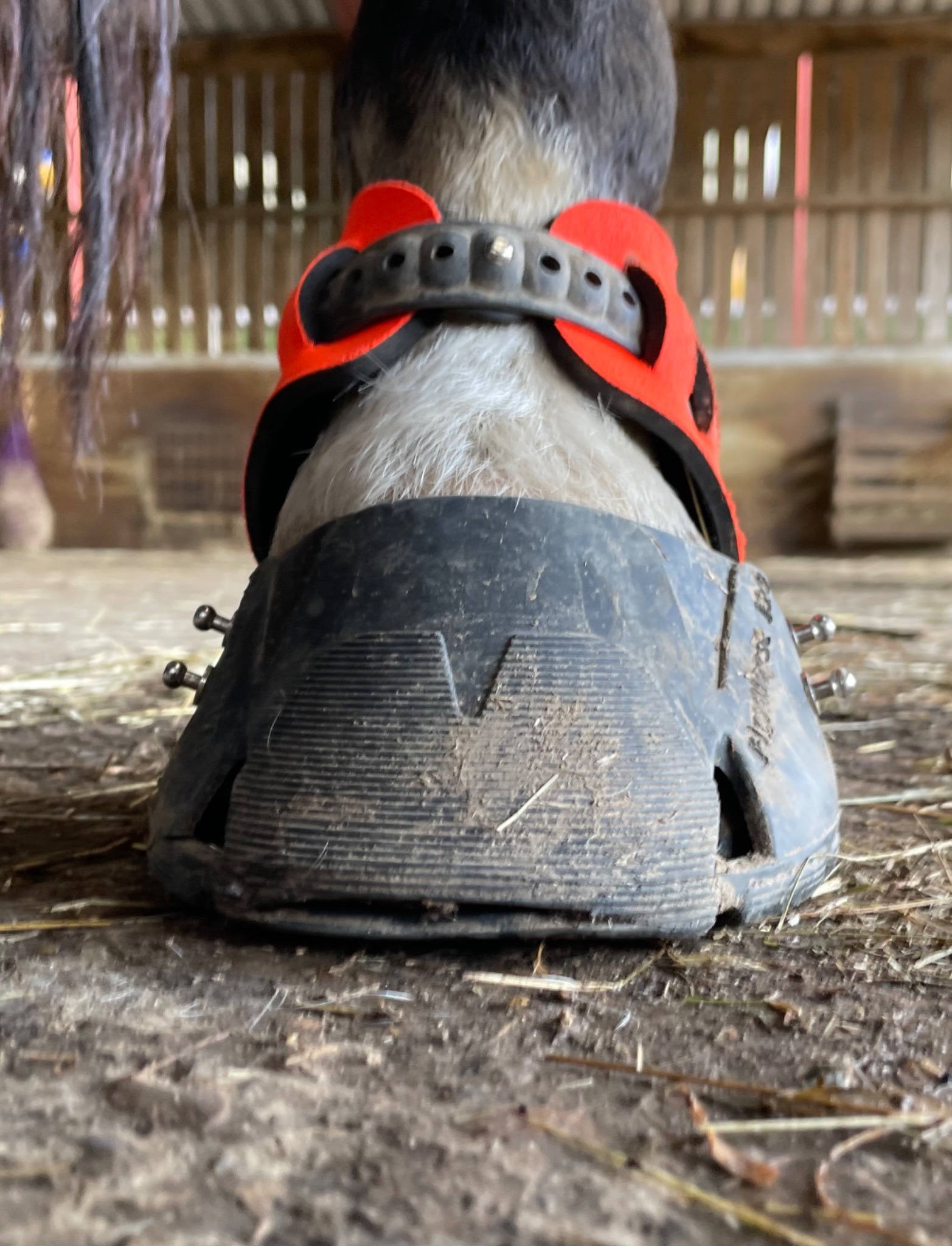
That being said, that same flexibility has another advantage that may be overlooked. Because the material is so soft and pliable, Flex Boots frequently become one of the first places where subtle movement compensations begin to show. Small wear patterns can develop long before a horse becomes obviously lame or before uneven hoof wear becomes apparent. In many ways, your boots become a record of how your horse is moving, which can be invaluable when it comes to noticing early signs of issues.
While no wear pattern can diagnose a problem on its own, learning to interpret these clues can help you identify areas that deserve a closer look and potentially catch developing problems much sooner.
Example 1: Wear at the Toe
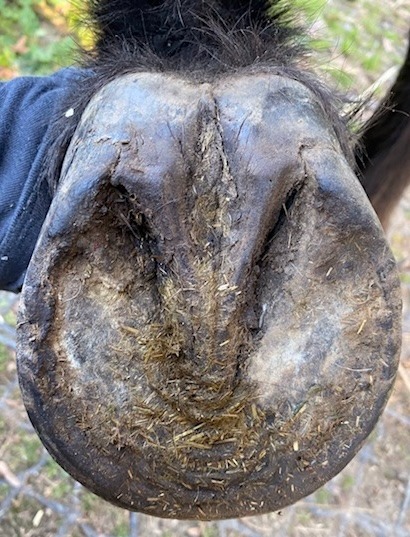
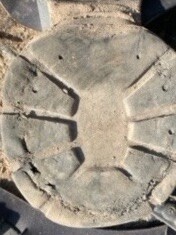
One common wear pattern seen on hoof boots is excessive wear at the toe.
Toe wear often suggests that the horse is spending longer than ideal rolling over the front of the foot before the hoof leaves the ground. This can occur for several reasons.
A long toe or delayed breakover is one of the most common causes. When breakover is extended, the toe stays in contact with the ground longer during each stride, increasing friction and gradually wearing away the front of the boot.
Toe wear can also be indicative of a toe first landing, or a horse that may be avoiding pain in the back half of their foot. A horse can have a toe first landing before they are overtly lame, and it’s important to address it before it leads to repetitive strain injuries of internal structures.
Wear on One Side of the Boot
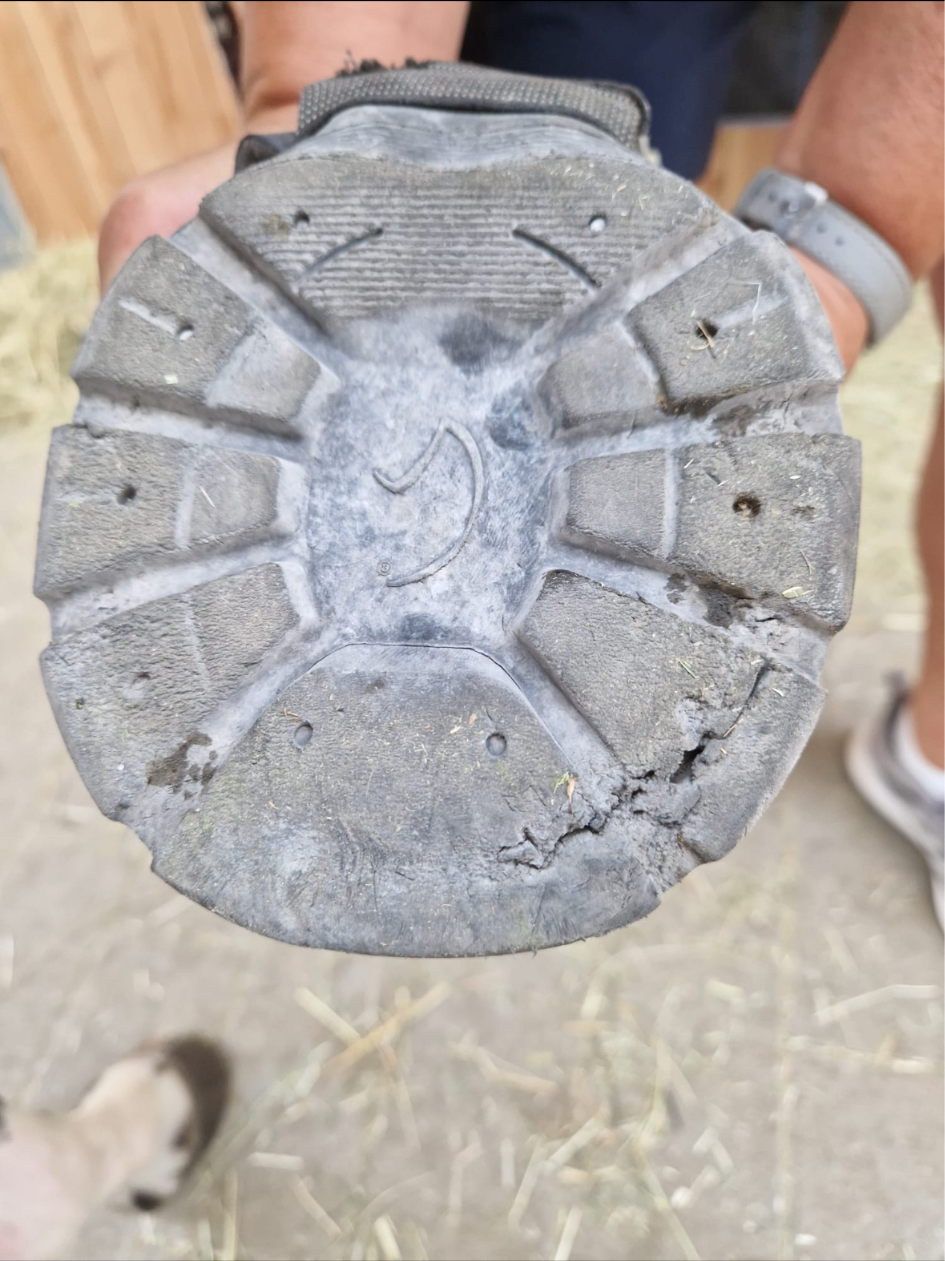
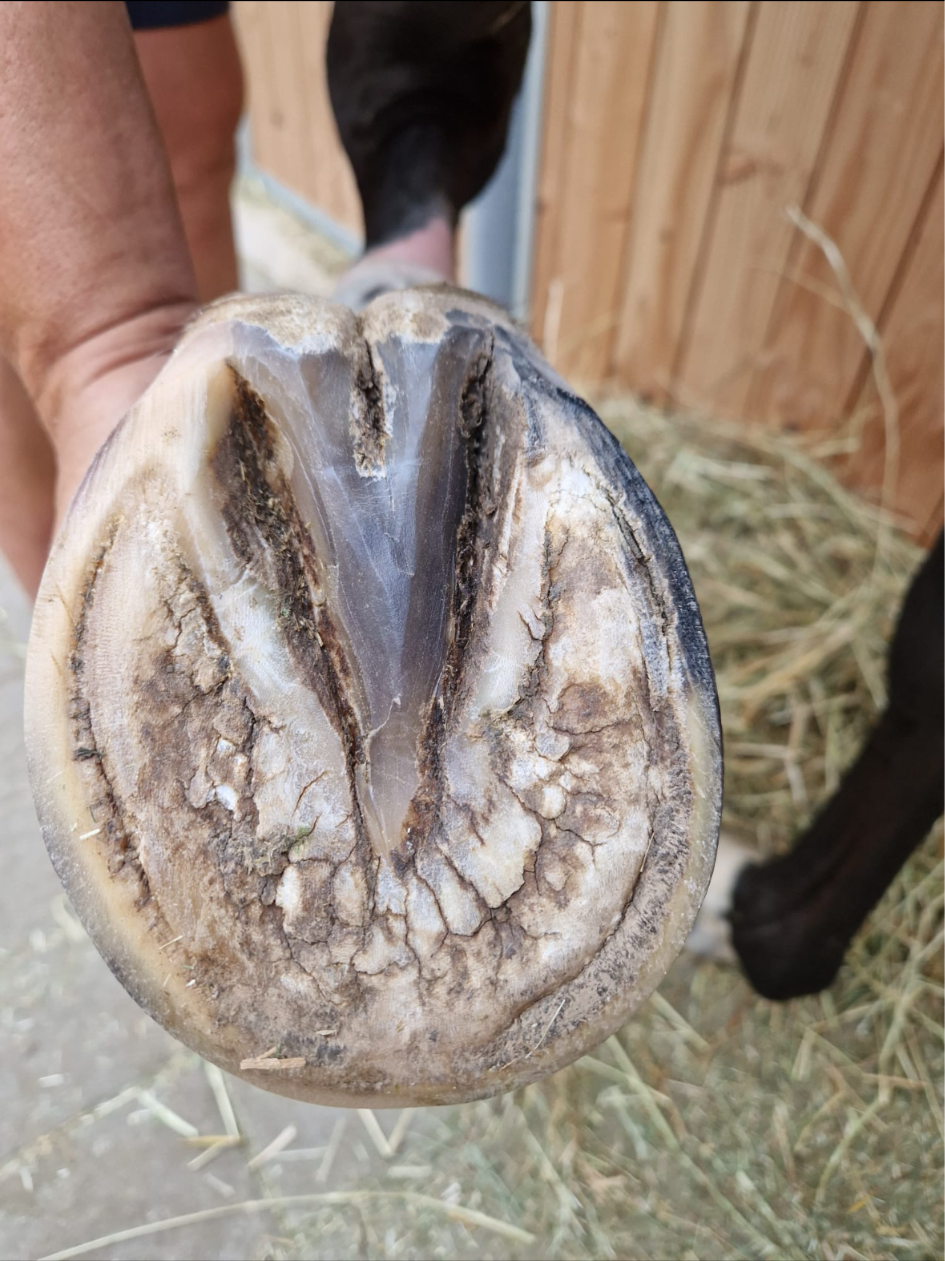
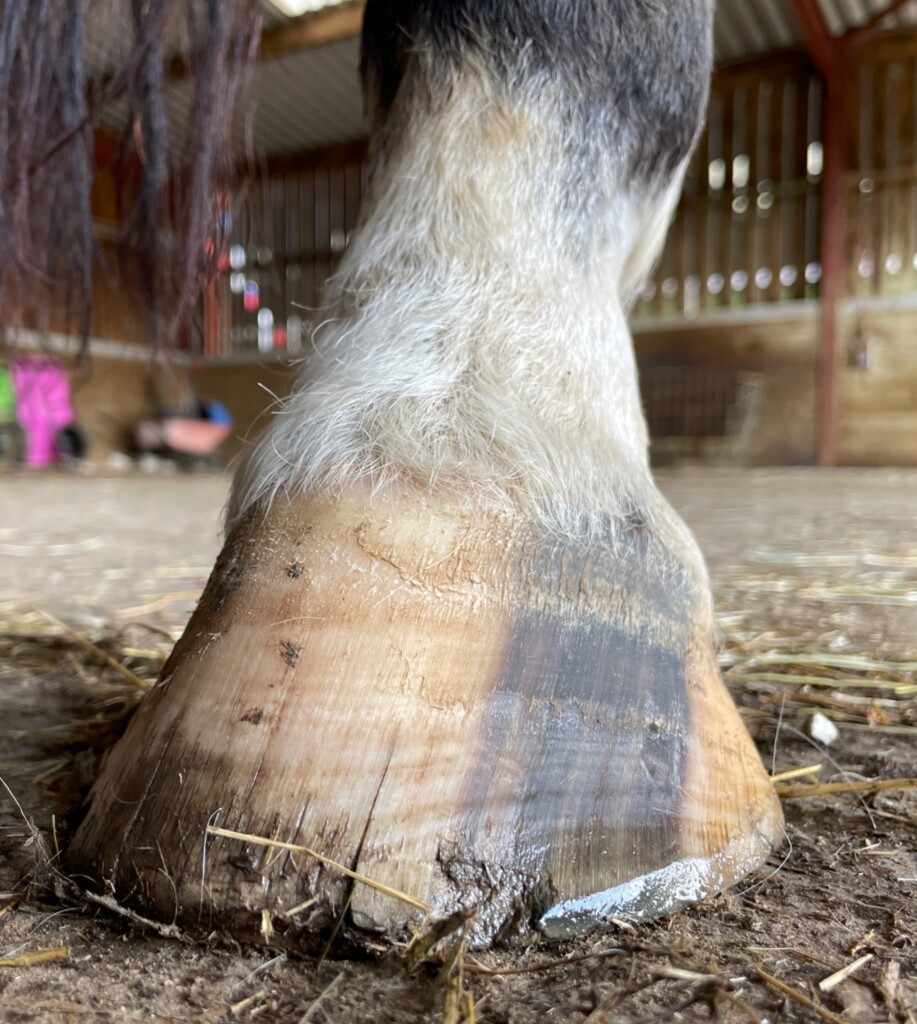
Uneven wear on either the medial (inside) or lateral (outside) portion of the boot often reflects an imbalance, or uneven loading of the hoof.
The picture above shows a flare on the medial (inside) of the hoof that is left longer than ideal, putting excess pressure on the boot in movement. This can play a large role in wear patterns seen on the foot, and should be tackled through careful attention to the trim. This could include a stronger roll, shorter trim cycle, or even investigating the diet or metabolic health of the horse to identify some causes for flaring or stretched white line.
In addition to issues with flaring, some horses naturally load one side of the foot more heavily because of their conformation. For example, a horse that toes in can land and load the lateral side of the foot more than the medial. A horse that toes out often has the opposite – more wear on the medial side of their foot.
Movement patterns can contribute as well. Horses that travel close behind, tightrope walk, swing the limb inward or outward, or consistently land harder on one side of the hoof may all create asymmetrical wear patterns over time. Likewise, horses with restricted movement during the swing phase may not place the foot flat and evenly, concentrating wear on one section of the boot.
Some horses can show uneven loading as a compensation for pain somewhere else in the body. A sudden change in wear pattern should be investigated, and a vet visit may be warranted to decide where the change in movement is coming from. Even subtle changes in posture or movement can gradually concentrate force on one side of the boot.
These patterns shouldn’t automatically be viewed as something that needs to be “corrected” by just trimming the hoof differently. Instead, they should encourage you to observe the horse more closely. Watch how the horse lands, how it breaks over, whether the wear matches the hoof itself, and whether the pattern changes as comfort improves.
Wear on the Outer Shell
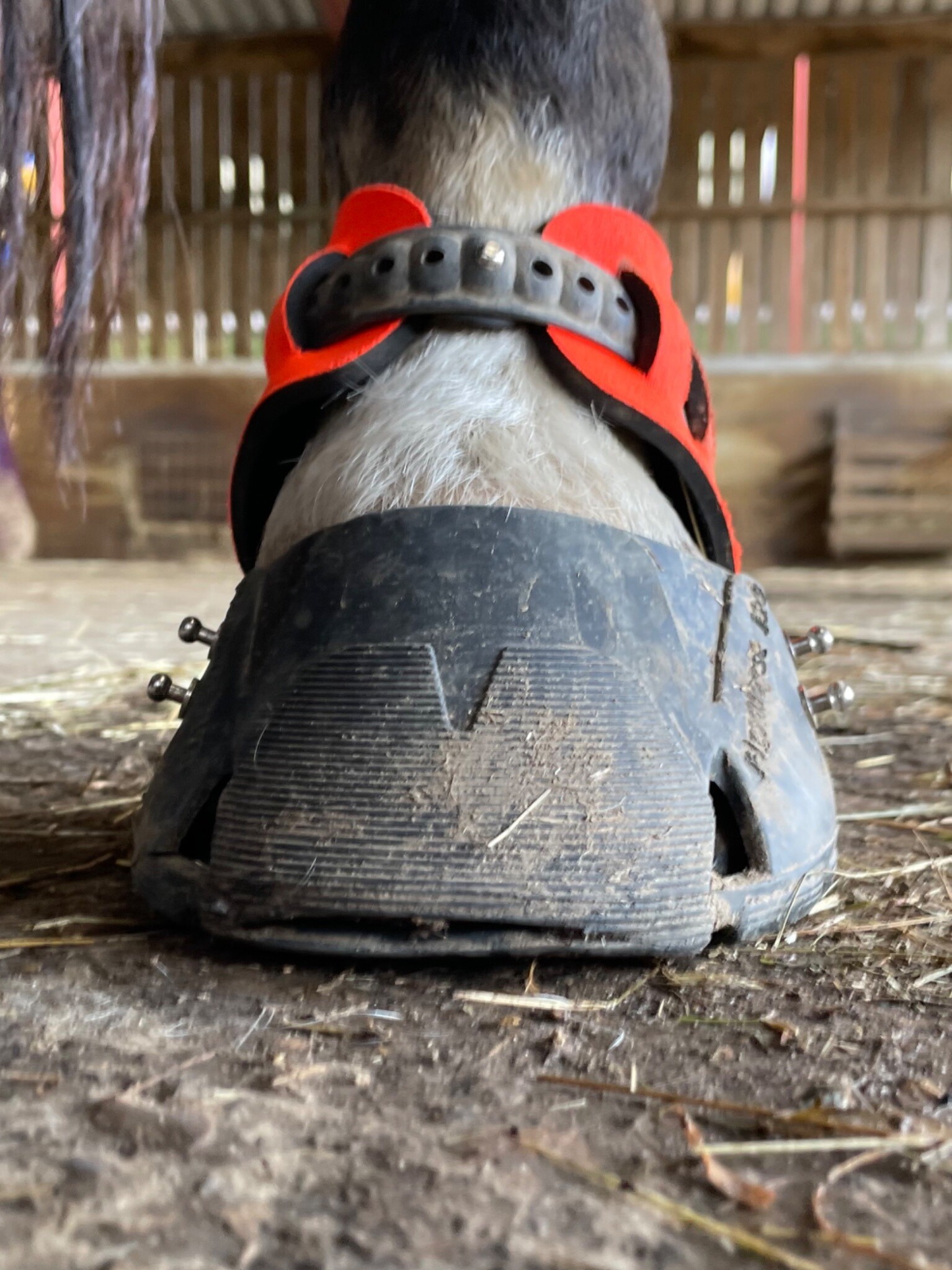
The outer shell of the Flex Boot can also provide valuable information.
One common cause of shell wear is excessive wall length or a lack of roll at the hoof wall. A sharp hoof wall can gradually abrade the boot material during movement, almost acting like sandpaper from the inside out. This often serves as an early reminder that the hoof may be overdue for maintenance or could benefit from a stronger bevel.
Another cause is improper pad use. Pads are designed to support the foot in a specific position within the boot. If the wrong pad thickness is used, the foot may sit differently within the shell, placing pressure on areas of the boot that were not intended to absorb excessive force. Over time, this can accelerate wear on specific sections of the shell.
Interference is another possibility, particularly if wear appears on the medial (inside) shell of the boot. Horses that brush, forge, or interfere with opposing limbs may repeatedly strike the boot during movement. In these cases, the wear pattern may be providing insight into a movement issue rather than a problem with the boot itself.
Toe wear on the outer shell can occur when a horse drags the toe during the swing phase of the stride. Toe dragging may be subtle enough that it is difficult to see with the naked eye, yet over time it can leave a very obvious wear pattern on the boot.
It’s important to remember that toe dragging is often a symptom rather than the primary problem. Horses may drag their toes because they are protecting painful front feet, compensating for discomfort elsewhere in the body, experiencing weakness through the topline, or simply because they are overdue for a trim. In hind feet, toe dragging may even point toward discomfort higher up the limb or within the horse’s upper body, causing them to alter how the limb moves through the stride.
When you notice consistent wear anywhere on the boot, don’t simply replace the boot and move on. Instead, ask why the horse is spending extra time on that area of the foot, and whether there is an opportunity to improve comfort, trimming, or movement.
Looking Beyond the Boot
It’s easy to look at a worn hoof boot and assume it simply needs to be replaced. But before reaching for a new pair, take a few minutes to study where and how the wear developed.
Ask yourself:
- Is the wear symmetrical between both boots?
- Does the wear match what I see in the horse’s movement?
- Has the horse recently become overdue for a trim?
- Has anything changed in the horse’s comfort, workload, or terrain?
- Could this pattern be pointing toward a compensation elsewhere in the body?
The answers to these questions often reveal much more than the worn boot itself.
Every Wear Pattern Tells a Story
One of the greatest advantages of a flexible hoof boot is that it doesn’t simply protect the hoof, it also records how the horse is using it.
While boot wear should never be considered a diagnosis, it can become an incredibly valuable observation tool. Combined with thoughtful movement assessment, regular trimming, and an understanding of the individual horse, these wear patterns often point you toward where to begin looking for answers.
Sometimes the solution is as simple as improving breakover or shortening the trim cycle. Other times, the wear pattern may encourage a closer evaluation of movement, comfort, or soundness. Although the boot can’t tell you exactly what’s wrong, it can give you a clue that something is not quite right. Learning to recognize those clues is often the first step toward helping your horse function at its best.