
Author : Alicia Harlov
Alicia Harlov is one of Flex Boots’ Equine Educators and Barefoot Trimming Specialists, where she creates video content as well as written articles pertinent to barefoot hoof health and soundness. Outside of Flex Boots, Alicia is a PHCP-certified hoofcare provider and program mentor who lives on the North Shore of Massachusetts, where she runs a hoof rehabilitation facility with a special focus on navicular horses. She pursues continuing education for hoofcare, equine nutrition and biomechanics at every opportunity, from sources around the world.
Lately, there have been a lot of conversations in hoofcare groups and on social media that seem to come back to the same idea: it’s all about the trim. If a horse has laminitic issues, thin soles, crushed heels, weak walls, a toe first landing, or is uncomfortable on certain surfaces, the answer often seems to be that the trim needs to change.
And before we go any further, it’s important to note that the trim is incredibly important. We can see firsthand how much a trim can change the way a horse moves and uses their feet. A trim can leave too much leverage, allow distortion to continue, remove structures the horse needs, or simply not work with the anatomy and movement of the individual horse. Horses can even become significantly more comfortable after making changes to their trim.
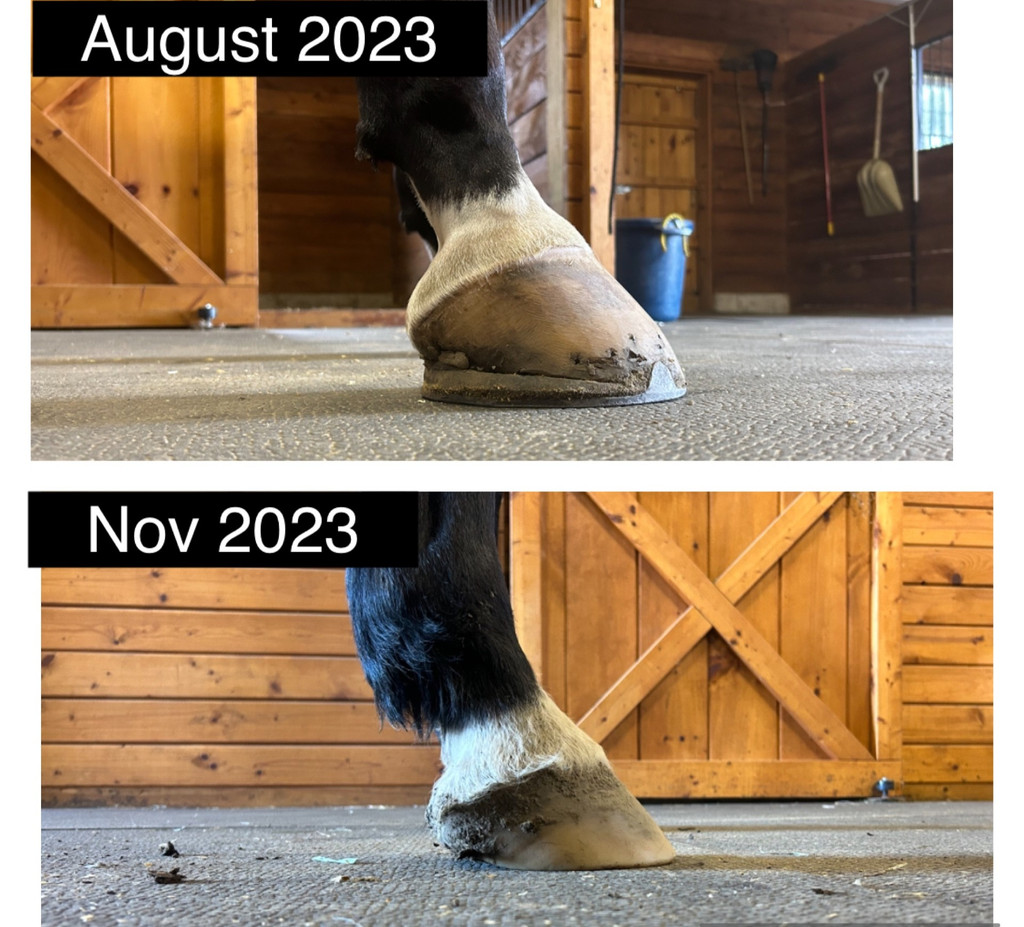
But while the trim is incredibly important, it is not the most important factor in hoof health. The hoof grows in response to many factors, and what we put into the horse’s care and management affects the growth daily, not just what is removed every 4-6 weeks. As hoofcare providers, we work with what the horse gives us. We can influence balance, leverage, breakover, distortion, and how the structures of the foot interact with the ground, but every time we pick up that foot, we’re working with tissue that the horse has spent months growing.
If we really want to improve hoof health, we have to look at what is happening during all of those hours and days between trims. While there are infinite factors that play a role, here are three really important pieces of that puzzle: diet, movement, and species-appropriate care.
1. Diet: You Can’t Trim Nutrition Into a Hoof
One of the first places we should look when trying to improve hoof health is diet.
For all horses, a forage-based diet should be the staple of their nutrition, with the gold standard being testing the hay and balancing minerals to that hay analysis. Hay makes up such a large portion of what our horses eat that knowing what is actually in it gives us a much better starting point than guessing.
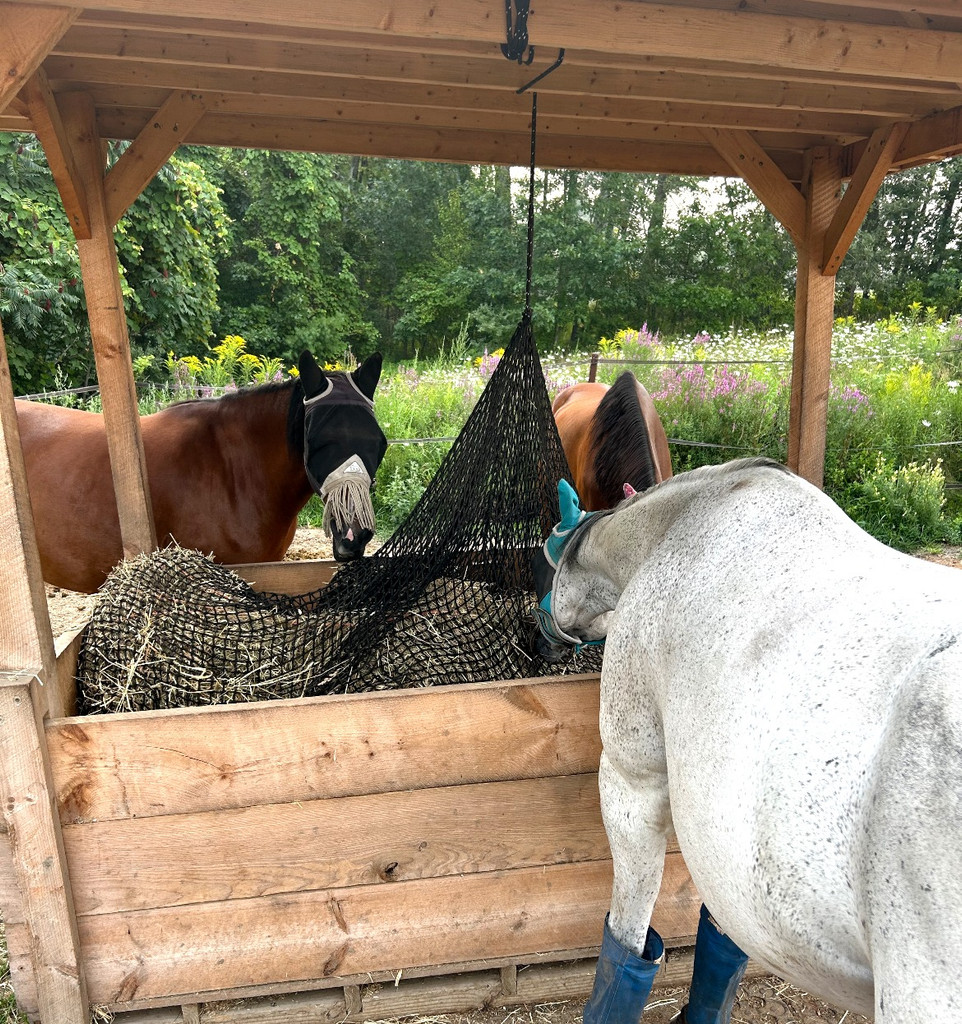
Of course, not everyone can test their hay. Boarders may have no control over where their hay comes from, and some barns change hay frequently enough that regular testing just isn’t practical. That doesn’t mean we throw our hands up and ignore nutrition.
There are some great vitamin and mineral supplements available that are formulated around common deficiencies in forage. It is important to check for good levels of copper and zinc, along with amino acids such as methionine, threonine, and lysine, without unnecessary added iron. For horses that don’t need additional calories, these can be fed in a small amount of a forage-based carrier such as Timothy grass pellets or something similar.
Nutrition isn’t nearly as exciting as changing a trim and immediately seeing a different-looking foot. In fact, it can take 9 months or even longer to see the benefits of that hard work and hoof growth hitting the ground. But it is worth it – proper nutrition is providing the raw materials the horse is using to build the hoof we’re going to be trimming months from now.
We simply can’t trim nutrients into a hoof.
We can create the most beautiful trim in the world, but if the horse doesn’t have what they need nutritionally to grow good-quality hoof, there is a limit to what that trim can accomplish.
2. Movement: Healthy Feet Need to Be Used
Another huge piece of the puzzle is movement. Hooves are designed to move. Regular movement provides repeated loading and unloading of the foot and affects not only the hoof itself, but also the muscles, joints, proprioception, posture, and the way the entire body functions. Ideally, we want to see horses moving frequently throughout the day with access to varied terrain and different surfaces.
That being said, there’s a really important distinction: movement needs to be comfortable.
We don’t want a horse forced to move barefoot over a surface that hurts simply because we think that surface is going to stimulate or “toughen” the hoof. When horses are uncomfortable, they compensate. They may shorten their stride, alter their landing, brace through their body, avoid certain surfaces, or simply choose to move less. At that point, I think we have to ask whether insisting on barefoot movement is actually helping the horse, or whether we’re creating a different problem. That’s one of the reasons hoof protection can be a game changer when a horse needs it.
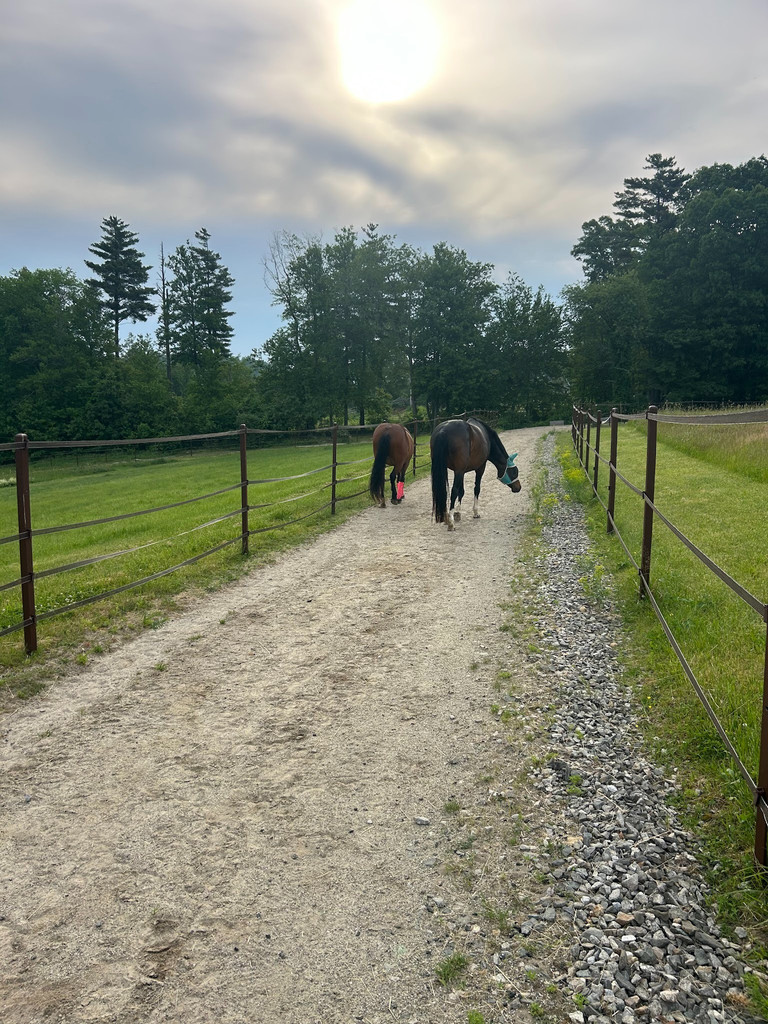
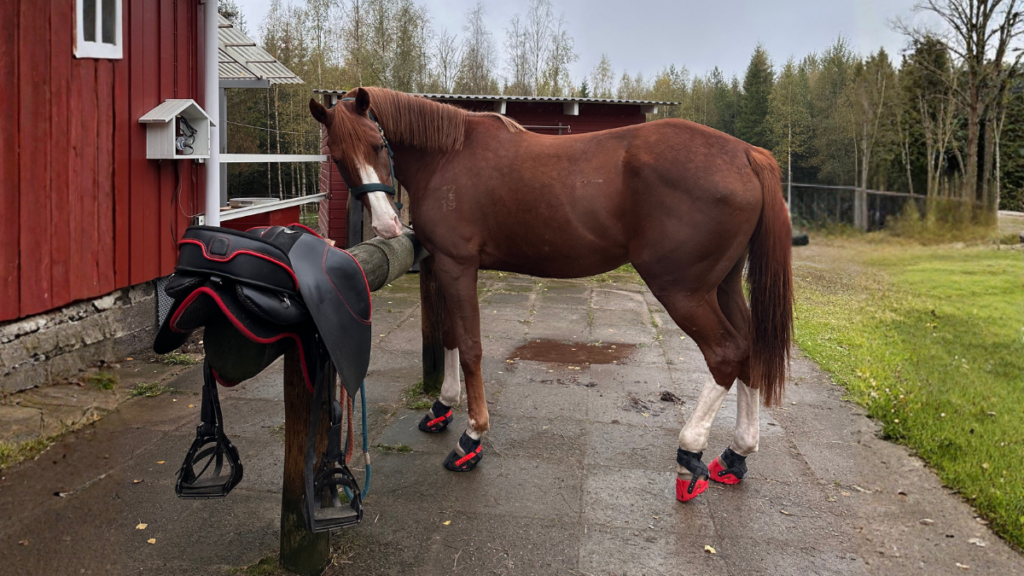
Boots and pads can be incredibly useful tools while we work on improving the foot. If putting a horse in boots allows them to confidently walk over their turnout environment, land more comfortably, use their body better, and simply move more, that is a positive thing, not a failure of barefoot hoofcare.
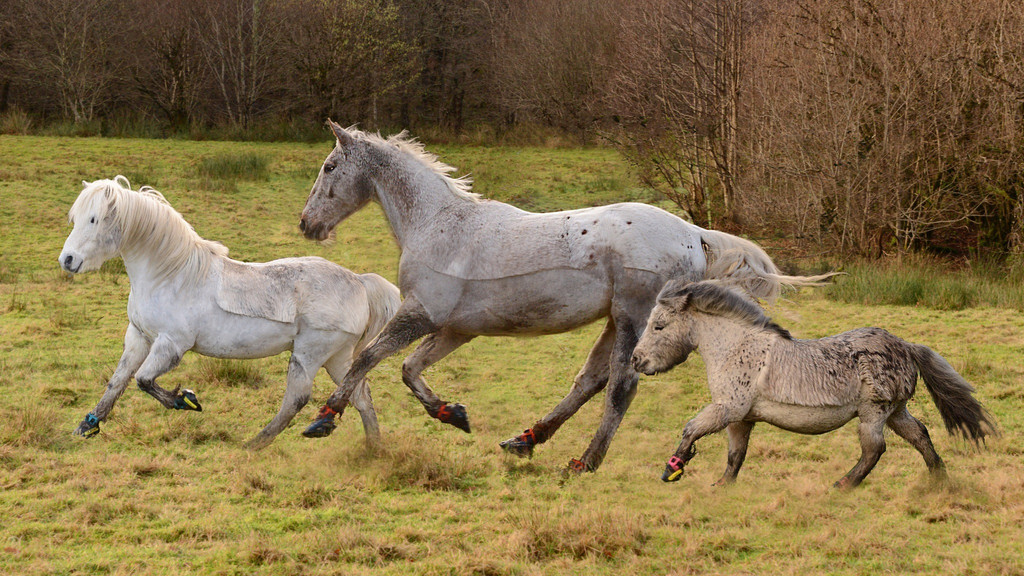
It is much better to have a horse comfortably moving in boots than moving poorly, compensating through their body, or hardly moving at all because we’re determined that they need to be barefoot. The goal isn’t barefoot at all costs. The goal is comfortable, healthy movement.
3. Species-Appropriate Care: We Have to Let Horses Be Horses
When it comes to hoofcare, we can often overlook the animal above the hooves.
We can get so caught up in hoof angles, heel height, breakover, sole depth, wall thickness, and everything else happening below the fetlock that we forget there is an entire horse attached to that foot.
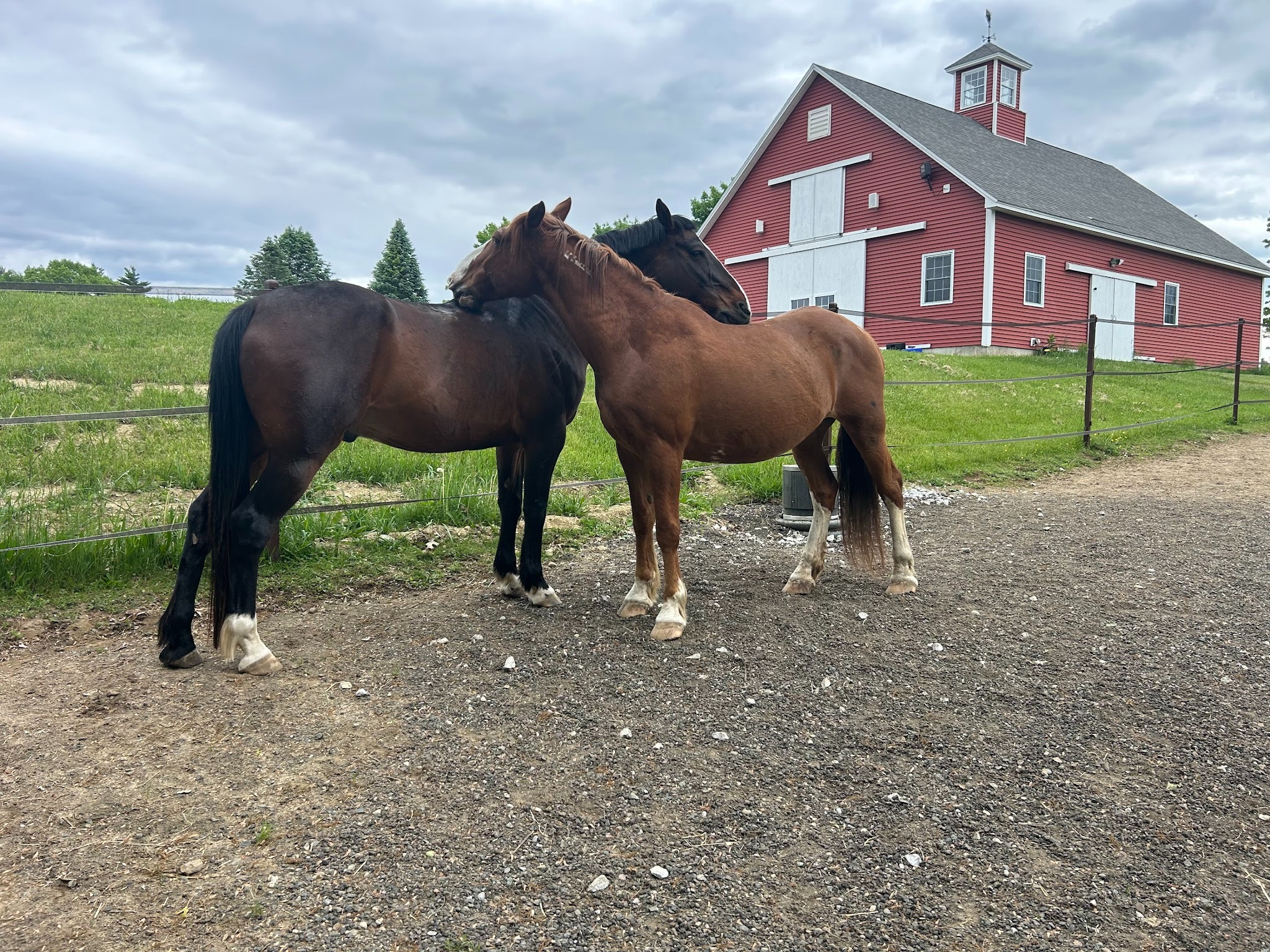
Horses are social, grazing prey animals. They evolved to move, eat forage throughout the day, interact with other horses, rest, and live within a social group. And perhaps most importantly, they need to feel safe.
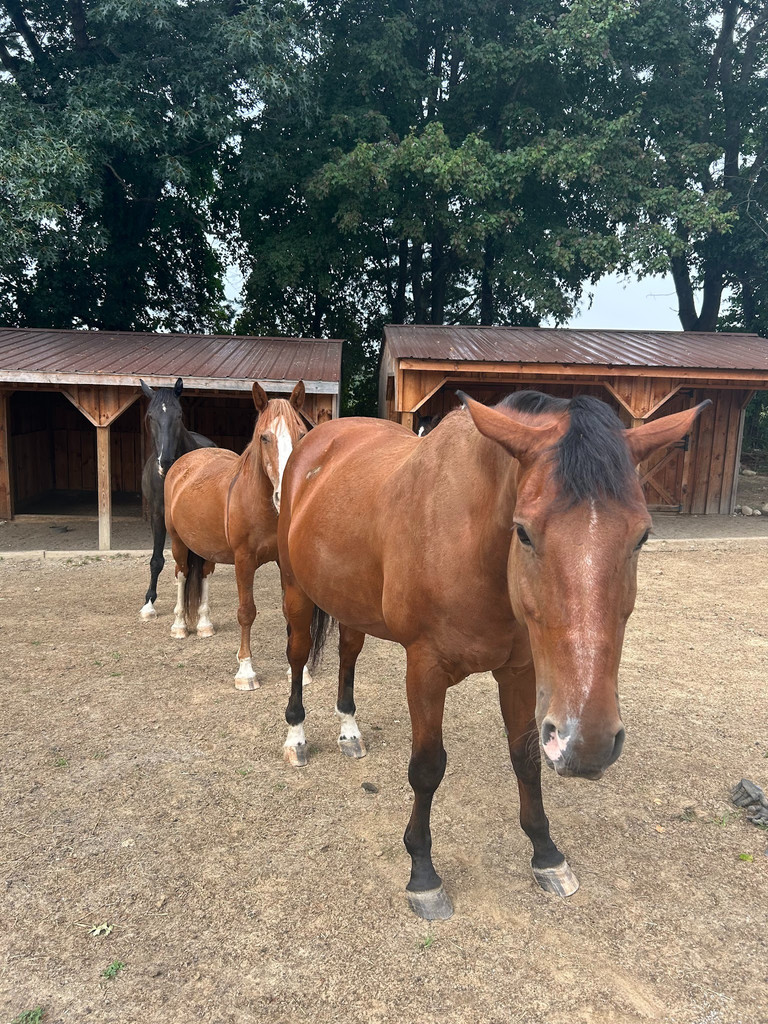
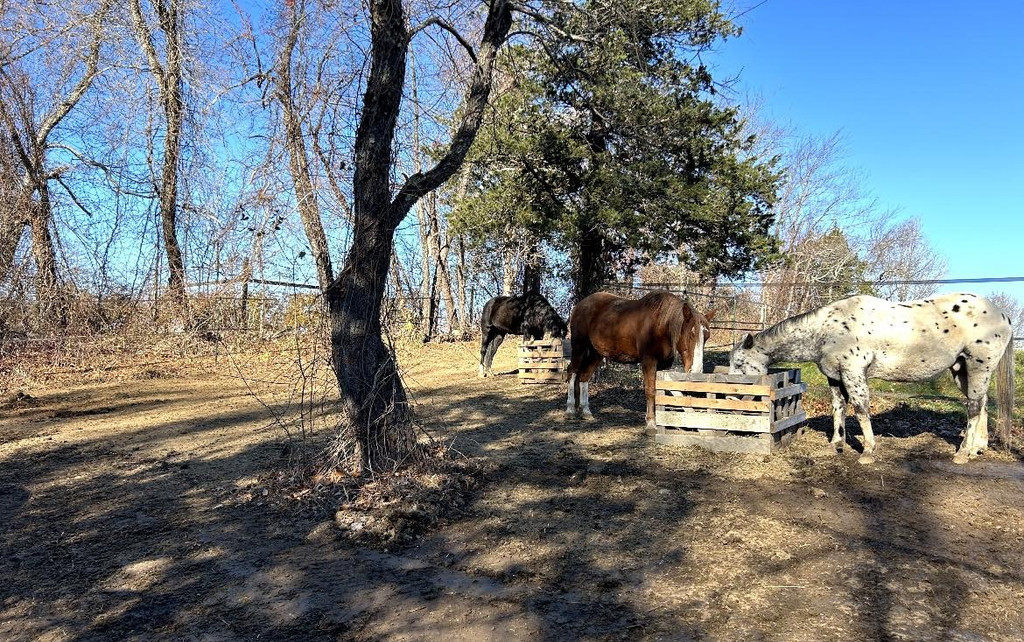
That can look different for different horses. For one horse, being in a herd may be incredibly relaxing. For another, being in the wrong herd where they’re constantly being chased away from hay or water may be incredibly stressful. Some horses need more space around resources. Some need a quiet place where they feel safe enough to lie down and sleep. Some thrive on a track with lots of movement, while another horse may need a different setup while they’re painful or recovering.
Species-appropriate care isn’t just checking boxes that say “24/7 turnout” and “lives in a herd.” It’s looking at the individual horse and asking whether their environment actually allows them to feel safe, rest, eat, socialize, and move comfortably.
Stress is an important consideration here, too. Cortisol is a normal and necessary hormone, and we don’t have enough evidence to simplify this down to “lower cortisol equals better feet.” But chronic stress has real effects throughout the body, including effects on metabolism, immune function, inflammation, sleep, and behavior.
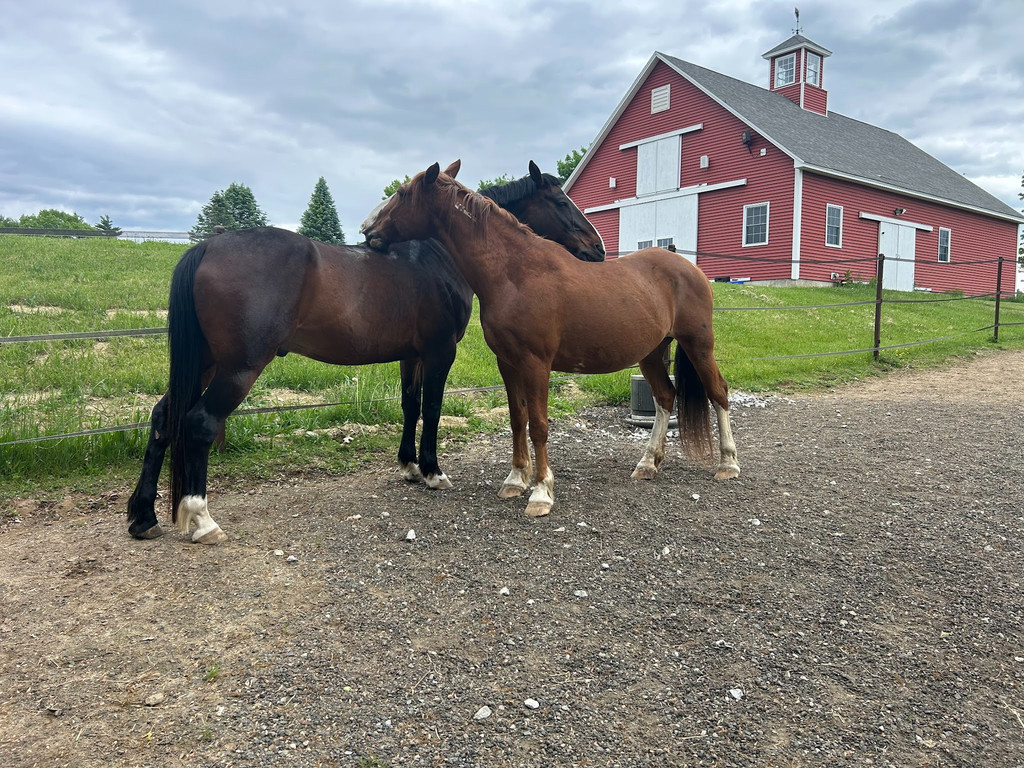
So when we’re trying to create the best possible conditions for a horse to grow healthy tissue, we can’t completely separate their emotional and physical wellbeing from their feet. A horse with access to forage, friends, movement, rest, comfortable feet, and an environment where they feel safe is being given a much better foundation for overall health. And hoof health is part of overall health.
So, Is Hoof Health Really All About the Trim?
No – but that doesn’t mean the trim isn’t incredibly important.
There are absolutely horses whose feet and movement improve dramatically when their trim changes. Many of us have seen it happen over and over again. There are also trims that can contribute to ongoing distortion, compensation, and discomfort.
But we have also seen horses whose feet plateau despite really thoughtful trimming.
Sometimes the thing that finally moves the needle isn’t another adjustment with the rasp. It’s changing the diet. It’s adding hoof protection so the horse can comfortably move more. It’s changing turnout. It’s addressing an underlying medical or metabolic issue. It’s reducing stress. And very often, it’s several of those things happening together.
This is why hoof health cannot simply be reduced to one trim method, one angle, one measurement, or one philosophy. Think about how much time we actually spend trimming a horse compared with how much time that horse spends living in those feet. We might trim them every four or five weeks. In between those appointments, they’re eating every day. They’re moving – or not moving – every day. They’re interacting with their herd and their environment every day. They’re loading those feet thousands of times. And they’re growing new hoof every single day.
So yes, look at the trim. Question it. Learn about it. Make changes when they’re needed. But don’t stop there. When we’re looking at a horse whose feet aren’t improving, maybe the question shouldn’t only be: “What do we need to change about this trim?”
Maybe we also need to ask: “What does this horse need in order to grow and use healthier feet?” Because ultimately, hoof health has never been just about the hoof, it’s about the whole horse.