
Author : Alicia Harlov
Alicia Harlov is one of Flex Boots’ Equine Educators and Barefoot Trimming Specialists, where she creates video content as well as written articles pertinent to barefoot hoof health and soundness. Outside of Flex Boots, Alicia is a PHCP-certified hoofcare provider and program mentor who lives on the North Shore of Massachusetts, where she runs a hoof rehabilitation facility with a special focus on navicular horses. She pursues continuing education for hoofcare, equine nutrition and biomechanics at every opportunity, from sources around the world.
One of the things I love about hooves is that they are constantly giving us information. The tricky part is that sometimes we aren’t listening until the horse starts shouting.
When we think about a horse with sore feet, we often picture something obvious, such as a horse that’s noticeably lame, reluctant to move, or clearly painful. The thing is, hoof discomfort doesn’t always look like that.
Sometimes it’s the horse who walks beautifully across the arena and then suddenly shortens their stride when they reach the driveway. It’s the horse who makes a beeline for the grass instead of walking over gravel. It’s the horse who lands occasionally toe first, takes shorter steps than we’d like, or occasionally “gimps” when they step on a rock. And because these horses aren’t necessarily lame, it’s easy to dismiss what we’re seeing.
“They’ve always been tender-footed.”
“They just don’t like gravel.”
“They need to toughen up their feet.”
Hearing these to me throws up a red flag for the horse – and I think we especially need to be careful with that last statement. Hooves absolutely adapt to their environment. Movement and appropriate exposure to different terrain can be wonderful for developing healthy, functional feet, but pain isn’t conditioning. If a horse is uncomfortable, repeatedly exposing their feet to something that hurts isn’t necessarily making them stronger, sometimes it’s just making them sore.
So how can we recognize when a horse might need a little extra help? When we have such great options for boots and pads where we can literally put the perfect surface under the horse’s feet at all times, how do we determine if they need that extra help?
Here are three signs I pay attention to.
1. Their Stride Changes When the Ground Changes
This is probably one of the easiest things for an owner to watch for. Take a horse who’s walking comfortably through their pasture or across soft arena footing and watch what happens when the surface changes and they move onto harder ground.
Maybe you walk onto packed dirt. Then pavement. Then gravel. What happens to the horse?
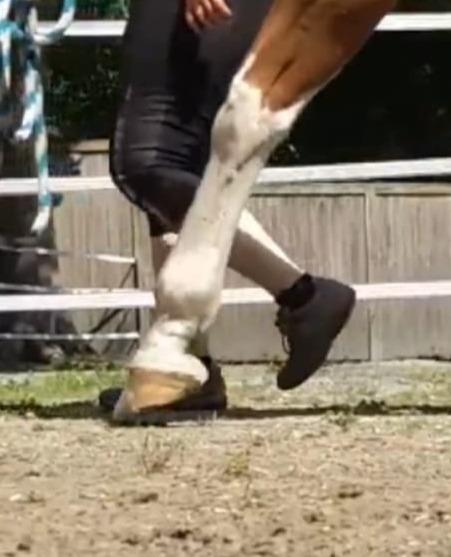
Ideally, we’re looking for a horse who continues walking forward confidently. Their stride might naturally adjust slightly for the terrain, but their overall comfort shouldn’t dramatically change. With a sensitive horse, though, sometimes you can see the change almost immediately. Their stride may get shorter, they may slow down, or they may even become more tentative. Instead of marching forward, they start carefully picking their way along. They may even leave the gravel altogether and head straight for the grass.
With this change in movement, the horse is answering the question for us – they are seeking out different footing to protect themselves. If your horse consistently chooses softer footing when given the option, ask yourself why.
Of course, choosing grass once doesn’t automatically mean your horse has painful feet. We always have to look at the whole horse and the entire picture. But when you repeatedly see the same pattern – confident movement on soft footing followed by short, tentative movement on hard or rocky footing – that’s worth paying attention to.
2. They’re Landing Toe First or Moving With a Short, Guarded Stride
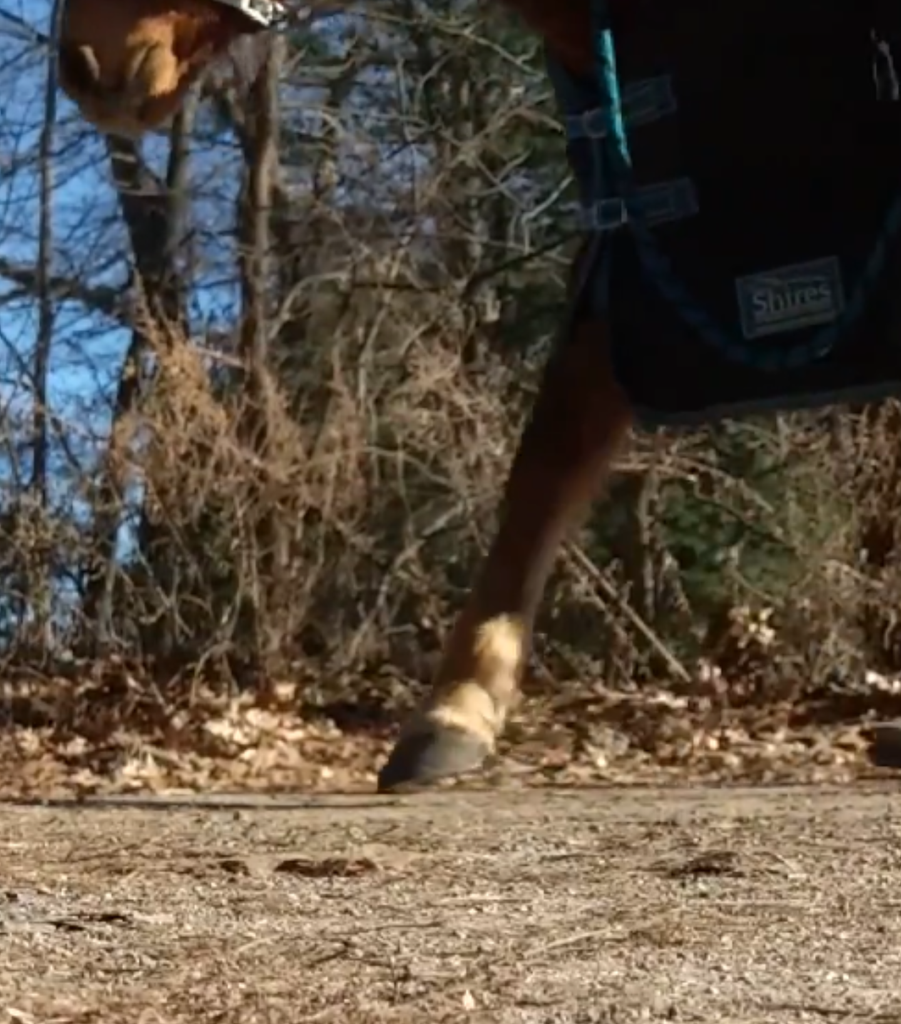
Another thing I really like owners to watch is how their horse’s feet are landing. Of course, hoof landings aren’t completely black and white. Terrain matters. Inclines and declines matter. Speed matters. Conformation matters. Trim mechanics matter. The individual horse matters. So seeing one toe first step doesn’t mean you need to panic.
But a horse who is consistently landing toe first, especially when it’s accompanied by a shortened or guarded stride, is telling us something worth investigating. Sometimes horses alter their landing because they’re trying to avoid loading an uncomfortable part of the hoof. In many cases, they may not look obviously lame. Instead, you might notice that their movement just doesn’t look quite as free as you’d expect. They might not reach forward as confidently. Of course, it’s important to remember that the hoof is attached to the rest of the horse. Horses are incredibly good at compensation. If something hurts every time the horse puts their foot on the ground, they’re going to figure out another way to move. They can change how they load the limb, how much they extend it, how they use the opposite limb, and eventually how they use the rest of their body. This is one reason I don’t love waiting until a horse is dramatically lame before deciding something needs to change.
The goal shouldn’t be to see how much discomfort a horse can tolerate before we intervene. The goal should be comfortable, confident movement. Sometimes improving comfort at the hoof is a very important piece of that.
3. They’re Tentative, “Gimpy,” or Constantly Looking for Softer Ground
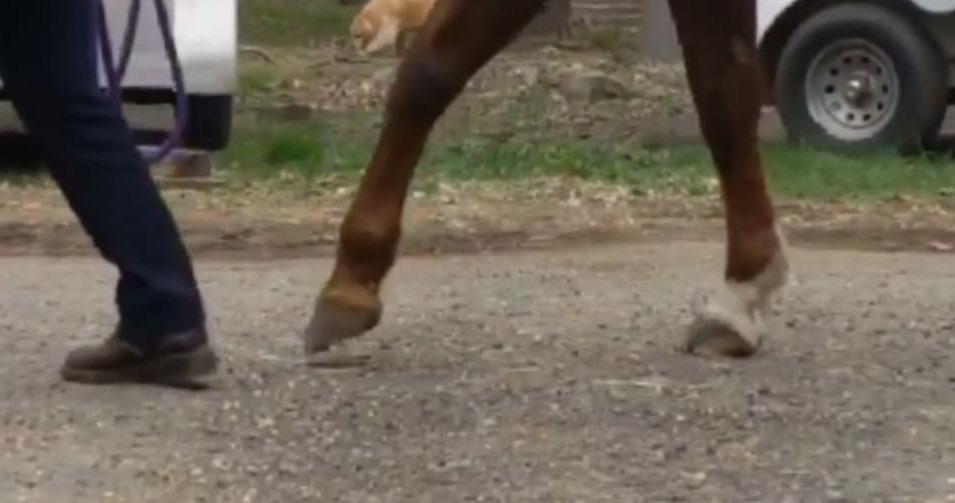
One sign a horse isn’t fully comfortable in their feet is they seem “lazy.” Laziness should not just be accepted as a personality trait – it can mean that their feet hurt or their body hurts! They may also turn slower, or even “gimp” on rocks or on turns.
As mentioned earlier, some horses seem to always seek softer ground when moving out on different surfaces. These horses are often described as simply being “careful,” but there’s usually more to pay attention to. Maybe your horse hesitates before stepping onto gravel, picks their way slowly down the driveway, constantly searches for the softer edge of the trail, or suddenly loses some of their forward movement when the footing gets rocky. A horse doesn’t have to be dramatically lame to be uncomfortable. Mild foot soreness can show up as hesitation, a shorter stride, altered foot placement, different landings, or reluctance to move over certain surfaces. Those more subtle signs still are important to take note of, and we shouldn’t have to wait until a horse is barely willing to walk before deciding they need more help.
Why “They Just Need to Toughen Up” Can Be Misleading
Varied terrain and appropriate movement can absolutely help develop healthy, adaptable hooves, but there is a big difference between conditioning a comfortable hoof and repeatedly asking a painful one to tolerate more stress. If your horse confidently crosses gravel and adapts easily to different surfaces, that’s one thing. If every trip down the driveway causes them to shorten their stride, search for soft grass to “soften the blow”, react to rocks, or change the way they land, repeatedly exposing them to that discomfort isn’t necessarily making the foot stronger. In fact, it can be causing damage if something else is going on internally.
There may be a reason that hoof is struggling. Thin or sensitive soles, inflammation, metabolic issues, excessive wear, an aggressive trim, poor hoof mechanics, or other underlying problems can all contribute. Repeated trauma to an already sensitive foot may lead to increased soreness, bruising, and in some cases abscessing. Instead of asking, “How do I make this horse toughen up?” I would rather ask, “Why isn’t this horse comfortable?”
Protection Shouldn’t Replace Investigation
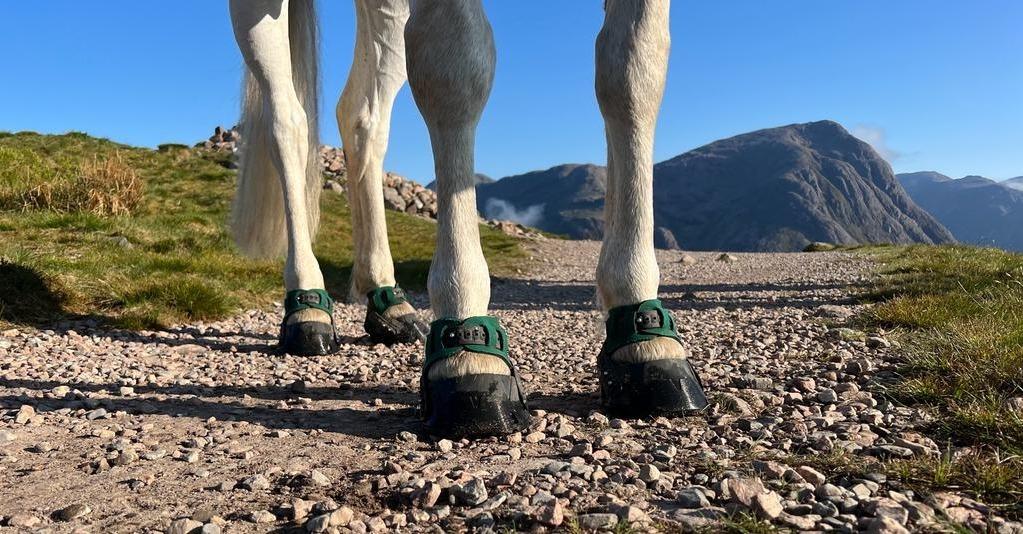
It’s important to realize that forcing a horse to move when they’re uncomfortable can cause damage to the hoof and compensation in the body, and hoof protection is sometimes a necessity. At the same time, hoof protection shouldn’t simply be used to cover up pain without investigating the cause. If a horse needs protection to stay comfortable, we should still look at things like sole depth, inflammation, metabolic health, diet, trim mechanics, hoof wear, infection, bruising, laminitis, or even whether the pain is coming from somewhere else entirely. Those are questions worth working through with your veterinarian, hoofcare professional, and the rest of your horse’s care team.
Finding the root cause can take time, though, and the horse does not need to remain uncomfortable while we figure it out. We can protect the hoof while improving it. We can use boots while addressing diet, trimming, movement, metabolic health, environment, and other contributing factors. Comfort and rehabilitation are not opposites – in many cases, comfort is an important part of rehabilitation. Comfortable movement allow for MORE movement, less compensation through the body, more circulation and blood flow, and ideally, healthier hoof growth.
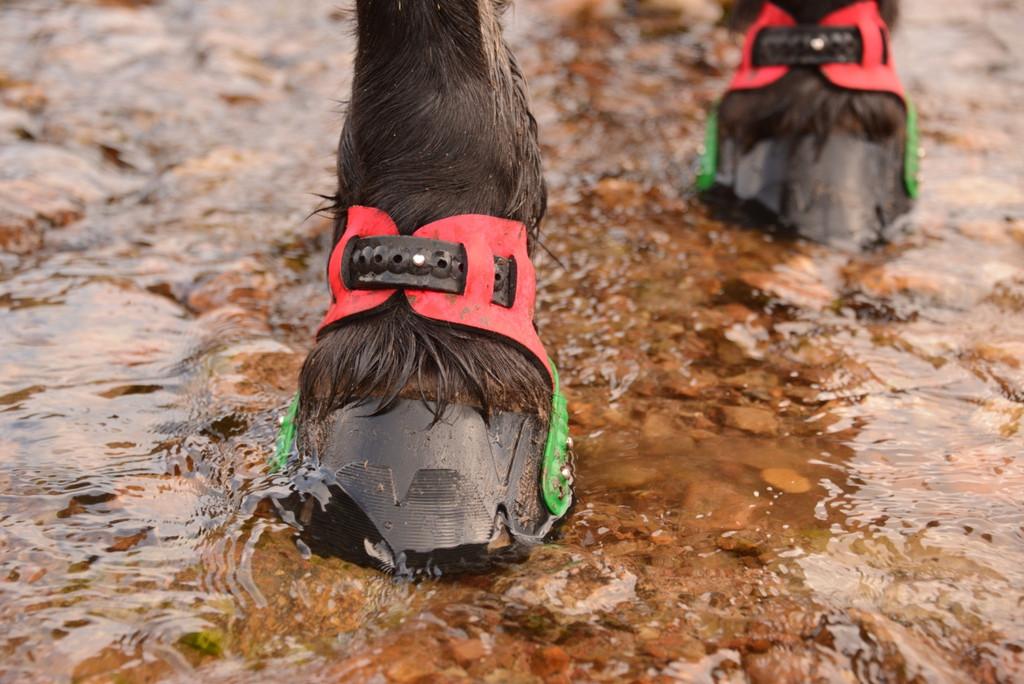
Sometimes Protection Becomes Part of the Assessment
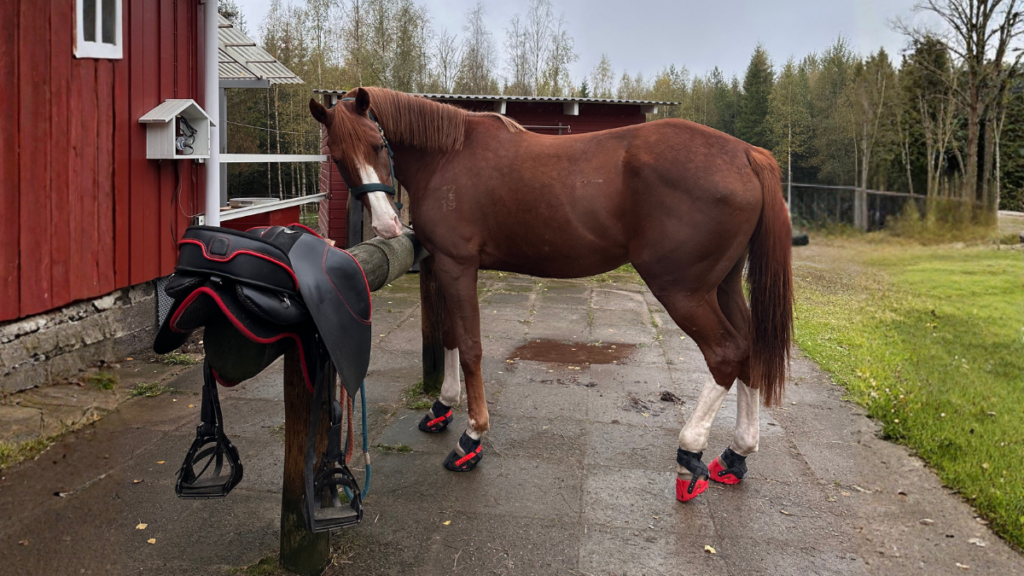
One of my favorite reasons to try hoof protection on a horse showing subtle signs of discomfort is simply to see what changes when the foot feels better. If your horse normally walks down the gravel driveway with a short, tentative stride, try putting them in a properly fitted hoof boot, with an appropriate pad if needed, and walk the same route again. Does their stride get longer? Do they move more freely, stop searching for the grass, land less toe first, or look more relaxed through their whole body? That change can be incredibly valuable information. It doesn’t necessarily tell us exactly what is wrong, but it can show us that hoof comfort was influencing the way the horse was moving.
Hoof protection also doesn’t have to be permanent. Some horses need it temporarily while healthier hoof structures develop, during rehabilitation, or after a trim that left them more sensitive than usual. Others may be completely comfortable barefoot in the pasture but need protection for riding, rocky trails, or harder footing. And some horses may simply continue to prefer protection on more challenging terrain. That’s okay. We can have goals for our horse’s feet and ideas about what we would eventually like them to be capable of, but the horse standing in front of us gets the biggest vote when it comes to whether they are comfortable today.
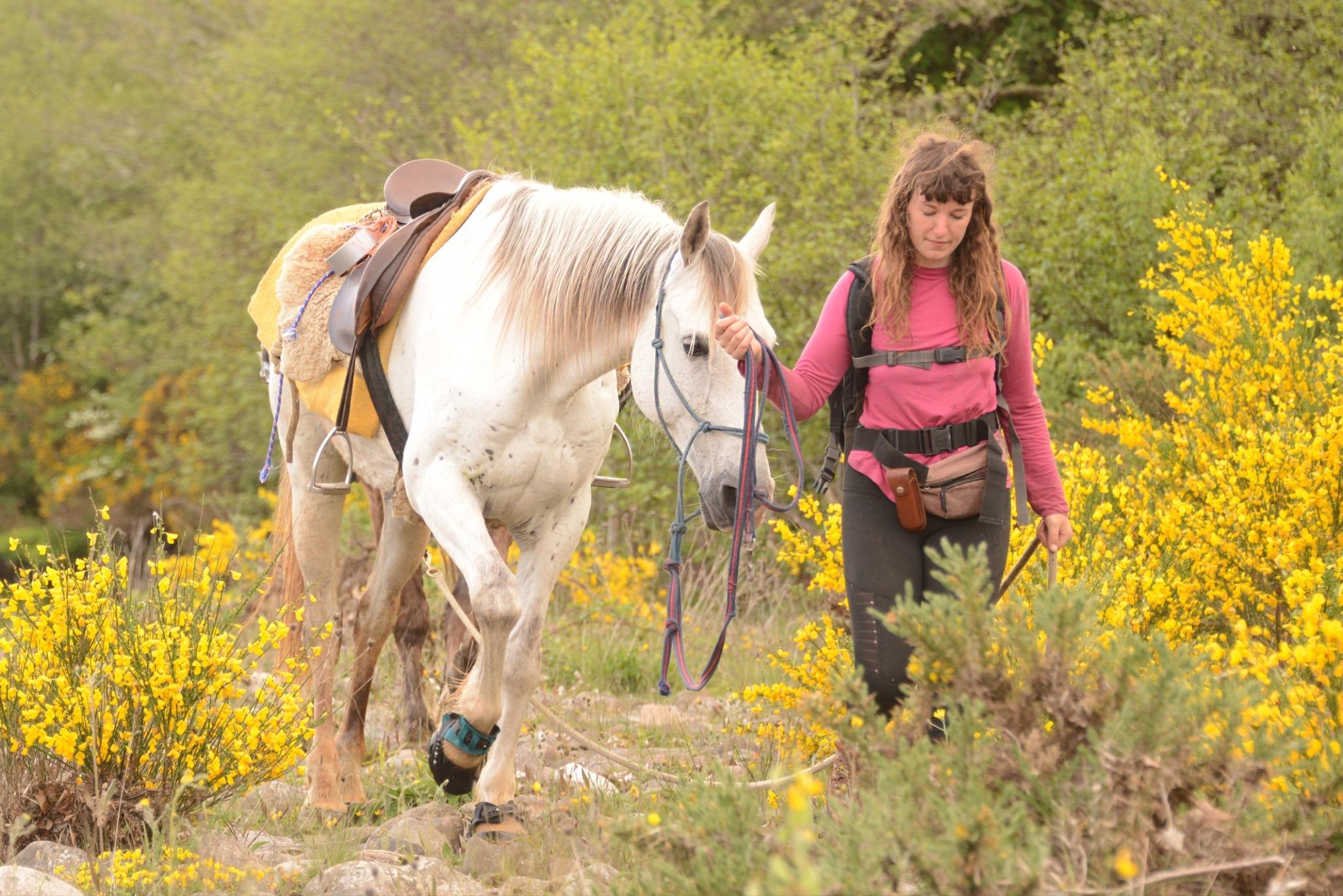
For horses who don’t need protection around the clock, hoof boots can be a really useful middle ground. They are a great option that allows owners to add protection when the horse needs it while still leaving the hoof barefoot when they don’t. They can be helpful for rocky trail rides, harder surfaces, periods of rehabilitation, or any situation where the terrain is asking more of the hoof than that particular horse can comfortably manage barefoot. Depending on the horse and the situation, pads can also be added inside the boots for additional cushioning and support.
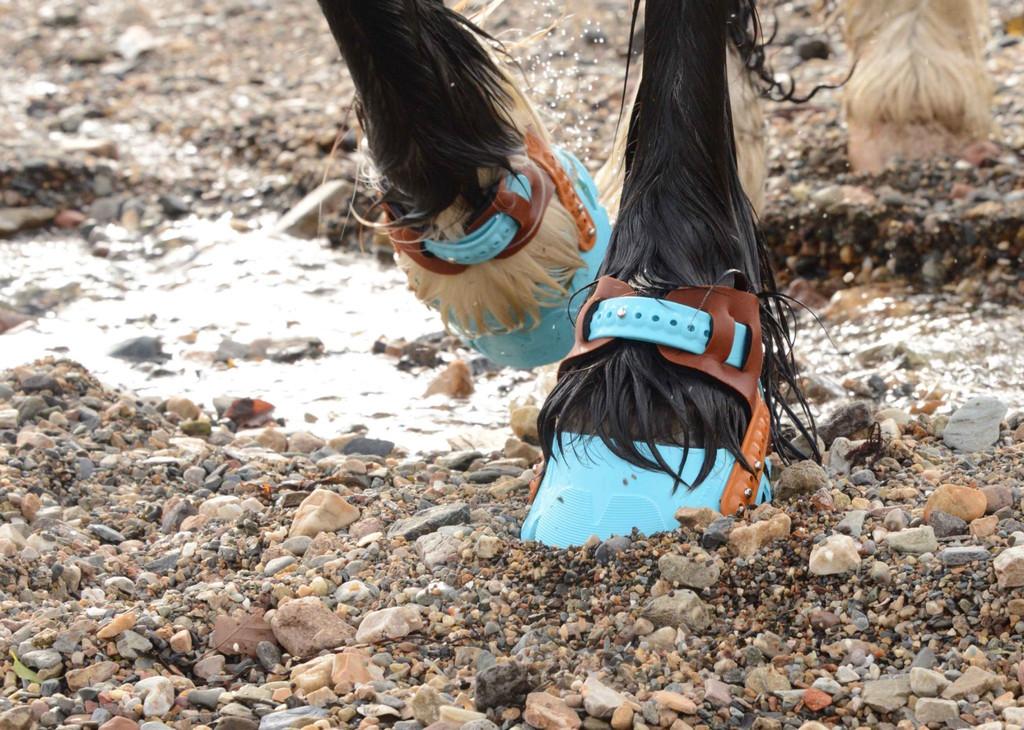
That’s really where I see hoof boots being so valuable. We aren’t necessarily trying to protect the hoof from every surface forever. Sometimes we’re simply saying, “Today, this horse needs a little more protection than their bare hoof can comfortably provide.” From there, we continue working on the bigger picture: diet, trimming, movement, metabolic health, environment, and whatever else may be contributing. As the hoof changes, we reassess. Maybe the horse eventually needs the boots less, maybe they continue using them for rocky terrain, or maybe another form of protection ends up being a better fit. There is no single answer that works for every horse.
If there’s one thing I hope owners take away from all of this, it’s that horses don’t have to be dramatically lame before we listen to them. Sometimes they whisper first. It may be the shortened stride when they leave the arena, the toe first landing you keep noticing, the hesitation before the gravel driveway, the horse who always chooses the grass, or that occasional “gimpy” step when they land on a rock. Those small changes matter. We don’t need to wait until a horse is severely sore, bruised, abscessing, or unwilling to move before deciding they deserve more comfort.
We also don’t have to choose between protecting the hoof and improving it. We can protect what hurts today while working toward a healthier hoof for the future. At the end of the day, barefoot isn’t the goal, boots aren’t the goal, and shoes aren’t the goal. The goal is comfortable, confident movement on healthy, functional feet. Sometimes giving the horse the protection they are asking for is an important part of getting there.
For more information on recognizing discomfort and signs of hoof issues, check out our Hoof to Horse Academy!