As seasons change, the horse’s hooves adjust as best they can to whatever the current climate and the horse’s living environment is like. In summer time, the ground gets hard, weather stays dry and most of the time, fairly hot. In this blog we talk about hoof cracks and three other common effects the hot summer months can have on a horse’s hooves, and what can be done to keep the hooves in the best possible condition.
1. Hoof cracks and chips
It’s common to see chips and hoof cracks on the hoof wall in summer months. If you see a chipped hoof wall, or a vertical crack in the horse hoof, it is almost always a sign that the walls have been allowed to grow too long. In other words, the trim cycle is too long. When the hoof wall grows too long, the forces in play will either cause the wall to flare, crack, or both.
What is an effective hoof crack treatment? There’s nothing that you can do to make an already cracked hoof grow back together. When you see a crack, the best course of action is to first do a proper barefoot trim on the hooves, and if the crack is considerable, remove pressure from the crack area to prevent it getting worse. Then the trim should be kept up-to-date, so that the crack can grow out as the hoof grows.
If the crack has gone all the way through to the laminae or compromised the hoof health, it’s important to treat the crack by opening the area so oxygen can enter it, and ensure the inner hoof wall grows down healthy.

2. Frogs pack very hard and can become uncomfortable
As the ground dries up and the weather stays hot and dry, the hooves will inevitably harden and dry out too. This is nature’s way to help the hooves cope with the hard, dry environment. Along with this, the frog can become very hard, almost resembling hoof horn tissue.
Whilst this isn’t always a bad thing, it can become uncomfortable for the horse if the frogs are allowed to grow too large. An overgrown, hard frog can cause pain to the horse as it moves.
The solution, again, is to make sure that the frogs are trimmed anatomically correctly and frequently enough.
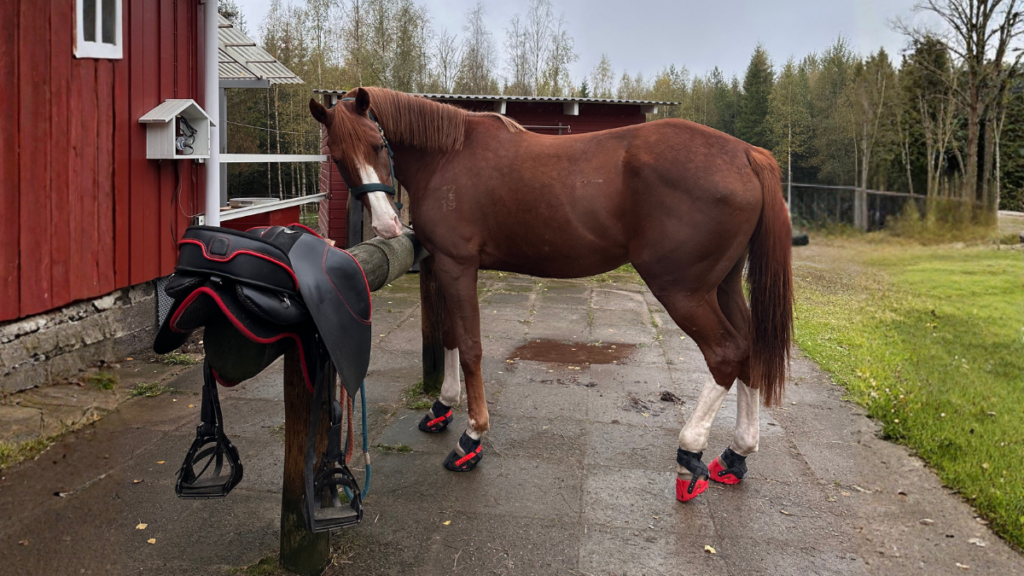
Is your horse uncomfortable walking on hard ground? Flex Boots can provide them with instant comfort, because they are designed to act like an air cushion under the hooves. Adding FlexPads into the boots will increase the cushioning and shock absorption even more.

3. Dead sole builds up
As the horse adjusts to cope with the hard ground, the hooves retain new sole growth more than normal. This makes sense, when you think about how it feels to walk on hard, uneven ground; the sole needs to endure sharp objects underneath it, and needs to find a way to handle it.
The dead sole can come off in chunks as you clean the hooves, and it can look worrying to the untrained eye. But it’s perfectly normal for the false sole to exfoliate. If the excess sole comes off with just a hoof pick, it’s safe to remove the pieces that come off. But keep an eye on any pockets or flappy pieces that are loose but not quite ready to come completely off. You don’t want dirt or bacteria to build up between the false sole and the new sole growth underneath.
A good hoof care provider will know when to trim the sole, and how much take off not to damage the new, healthy sole growth. Taking off too much sole is detrimental for the horse and in the worst case, can make them lame for a lengthy period of time.

4. Overgrown bars can become very painful
Bar trimming is something that divides options somewhat. As part of a correct barefoot trim, the bars should be trimmed to the sole level and scooped up towards the heels. If the bars are not trimmed adequately, they grow a very sharp ridge and this can be incredibly painful for the horse, especially when the ground is hard. Imagine walking around with a sharp pebble in your shoe. That’s how your horse feels when its bars aren’t trimmed correctly or often enough.


What do all these things have in common?
It’s been mentioned above already, but it’s worth emphasising the common factor in all the above:
They happen on “normal” or long trim cycles when the hooves are not trimmed often enough. A “normal” trim cycle is around 8 weeks, but for most horses, this is way too long. For optimal hoof health, barefoot horses need their hooves trimmed at least every four weeks. Even better is for you as the owner to learn to do a small maintenance trim that they can carry out once a week. This way, you can address hoof cracks as soon as you notice them starting to appear, and before they become a bigger issue.

In summary, horses need careful hoof care all year round, and summer is no different. If the hooves are not trimmed correctly or often enough, they may develop hoof cracks and chipped hoof walls; the sole, frogs, and bars can overgrow and become painful for the horse. The solution is to keep an eye on your horse’s hoof health and shorten the trim cycle so that the hooves can grow stronger and healthier.