
Author : Alicia Harlov
Alicia Harlov is one of Flex Boots’ Equine Educators and Barefoot Trimming Specialists, where she creates video content as well as written articles pertinent to barefoot hoof health and soundness. Outside of Flex Boots, Alicia is a PHCP-certified hoofcare provider and program mentor who lives on the North Shore of Massachusetts, where she runs a hoof rehabilitation facility with a special focus on navicular horses. She pursues continuing education for hoofcare, equine nutrition and biomechanics at every opportunity, from sources around the world.
When it comes to hoofcare, it is easy to think that more frequent trimming means more aggressive trimming, but these two things are not always the same. In fact, the goal of frequent hoofcare should often be to make smaller, more thoughtful adjustments that support the horse’s comfort and biomechanics without causing soreness. Rather than waiting for the hoof to become distorted and then making larger changes all at once, frequent trimming allows us to address changes or imbalances gradually without chasing after growth. The goal of frequent trimming should never be to force the hoof into an ideal shape at the expense of the horse’s comfort. The horse’s comfort should always guide how much, or how little, we choose to do.
Why Small, Frequent Hoof Trims Can Help
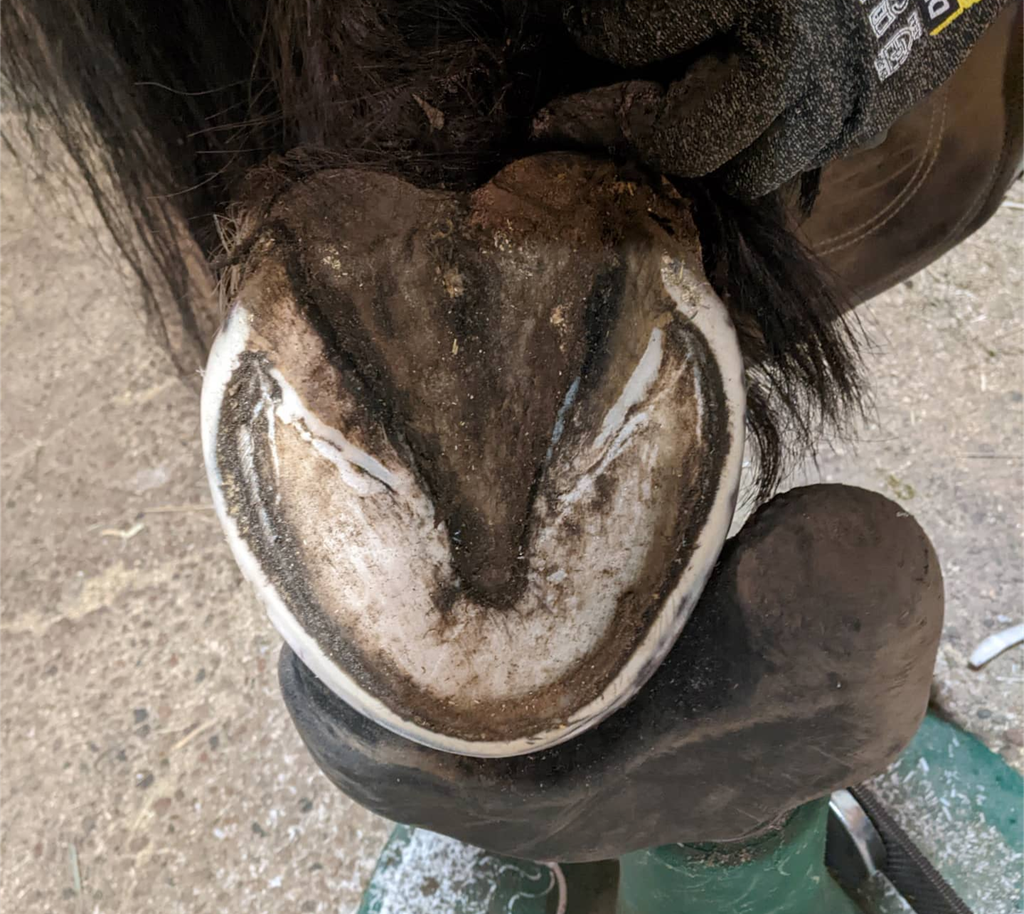
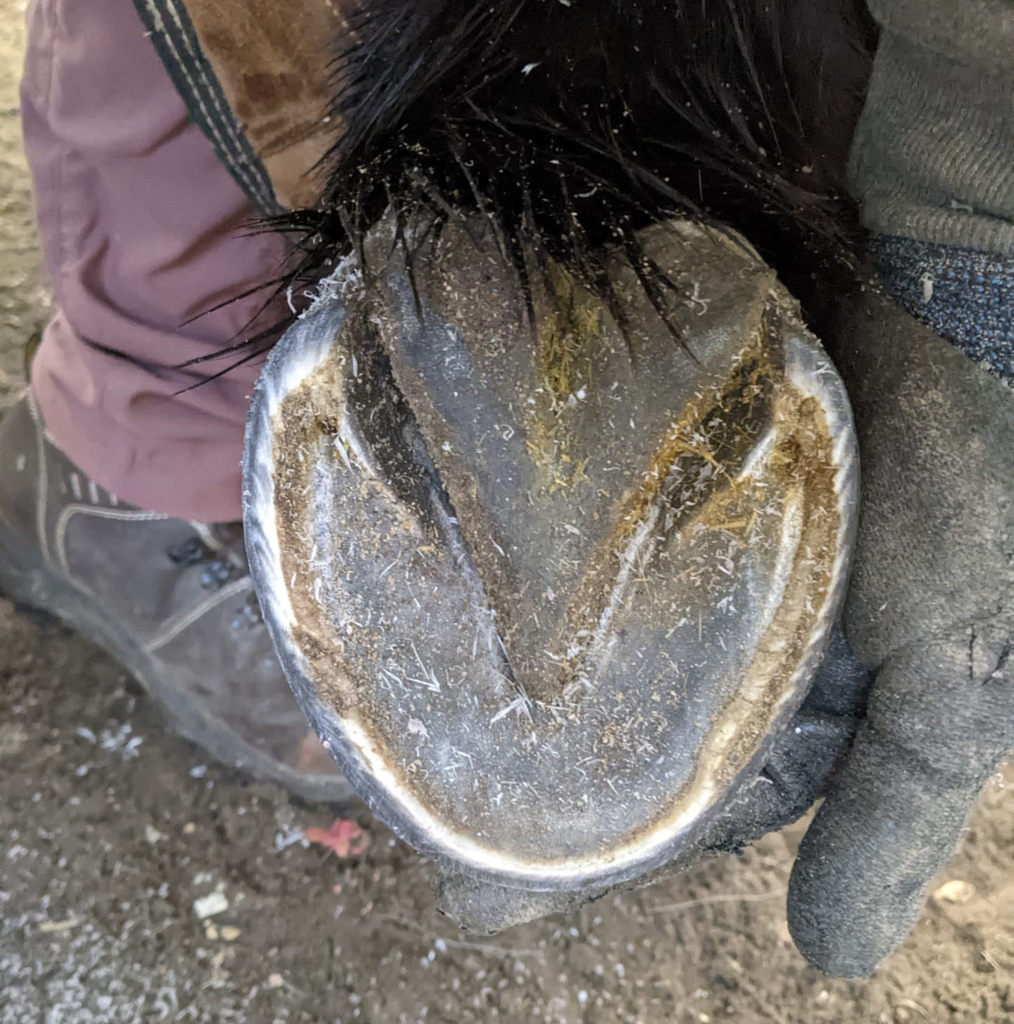
Minor, frequent corrections can be incredibly valuable, particularly for horses with hoof distortions or rehabilitation needs. This might include cleaning up chips and cracks before they cause problems, rolling the toe for a comfortable breakover for the horse, or gradually addressing underrun or contracted heels without removing too much height or length. Sometimes it’s simply a matter of making a small adjustment to encourage healthier hoof landing or loading patterns. These changes may seem insignificant when viewed individually, but over time they can help guide the hoof toward improved function without requiring dramatic changes at each appointment. The key is that the horse should be just as comfortable, if not more comfortable, following these adjustments. A trim doesn’t have to remove a lot of hoof to be productive, and sometimes the most beneficial decision is to leave certain structures completely alone.
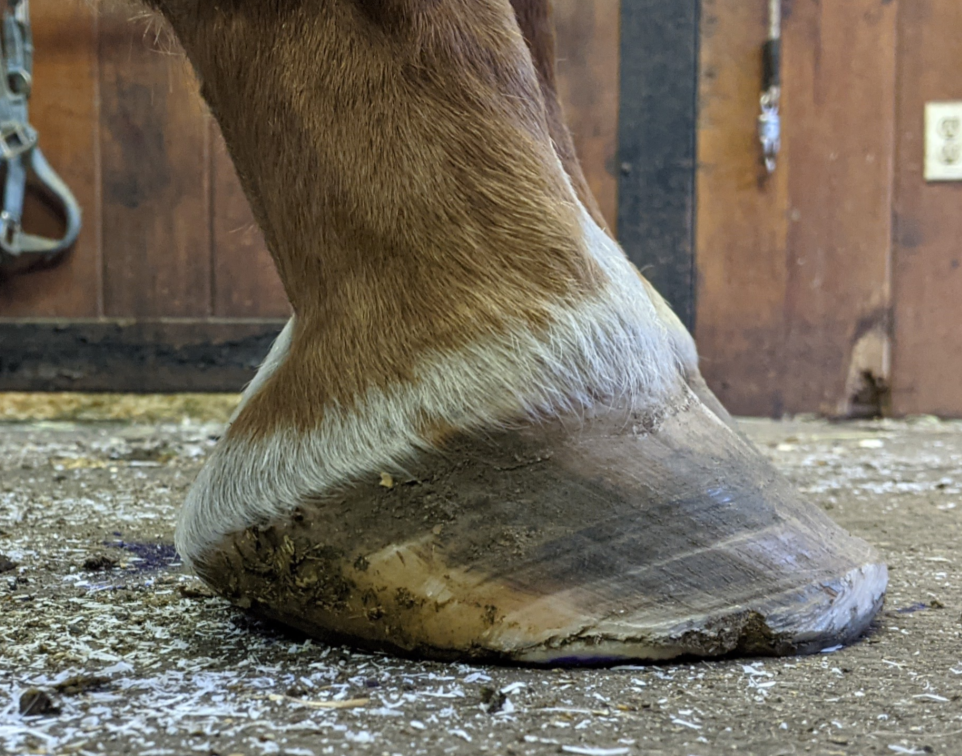
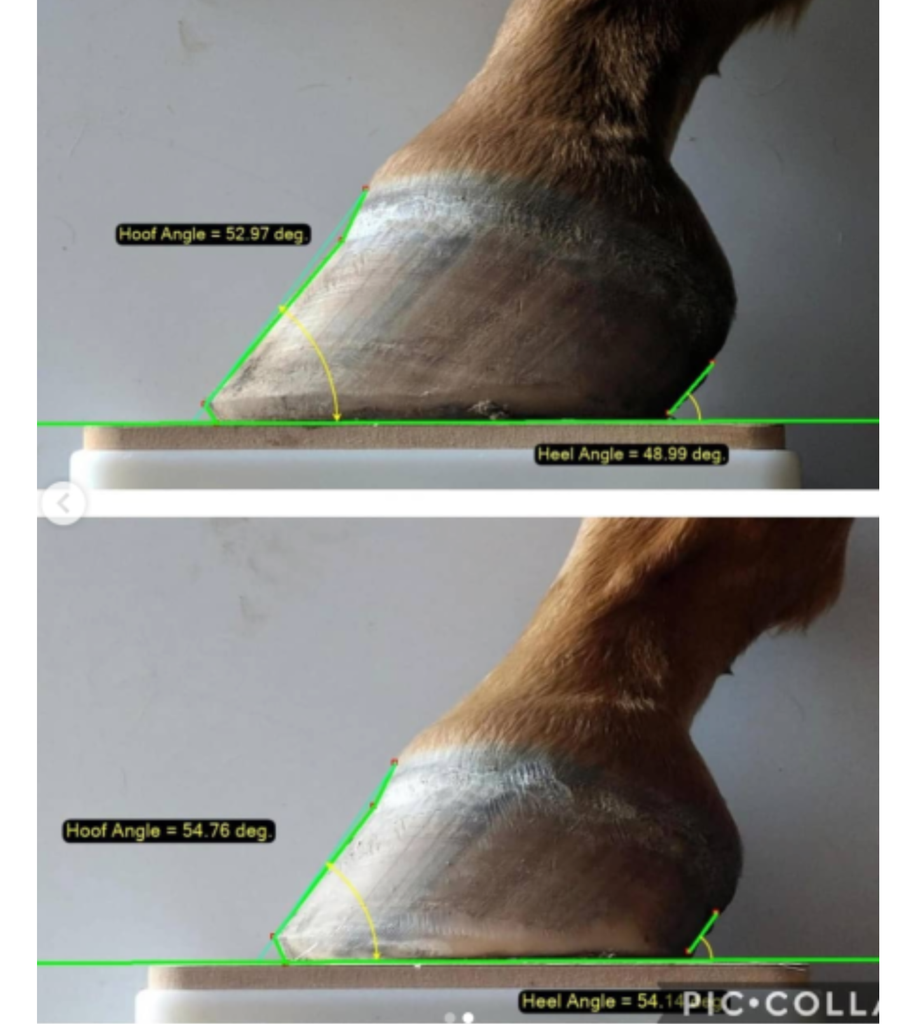
One of the challenges in hoofcare is recognizing that what we see externally doesn’t always tell us what the horse is experiencing internally. A hoof may have a long toe, underrun heels, or uneven wear, and while these distortions may suggest areas that could benefit from correction, they don’t necessarily tell us how much material can safely be removed in a single trim. A horse may be relying on certain hoof structures for protection or stability, even when those structures don’t fit our idea of an ideal hoof shape. Removing too much heel in an attempt to achieve a particular angle, aggressively shortening the toe, or thinning the sole to create a more “aesthetically pleasing” foot can leave the horse struggling to move comfortably. Correcting angles and distortions is often a process that requires patience, so the hoof and the rest of the body has time to adapt rather than expecting everything to change in one trim.
What Is Overtrimming?
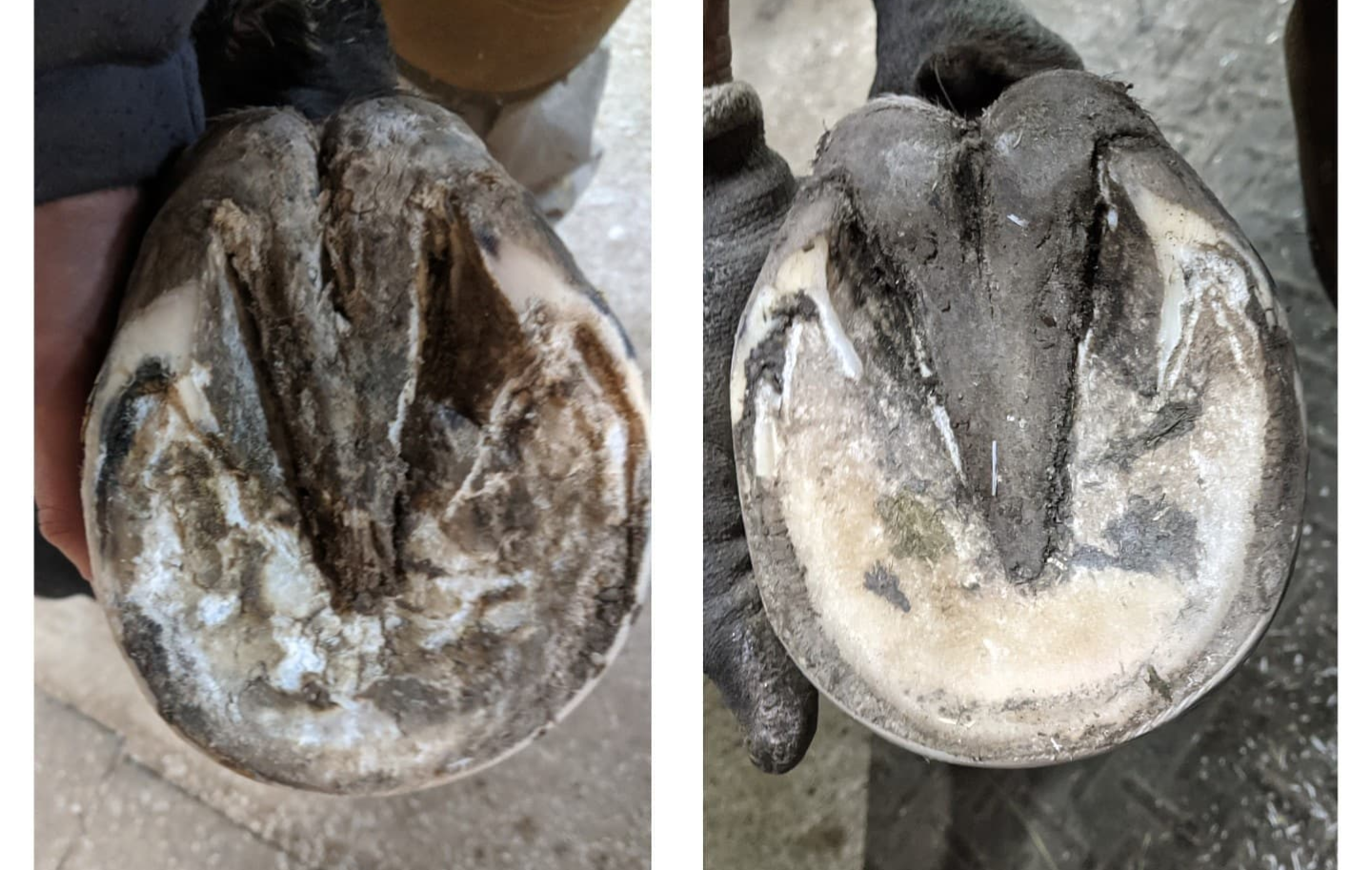
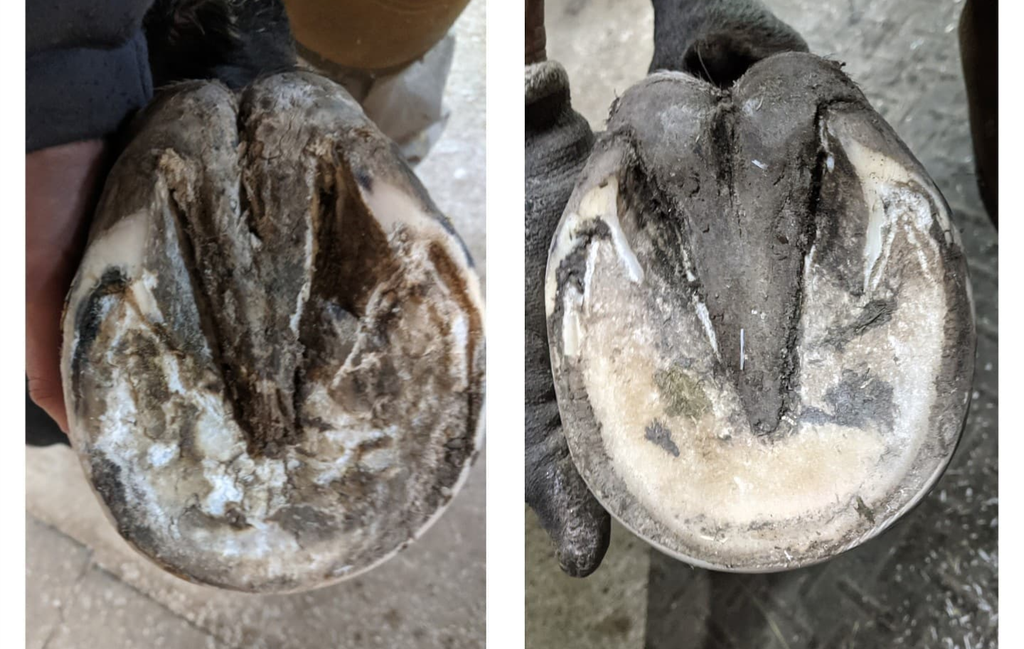
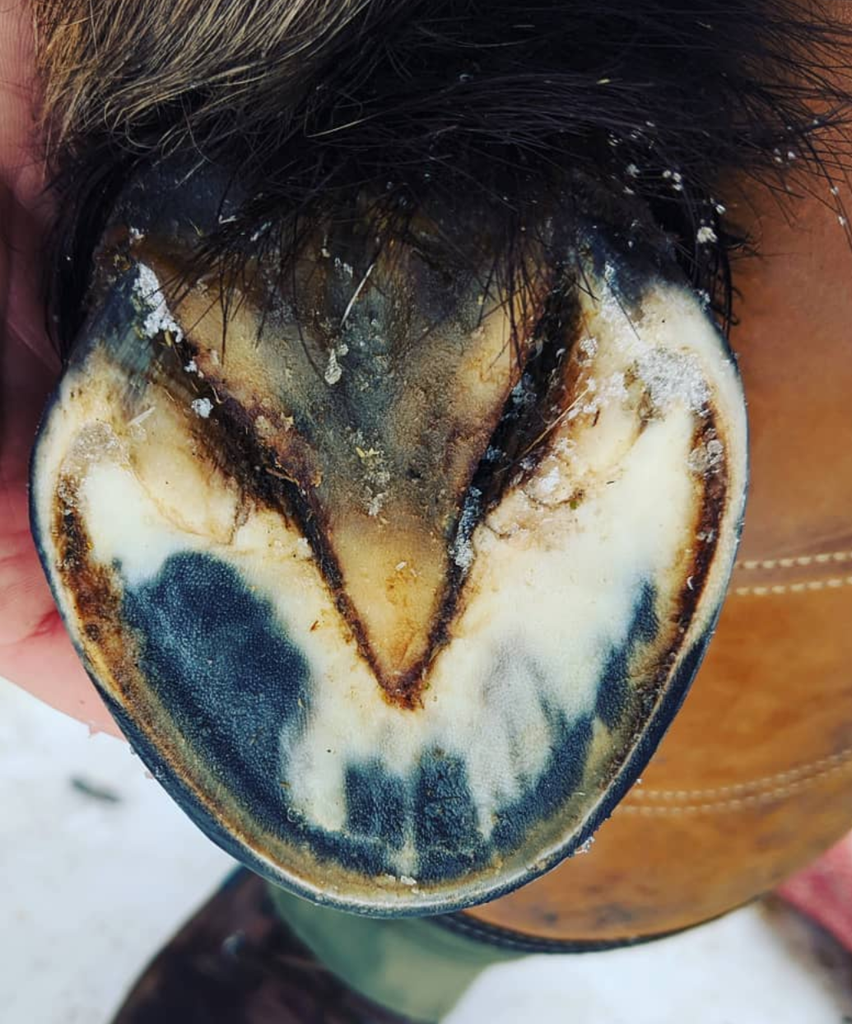
Overtrimming isn’t necessarily defined by how often a horse is trimmed, but more by how much- or which– hoof material is removed. It’s about whether the trim removes structures the horse needs for comfort, protection, and function. Aggressive trimming of the sole, frog and other structures can compromise the horse’s ability to comfortably move and navigate their environment. A horse that was moving comfortably before a trim but becomes tender, short-strided, or reluctant to move afterward may be telling us that more was taken than their hoof could tolerate. While some horses have underlying metabolic or systemic conditions that can cause fluctuations in comfort regardless of trimming, post-trim soreness should never be used as an excuse for an inevitable or necessary part of improving hoof health. A horse shouldn’t have to become uncomfortable today in the hope of developing a healthier hoof tomorrow.
How Overtrimming Can Affect the Whole Horse
Not only that, but the consequences of overtrimming don’t necessarily stop at the hoof. When a horse experiences pain or discomfort in their feet, they often change the way they move to protect the sensitive structures. They may begin landing toe first, shortening their stride, shifting weight, or changing their posture to avoid loading a painful area or sore hooves. These compensations can affect the entire body, potentially contributing to muscle tension, joint pain, and additional strain through the limbs, shoulders, back, and hind end. For a horse already dealing with soundness issues, these changes can complicate an existing rehabilitation plan or exacerbate other problems. What began as an attempt to improve hoof balance can unintentionally create a cycle of discomfort and compensation, making it even harder for the horse to move in a healthy, functional way.
Why Hoof Comfort Matters More Than Appearance
Frequent hoofcare, when approached thoughtfully, offers an opportunity to work with the horse rather than against them. Instead of trying to accomplish the “perfect hoof angle”, heel height, or some other visual “ideal,” we can evaluate how the horse is moving, where the hoof is wearing, which structures need protection, and what small changes might improve function without compromising comfort. A minor adjustment at the toe for breakover may be appropriate at one trim, while another trim may call for addressing a small flare or simply maintaining what’s already working. For some horses, especially those with thin soles, weak feet overall, or chronic sensitivity, the best trim may involve removing very little material at all. This approach requires observation, patience, and a willingness to accept that progress isn’t always immediately visible. Sometimes the most important improvements happen through consistent, subtle changes over time rather than dramatic transformations in a single visit.
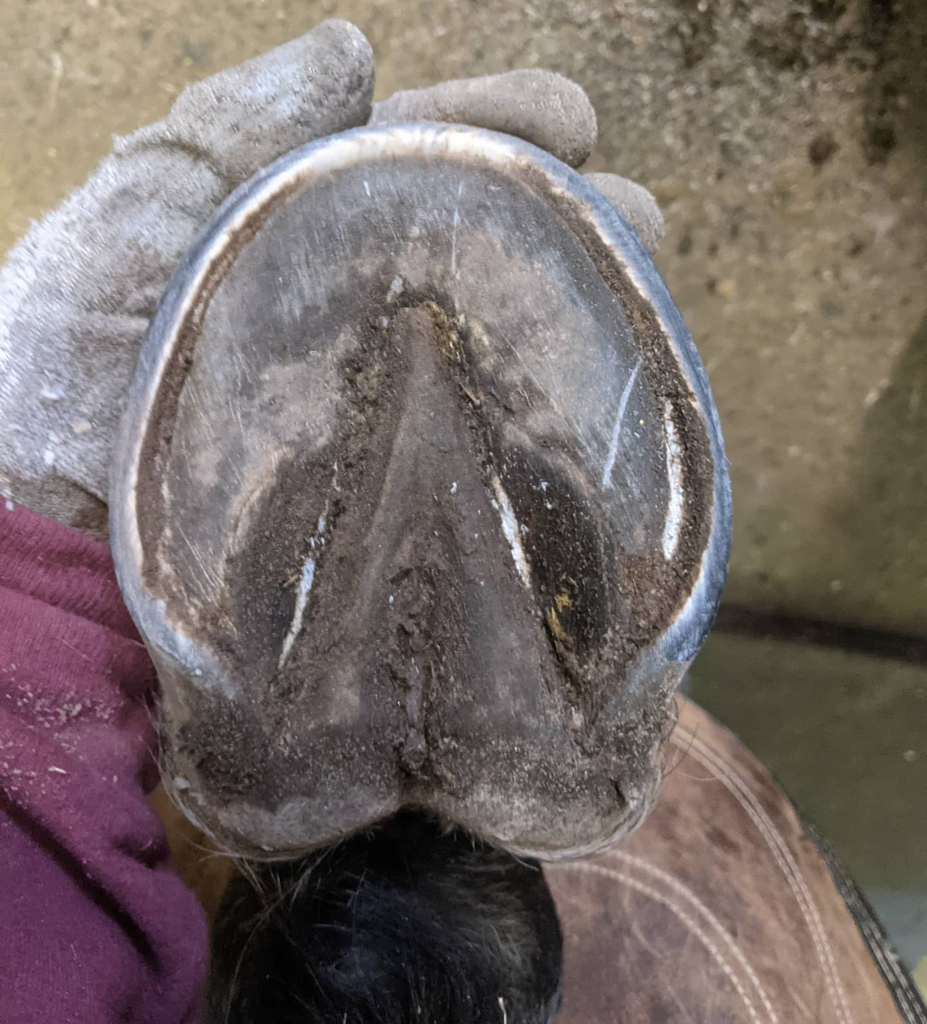
Ultimately, good hoofcare isn’t measured by how much hoof we remove, how dramatically we change an angle, or how closely the finished foot resembles a textbook image. It’s measured by how well the hoof supports the horse above it. Minor, frequent corrections can be a powerful tool for improving hoof function, but only when they respect the horse’s individual needs, hoof structures, and comfort. The goal should be to leave the horse moving at least as comfortably as they were before, ideally better, while gradually encouraging healthier hoof growth and biomechanics. A hoof that looks better but leaves the horse moving worse isn’t necessarily an improvement, and sometimes, the most skilled thing a hoof care provider can do is recognize when to make a small correction, and when to leave well enough alone.